Communal Monologue
Communal Monologue is an exercise in which multiple performers deliver a single monologue together, trading off mid-sentence or mid-thought without any performer beginning a new idea. Each speaker must continue seamlessly from where the last one stopped, maintaining the same voice, tone, and thought. The exercise trains verbal listening, agreement, and the construction of a collective voice.
Structure
Setup
Players stand in a line or loose group. The coach establishes the monologue's starting point: a character type, an emotional state, or a simple opening line.
The Monologue
One player begins speaking as the character. At any point the coach (or a designated player) signals, and another player immediately continues the exact sentence from where the first player stopped -- not a new sentence, and not a new thought, but the same sentence continued. The second player carries the same voice, rhythm, and emotional logic forward.
Intercept Rules
In advanced versions, players intercept without a signal: they step in the moment they sense the current speaker is about to drift or when they have a strong continuation to offer. The key rule in all versions is continuation, not replacement: the incoming player picks up the thread, not a new thread.
Conclusion
The monologue continues until it arrives at a natural ending or the coach calls a close. A second round can begin with a different character or a different starting premise.
How to Teach It
Objectives
Communal Monologue targets verbal listening, agreement, and the group's ability to sustain a collective voice. It exposes how players hear (or fail to hear) the grammar, rhythm, and intention of the player before them, and trains the impulse to continue rather than redirect.
How to Explain It
"We're going to tell one story together, but no single person tells more than a sentence or two. When I give the signal, you pick up exactly where the last person left off -- same sentence, same thought. Don't start something new. Continue what was there. We are one person, not many."
Scaffolding
With beginners, use clear signals (a tap on the shoulder or a distinct verbal cue) and allow longer stretches before each intercept so players can fully hear the voice before they continue it. With advanced groups, remove signals entirely and train players to feel the moment of intercept organically. An intermediate exercise is to slow the speaking pace so the listen-and-continue skill is isolated before speed is introduced.
Common Sidocoaching
- "You're one brain, not a relay race. Don't change direction."
- "You started a new thought. Go back to what they were saying."
- "Match the voice before you take it forward."
Common Pitfalls
The most common drift is players completing one sentence and then beginning a new one of their own, effectively taking over the monologue rather than continuing it. The intercept should happen mid-sentence or mid-phrase, not at a full stop. A second drift is players who change the emotional register of the monologue when they take over; the voice should be continuous even as the words change.
Worth Reading
See all books →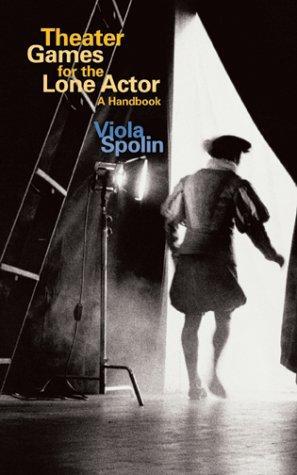
Theater Games for the Lone Actor
Viola Spolin
The Improvisation Game
Discovering the Secrets of Spontaneous Performance
Chris Johnston
Theater Games for Rehearsal
Viola Spolin
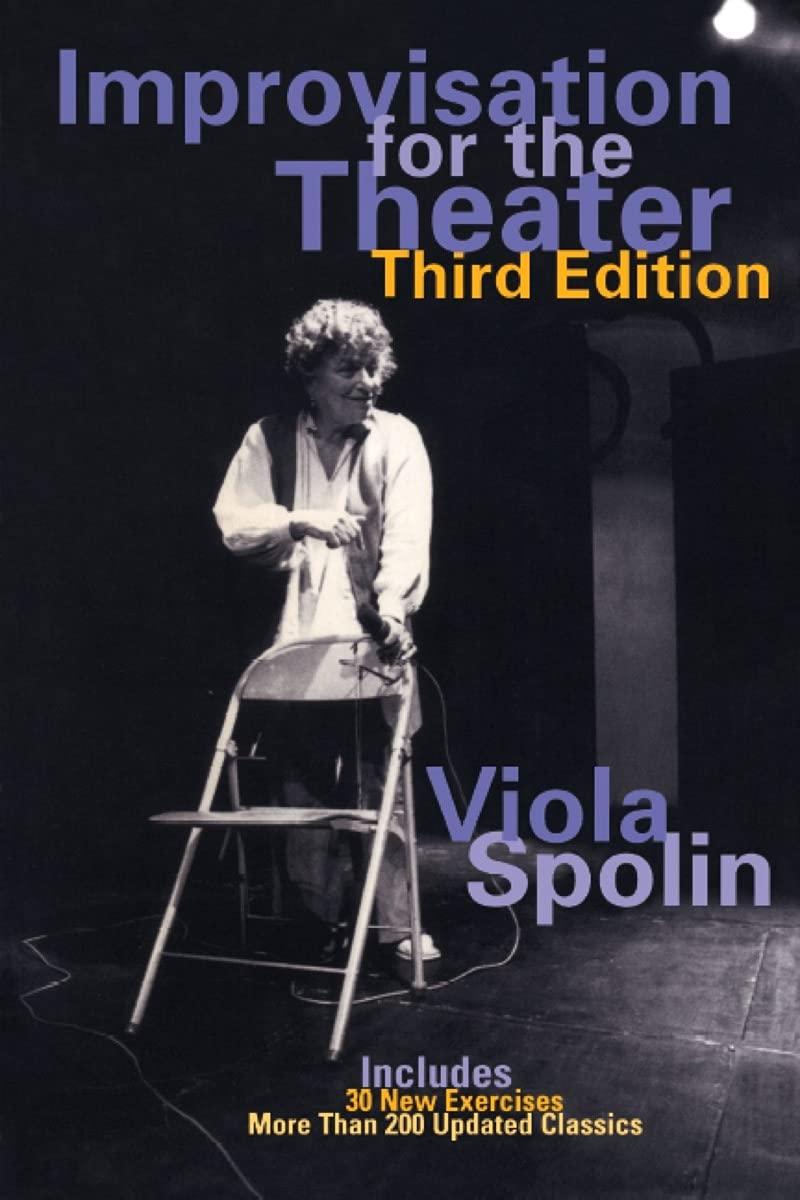
Improvisation for the Theater
A Handbook of Teaching and Directing Techniques
Viola Spolin

Group Improvisation
The Manual of Ensemble Improv Games
Peter Campbell Gwinn; Charna Halpern

Drama Games and Improvs
Games for the Classroom and Beyond
Justine Jones; Mary Ann Kelley
Related Exercises
Character Monologue
Character Monologue is an exercise in which a performer delivers an extended solo speech in character, speaking directly to the audience or to the ensemble. The sustained solo performance builds stamina, character depth, and the ability to hold attention without scene support from other players. Character Monologue develops the skill of generating detailed, specific character voices and perspectives under the pressure of uninterrupted stage time. The exercise serves as a core training tool for monologue-based long-form formats such as The Armando, where monologues function as the engine that generates scene material for the rest of the ensemble.
One Voice
One Voice is a game and exercise in which two or more performers speak simultaneously, attempting to produce the same words at the same time without prior coordination. The group must listen intently and follow collective impulses rather than individual intention, producing coherent shared speech as a single entity. The game develops group mind, deep listening, and the capacity to surrender individual control to collective will.
Monologue Thief
Monologue Thief is a hybrid game and exercise in which one performer delivers a monologue and a second performer -- the thief -- intercepts lines, phrases, or images from the monologue and builds them into their own parallel or transforming monologue. The exercise trains active listening at the level of specific language rather than general meaning, and develops the ability to receive and immediately transform material offered by a scene partner into new creative output.
Two Players -- One Voice
Two Players One Voice is an applied exercise in which two participants speak simultaneously as a single character, committing to matching word choices, rhythm, and volume in real time, training deep listening, surrender of individual agenda, and the construction of shared voice.
Non Sequitor
Non Sequitur is a hybrid game and exercise in which performers deliberately break logical connections between lines of dialogue, forcing each new statement to have no apparent relationship to the one before it. The exercise trains performers to let go of the need to make sense, builds comfort with absurdity, and paradoxically reveals how audiences will construct meaning even from disconnected material.
Cocktail Party
Cocktail Party is a multi-scene ensemble exercise and game in which several pairs of performers simultaneously engage in separate conversations at an imagined social gathering. The overlapping dialogues create a rich, layered environment in which performers must maintain their own character and scene while tracking the conversations happening around them. As connections emerge between the separate conversations, performers weave themes, characters, and references across the pairs. The game trains ensemble awareness, the ability to sustain a character in the background, and the skill of recognizing shared themes and patterns across simultaneous scenes. As described in Truth in Comedy, the Cocktail Party allows performers to explore the value of connections in improvisation.
How to Reference This Page
The Improv Archive. (2026). Communal Monologue. Retrieved September 28, 2026, from https://improvarchive.org/exercises/communal-monologue
The Improv Archive. "Communal Monologue." The Improv Archive, 2026. https://improvarchive.org/exercises/communal-monologue.
The Improv Archive. "Communal Monologue." The Improv Archive, 2026, https://improvarchive.org/exercises/communal-monologue. Accessed September 28, 2026.
The Improv Archive is a systemically maintained repository. The archive itself acts as the corporate author.