Conch Shell is an applied improvisation exercise in which a physical object serves as a speaking token: only the person holding the object may speak. The mechanic enforces one-voice-at-a-time give-and-take in group conversations, making unequal participation patterns visible and creating structured space for voices that are typically crowded out by more dominant speakers.
Structure
Setup
A physical object is designated as the conch: any held item serves the function. The group sits in a circle or around a table. A topic or question is established for the conversation.
The Rule
Only the person holding the object may speak. When a speaker finishes, they pass the object to the next speaker or return it to the center of the circle for anyone to claim. No one may interrupt the speaker or speak without the object in hand.
Conversation
The group holds a structured discussion or deliberation for fifteen to twenty minutes under these rules. The facilitator observes without participating, noting patterns of object transfer and participation.
Conclusion
The facilitator ends the structured conversation and opens a debrief based on what was observed.
How to Teach It
Objectives
Conch Shell targets turn-taking, active listening, and group equity in conversation. The mechanic creates an externalized version of the implicit norms that govern who speaks and for how long in group settings, making those norms visible and open to examination.
How to Explain It
"Whoever holds [the object] has the floor. No one else speaks. When you're done, pass it or return it to the center. The conversation runs the same way it would normally -- but with this one constraint."
Scaffolding
Start with a neutral topic to establish the mechanic before using it with higher-stakes content. With groups unfamiliar with structured facilitation, model the first exchange yourself to demonstrate both the holding and the passing. Advanced versions introduce a time limit per hold to prevent a single speaker from holding the floor indefinitely.
Common Pitfalls
Participants who are accustomed to conversational dominance find the mechanic frustrating rather than illuminating. Acknowledge this in the setup: the constraint is not a judgment of how they normally participate but a tool for noticing what the group's conversational patterns actually are.
In Applied Settings
Learning Objectives
Conch Shell is used in organizational facilitation, classroom settings, community meetings, and any group conversation where participation equity is a concern. The exercise addresses the problem of dominant voices crowding out quieter participants by making the inequality physically visible: when the object rarely leaves certain people's hands, the pattern is observable rather than deniable.
Workplace Transfer
Many workplace meetings operate under implicit participation norms that favor extroverted, high-status, or culturally dominant contributors. Conch Shell makes those norms explicit and gives groups a concrete tool for disrupting them. Organizations use it to explore whose voices are typically centered in decision-making conversations and whose are peripheral, and to practice the discipline of holding space for less dominant participants.
Facilitation Context
The exercise is used in team effectiveness workshops, leadership development programs, diversity and inclusion training, classroom discussion facilitation, and community dialogue work. It works with groups of any size, though larger groups benefit from time limits per speaker to keep the conversation moving.
Debrief Framing
Facilitators ask: "Who held the object most often? Who held it least? How did it feel to hold the floor without being interrupted? How did it feel to wait? What would your typical meeting look like if we mapped the same participation pattern? What does that tell you?"
Skills Developed
Worth Reading
See all books →
Getting to Yes And
The Art of Business Improv
Bob Kulhan; Chuck Crisafulli

Business Improv
Experiential Learning Exercises to Train Employees
Val Gee

The Applied Improvisation Mindset
Tools for Transforming Individuals, Organizations, and Communities
Theresa Robbins Dudeck; Caitlin McClure

Group Improvisation
The Manual of Ensemble Improv Games
Peter Campbell Gwinn; Charna Halpern
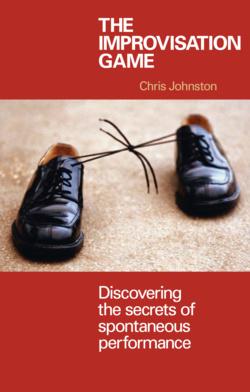
The Improvisation Game
Discovering the Secrets of Spontaneous Performance
Chris Johnston
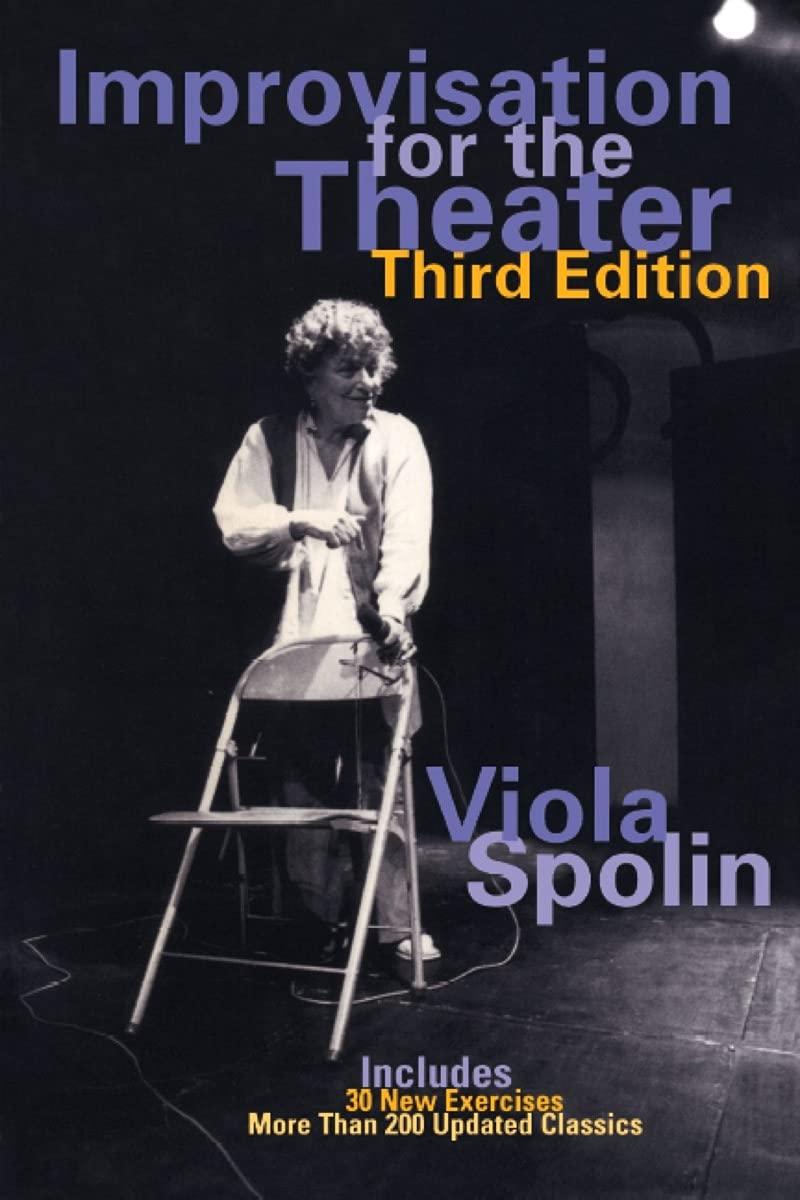
Improvisation for the Theater
A Handbook of Teaching and Directing Techniques
Viola Spolin
Related Exercises
New Object to Talk
New Object to Talk is a warm-up exercise in which participants pick up a random object and use it as a conversation starter, speaking to or about the object as if it has significance, purpose, or a story attached to it. The exercise trains spontaneous verbal commitment and the ability to generate content from minimal external stimulus.
Nonverbal Communication
Nonverbal Communication is an applied improvisation exercise in which participants interact, negotiate, and collaborate without spoken language, relying entirely on gesture, facial expression, body positioning, and physical presence. The exercise reveals how much information is transmitted nonverbally and trains participants to read and use body language with greater awareness and precision.
Four-Chair Fishbowl
Four Chair Fishbowl is a facilitation technique in which four chairs are placed in the center of a larger group. The four center chairs hold a rotating conversation on a topic while all other participants observe. An open chair rule allows observers to enter the conversation by sitting in the empty seat, at which point another participant must leave to restore the open chair. The structure creates a dynamic, participatory discussion format that resists domination by any single voice.
Silent Organization
Silent Organization is an applied improvisation exercise in which the group must arrange themselves in a specific order without using any words, relying only on eye contact, gestures, and nonverbal negotiation. The exercise reveals how much communication is possible without language and how groups self-organize under constraint.
Delegation
Delegation is an applied improvisation exercise in which groups create silent human tableaux depicting delegation at its worst and its best. Using only bodies and physical relationships -- no words, no props -- participants explore the dynamics of empowerment, control, and collaborative trust that characterize effective and ineffective delegation. The exercise surfaces assumptions about authority, ownership, and trust in ways that verbal discussion alone often cannot reach.
Leadership
Leadership is an applied improv exercise that uses structured group movement and voluntary leader emergence to explore how leadership authority is claimed, transferred, and recognized within a group. Participants move through the space or perform actions in which any member of the group may step into a leadership role at any moment, and the group must recognize and follow the shift without verbal announcement. The exercise surfaces the dynamics of organizational leadership through an embodied, real-time demonstration.
The Lineage
Explore the schools and structures that influenced or evolved from Conch Shell.
Getting to 'Yes And' (Bob Kulhan)
How to Reference This Page
The Improv Archive. (2026). Conch Shell. Retrieved September 28, 2026, from https://improvarchive.org/exercises/conch-shell
The Improv Archive. "Conch Shell." The Improv Archive, 2026. https://improvarchive.org/exercises/conch-shell.
The Improv Archive. "Conch Shell." The Improv Archive, 2026, https://improvarchive.org/exercises/conch-shell. Accessed September 28, 2026.
The Improv Archive is a systemically maintained repository. The archive itself acts as the corporate author.