Four-Chair Fishbowl
Four Chair Fishbowl is a facilitation technique in which four chairs are placed in the center of a larger group. The four center chairs hold a rotating conversation on a topic while all other participants observe. An open chair rule allows observers to enter the conversation by sitting in the empty seat, at which point another participant must leave to restore the open chair. The structure creates a dynamic, participatory discussion format that resists domination by any single voice.
Structure
Setup
Four chairs are arranged in a small circle at the center of the room. The remaining participants form an outer circle of observers. An open chair in the center is left empty at all times during the discussion.
Progression
Four participants begin the discussion in the fishbowl center. The conversation is guided by a topic or question established by the facilitator. Observers watch without participating.
When an observer wishes to join, they sit in the empty chair and become part of the conversation. One of the current participants must then voluntarily leave the center and return to the outer circle, restoring the empty chair.
Conversations continue with participants rotating in and out. The facilitator may establish a time limit for each participant's turn in the center, or allow organic rotation.
Conclusion
The exercise ends when the topic has been sufficiently explored or when the facilitator closes the fishbowl. A full-group debrief follows, inviting both center and outer circle participants to share what they observed.
How to Teach It
Objectives
Four Chair Fishbowl develops active listening in observers, equitable participation structures in group discussion, and the experience of both holding space for a conversation and yielding it to others. It makes the dynamics of conversational dominance and exclusion visible and structural rather than personal.
How to Explain It
"The conversation happens in the center. The empty chair is the invitation -- sit in it to join. When you sit down, someone in the center makes room by stepping out. One chair is always empty."
Scaffolding
For groups new to the format, run a brief practice round before introducing the real topic. Familiarity with the physical structure reduces confusion when the actual discussion begins.
Common Pitfalls
The outer circle sometimes becomes passive -- observers who wait too long lose their sense of permission to enter the center. The facilitator can open the exercise by explicitly inviting the outer circle to enter whenever they are moved to do so.
In Applied Settings
Learning Objectives
In applied settings, Four Chair Fishbowl addresses the participation inequalities that characterize most large-group professional discussions: the same voices speak repeatedly while others remain silent not from lack of perspective but from lack of structural permission. The fishbowl format creates explicit structural equity by making the mechanism of entry and exit visible and accessible to all participants rather than determined by social confidence or positional status.
Workplace Transfer
The exercise transfers to meeting facilitation, town hall design, and any large-group conversation where participation equity is a goal. Facilitators who have used the fishbowl format report higher diversity of contribution, better observer retention (watching a conversation is more engaging than waiting to speak in a large group), and more substantive discussions. The rotating structure also models the leadership behavior of yielding space -- stepping out of the center when a new voice is ready to enter.
Facilitation Context
Four Chair Fishbowl is used in leadership development, organizational development, change management programs, and any facilitated large-group discussion. It is particularly effective for town halls, retrospectives, and strategic conversations where surface-level participation from a small number of voices is a known problem. Groups of 15 to 60 work well.
Debrief Framing
Ask participants: "What did you observe from the outer circle? What prompted you to enter or stay out? What was it like to yield your seat when someone else arrived? Where in your organization does this dynamic of voices and silences play out?"
Skills Developed
Worth Reading
See all books →
The Applied Improvisation Mindset
Tools for Transforming Individuals, Organizations, and Communities
Theresa Robbins Dudeck; Caitlin McClure
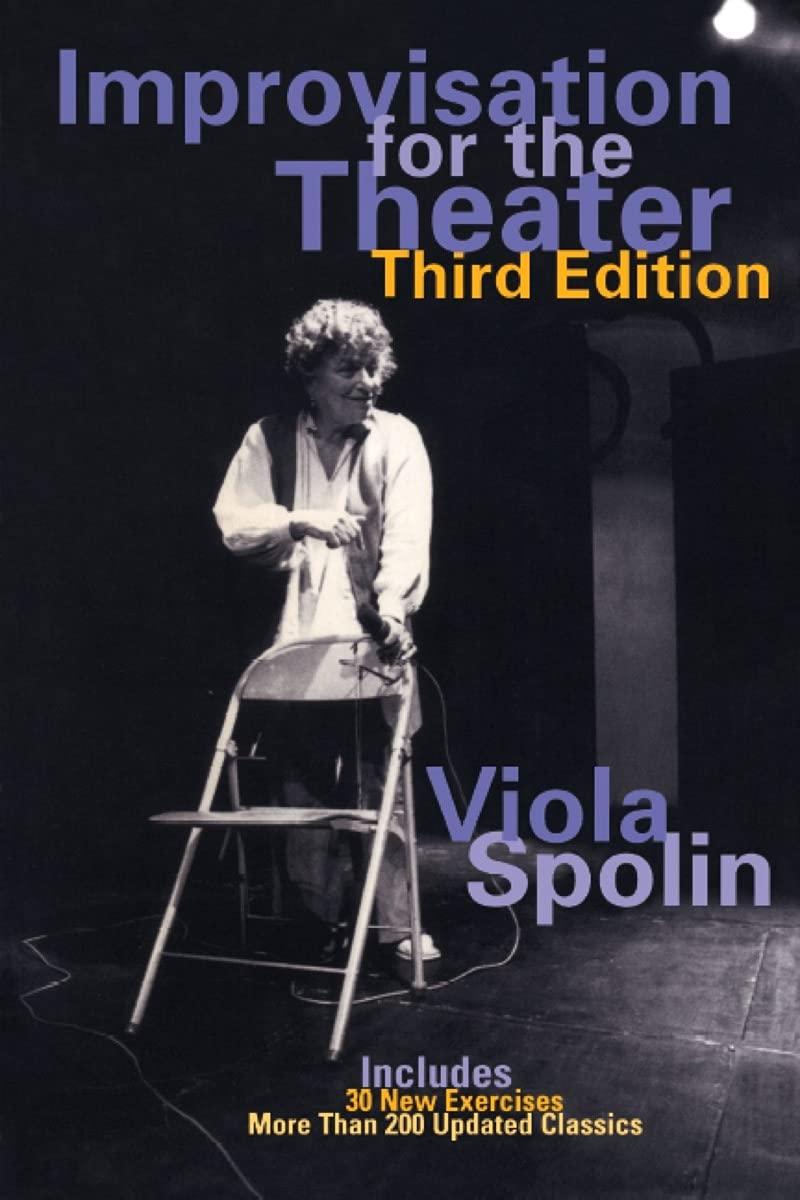
Improvisation for the Theater
A Handbook of Teaching and Directing Techniques
Viola Spolin
Theater Games for Rehearsal
Viola Spolin

Playing Along
37 Group Learning Activities Borrowed from Improvisational Theater
Izzy Gesell

Directing Improv
Asaf Ronen
Theater Games for the Lone Actor
Viola Spolin
Related Exercises
Fishbowl
Fishbowl is a performance and observation exercise in which a small group performs a scene or task inside a circle of watchers. The surrounding observers study the work closely, and the format alternates between performing and watching. The arrangement creates a focused, intimate performance dynamic in which every choice is visible and accountable. Fishbowl trains both the doing and the observing of improv, developing critical watching skills alongside performance skills.
Conch Shell
Conch Shell is an applied improvisation exercise in which a physical object serves as a speaking token: only the person holding the object may speak. The mechanic enforces one-voice-at-a-time give-and-take in group conversations, making unequal participation patterns visible and creating structured space for voices that are typically crowded out by more dominant speakers.
Meal
Meal is an applied improv exercise structured around the experience of sharing a meal -- real or imagined -- as a vehicle for group connection, honest conversation, and collaborative presence. The exercise uses the social ritual of eating together as a framework for lowering defensive barriers, encouraging personal disclosure, and building the interpersonal familiarity that applied improv programs often need to establish quickly at the start of a workshop or retreat.
Silent Organization
Silent Organization is an applied improvisation exercise in which the group must arrange themselves in a specific order without using any words, relying only on eye contact, gestures, and nonverbal negotiation. The exercise reveals how much communication is possible without language and how groups self-organize under constraint.
Three in the Middle
Three in the Middle is an applied exercise in which three participants stand at the center of a circle of observers and practice simultaneous conversation, physical awareness, and group mind. The three must speak, move, and make decisions together without a leader, building the capacity for lateral collaboration and distributed leadership.
Nonverbal Communication
Nonverbal Communication is an applied improvisation exercise in which participants interact, negotiate, and collaborate without spoken language, relying entirely on gesture, facial expression, body positioning, and physical presence. The exercise reveals how much information is transmitted nonverbally and trains participants to read and use body language with greater awareness and precision.
The Lineage
Explore the schools and structures that influenced or evolved from Four-Chair Fishbowl.
The Applied Improvisation Mindset (Dudeck & McClure)
How to Reference This Page
The Improv Archive. (2026). Four-Chair Fishbowl. Retrieved October 14, 2026, from https://improvarchive.org/exercises/four-chair-fishbowl
The Improv Archive. "Four-Chair Fishbowl." The Improv Archive, 2026. https://improvarchive.org/exercises/four-chair-fishbowl.
The Improv Archive. "Four-Chair Fishbowl." The Improv Archive, 2026, https://improvarchive.org/exercises/four-chair-fishbowl. Accessed October 14, 2026.
The Improv Archive is a systemically maintained repository. The archive itself acts as the corporate author.