Count Yes/No in a Day
Count Yes/No in a Day is an applied improvisation awareness exercise in which participants track how many times they say 'Yes' and 'No' across all their communication channels over the course of a day or a designated week. The exercise builds awareness of habitual agreement and refusal patterns, revealing whether participants' default conversational moves align with their stated values around collaboration and openness.
Structure
The Assignment
Participants are given a tracking task to complete between sessions: log every instance of 'yes' and 'no' (and their functional equivalents: 'that works,' 'not possible,' 'absolutely,' 'we can't do that') across conversations, emails, meetings, and informal interactions over a full workday or a defined period.
Tracking Method
Participants use a simple tally or a notes app to count each instance as it occurs. The goal is observation, not modification: participants do not try to change their behavior during the tracking period, only to notice it accurately.
Debrief Session
After the tracking period, participants gather to compare counts and patterns. Discussion covers: the ratio of yes to no, the contexts in which each was most frequent, whether the counts matched participants' self-perception, and what the data suggests about their habitual communication orientation.
Reflection Extension
A follow-up conversation can explore whether participants' yes and no counts reflect genuine evaluation of requests or habitual patterns that operate independently of the actual content of what is being agreed to or refused.
How to Teach It
Objectives
Count Yes/No in a Day targets self-awareness, communication habits, and the relationship between participants' stated values (openness, collaboration, flexibility) and their actual conversational behavior. It is a behavioral audit rather than a skill drill.
How to Explain It
"For the next [time period], count every time you say yes and every time you say no in any communication context. Don't try to change anything -- just notice. We'll compare notes when we're back."
Scaffolding
With groups unfamiliar with reflective practice, frame the exercise as data collection rather than evaluation, emphasizing that neither a high yes count nor a high no count is inherently good or bad. The value is in the awareness, not the ratio. A useful extension for advanced groups is to track not just the count but the context: was the yes or no given after genuine consideration or reflexively?
Common Pitfalls
Participants sometimes modify their behavior during the tracking period rather than simply observing it, producing counts that reflect what they think they should say rather than what they actually say. Emphasize that unmodified observation is the exercise; behavior change comes after awareness, not during measurement.
In Applied Settings
Learning Objectives
Count Yes/No in a Day surfaces the degree to which participants' communication patterns are habitual rather than intentional. Many professionals believe themselves to be more collaborative or more decisive than their actual yes/no patterns reveal. The exercise creates a concrete, personal data point that initiates reflection on the gap between self-perception and observable behavior.
Workplace Transfer
In organizational contexts, habitual over-agreement leads to overcommitment and boundary erosion; habitual over-refusal leads to blocked collaboration and missed opportunity. The exercise does not prescribe which direction to move but gives participants evidence to evaluate their own balance. It is particularly useful for managers, team leads, and anyone in a role where their yes or no carries organizational weight.
Facilitation Context
The exercise is used in leadership development programs, management training, communication skills workshops, and assertiveness training. It works best when paired with a debrief session where participants share and compare their counts in a psychologically safe environment.
Debrief Framing
Facilitators ask: "What surprised you about your counts? Were there contexts where you said yes more often? No more often? Do your counts reflect what you intended? What would change if you could shift the balance in one specific context?"
Skills Developed
Worth Reading
See all books →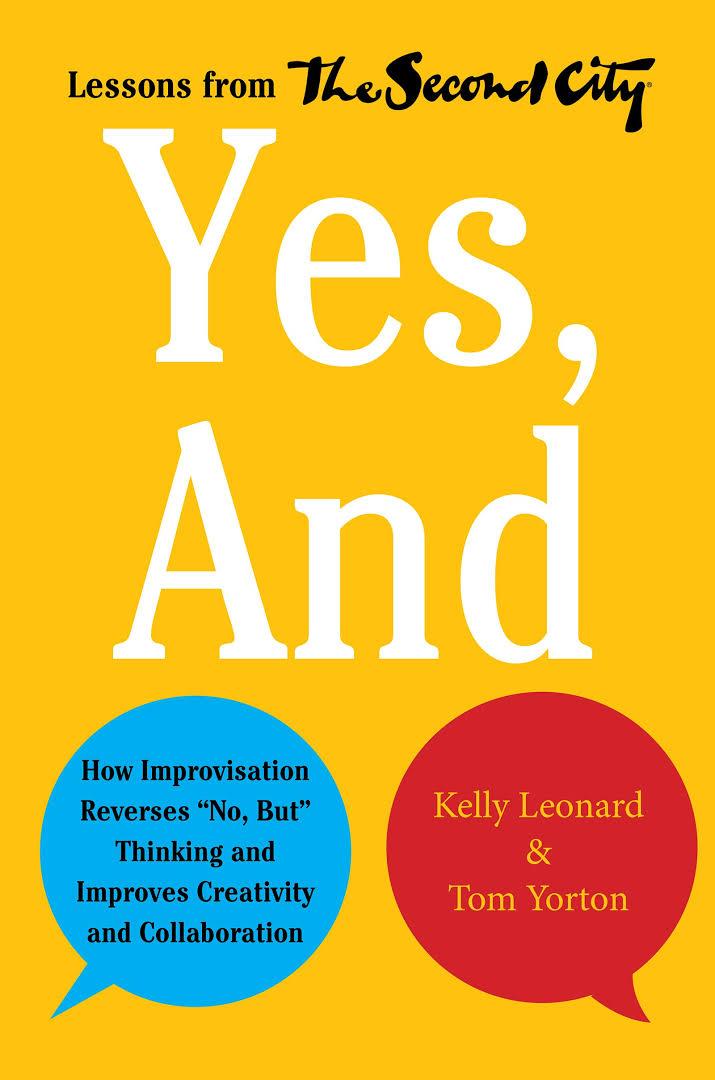
Yes, And
How Improvisation Reverses No, But Thinking and Improves Creativity and Collaboration
Kelly Leonard; Tom Yorton

The "Yes And" Business Evolution
Improv Skills for Leadership and Life
Tracy Shea-Porter

Getting to Yes And
The Art of Business Improv
Bob Kulhan; Chuck Crisafulli

When I Say This, Do You Mean That?
Enhancing Communication
Cherie Kerr; Julia Sweeney

You Can Teach Improv (Yes, You!)
The Ultimate Guide to Class Planning, Skill Building, and Helping Every Student Leave With a Win
Andrew Berkowitz
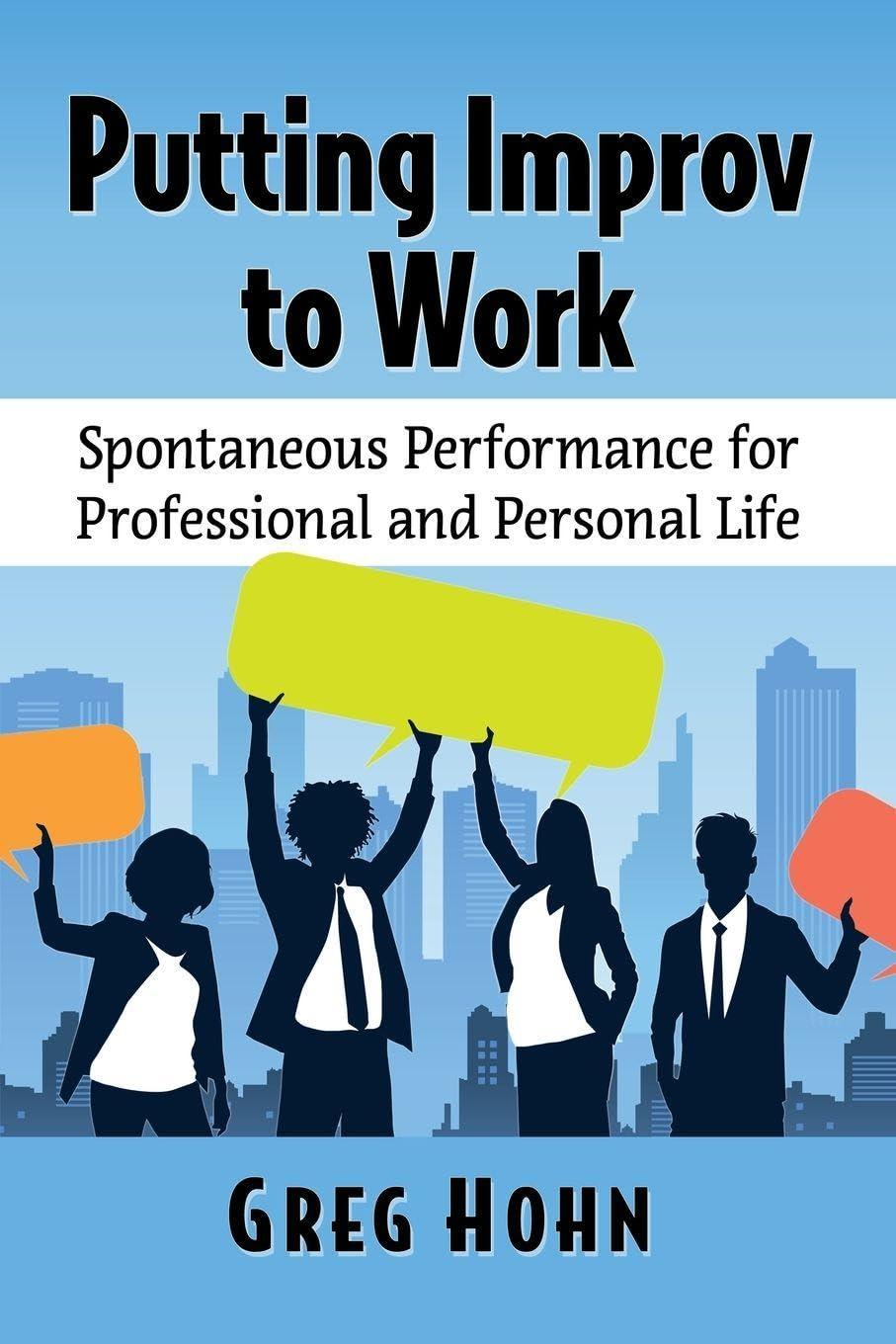
Putting Improv to Work
Spontaneous Performance for Leadership, Learning, and Life
Greg Hohn
Related Exercises
Identify When People Say No
Identify When People Say No is an applied observation exercise in which participants track the frequency, pattern, and context of refusals or resistance they encounter in their professional environment over a set period. By counting how many times others decline, deflect, or block their requests -- and by noting the time of day, questioning style, relationship context, and group dynamics associated with each refusal -- participants build data-informed awareness of their own influence and communication patterns.
The Cycle of Deep Yes And
The Cycle of Deep Yes And is an applied exercise in which participants practice full acceptance and active building in paired conversation, moving through multiple rounds that progressively deepen their commitment to the yes-and principle. The exercise trains the habit of genuine affirmation before contribution.
No Doubles 1-10
No Doubles 1-10 is a group focus exercise in which participants attempt to count from one to ten as a collective, with only one person speaking each number at a time. If two or more people speak simultaneously, the count resets to one. The exercise trains group listening, patience, and the shared impulse awareness that underlies ensemble work.
Pass Yes
Pass Yes is a circle warm-up in which players attempt to say the word "yes" at the exact same moment as a partner. One player turns to a neighbor and both try to speak simultaneously, then the receiving player turns to the next person and repeats the process. The exercise trains listening, eye contact, and the willingness to synchronize with another person rather than lead or follow.
Yes And
Yes And is the foundational improv exercise and philosophical principle in which performers practice accepting a partner's offer (the "yes") and adding new information that builds on it (the "and"). One player makes a statement; the partner responds by first affirming the reality of that statement and then contributing something new. The exercise trains the most essential skill in improvisation and has become the defining principle of the entire art form.
Status Scene With Numbers
Status Scene with Numbers is a status exercise in which each participant draws a numbered card to determine their status level, then creates a character at that level and interacts with others, learning to embody and read status through physical and verbal behavior.
The Lineage
Explore the schools and structures that influenced or evolved from Count Yes/No in a Day.
Brain Disruption (Montgomery & Montgomery)
How to Reference This Page
The Improv Archive. (2026). Count Yes/No in a Day. Retrieved September 29, 2026, from https://improvarchive.org/exercises/count-yes-no-in-a-day
The Improv Archive. "Count Yes/No in a Day." The Improv Archive, 2026. https://improvarchive.org/exercises/count-yes-no-in-a-day.
The Improv Archive. "Count Yes/No in a Day." The Improv Archive, 2026, https://improvarchive.org/exercises/count-yes-no-in-a-day. Accessed September 29, 2026.
The Improv Archive is a systemically maintained repository. The archive itself acts as the corporate author.