Repetition is a paired listening exercise in which participants hold a conversation one sentence at a time, with each person required to repeat their partner's last statement before responding. The exercise forces genuine listening by making the repetition a prerequisite for the reply.
Structure
Setup
Participants pair up and face each other. The facilitator explains the rule: before you can say anything new, you must first repeat back what your partner just said, word for word. Only after the accurate repetition can you add your own sentence.
Progression
One partner begins with a statement. The other partner repeats that statement back, then adds their own response. The first partner repeats the response, then continues the conversation. The rhythm becomes: listen, repeat, respond.
The conversation can be on any topic, from a work project to a personal interest. The subject matter is secondary to the listening discipline. As the conversation progresses, participants discover how much they normally miss when they are preparing their response instead of listening.
The facilitator may increase difficulty by having pairs discuss a topic they disagree about. The requirement to repeat the opposing viewpoint before responding creates a powerful experience of genuine engagement with a different perspective.
Variations
A paraphrase version allows participants to restate the meaning in their own words rather than repeating verbatim, training comprehension rather than rote recall. A group version passes statements around a circle, with each person repeating the previous speaker before adding their contribution. An emotional version asks participants to repeat not just the words but the emotional tone of their partner's statement.
How to Teach It
Objectives
Repetition trains active listening, retention, and the discipline of fully receiving a partner's contribution before generating a response. It reveals how frequently people compose their reply while the other person is still speaking, and demonstrates the impact of genuine attention on conversation quality.
How to Explain It
"Have a conversation with your partner. Before you can say anything new, you must first repeat exactly what they just said. Listen carefully enough to get it right."
Scaffolding
Begin with neutral, low-stakes topics. Progress to subjects where participants have opinions. The exercise becomes most revealing when applied to topics where the natural impulse is to respond immediately rather than listen fully.
Common Pitfalls
The most common error is participants paraphrasing rather than repeating, substituting their interpretation for their partner's actual words. Insist on accuracy in the early rounds. A second pitfall is the exercise becoming mechanical, with participants robotically repeating without genuinely processing the content. Encourage natural delivery of the repetition, as if confirming understanding rather than performing a task.
In Applied Settings
Repetition is widely used in conflict resolution, negotiation training, and leadership development. The exercise demonstrates that most people listen to respond rather than to understand, and provides a concrete technique for improving communication quality. In workplace contexts, facilitators use it to address meeting dynamics where participants talk past each other. The debrief explores what changes when people feel genuinely heard, and how the quality of response improves when it is preceded by accurate comprehension of what was actually said.
Skills Developed
Worth Reading
See all books →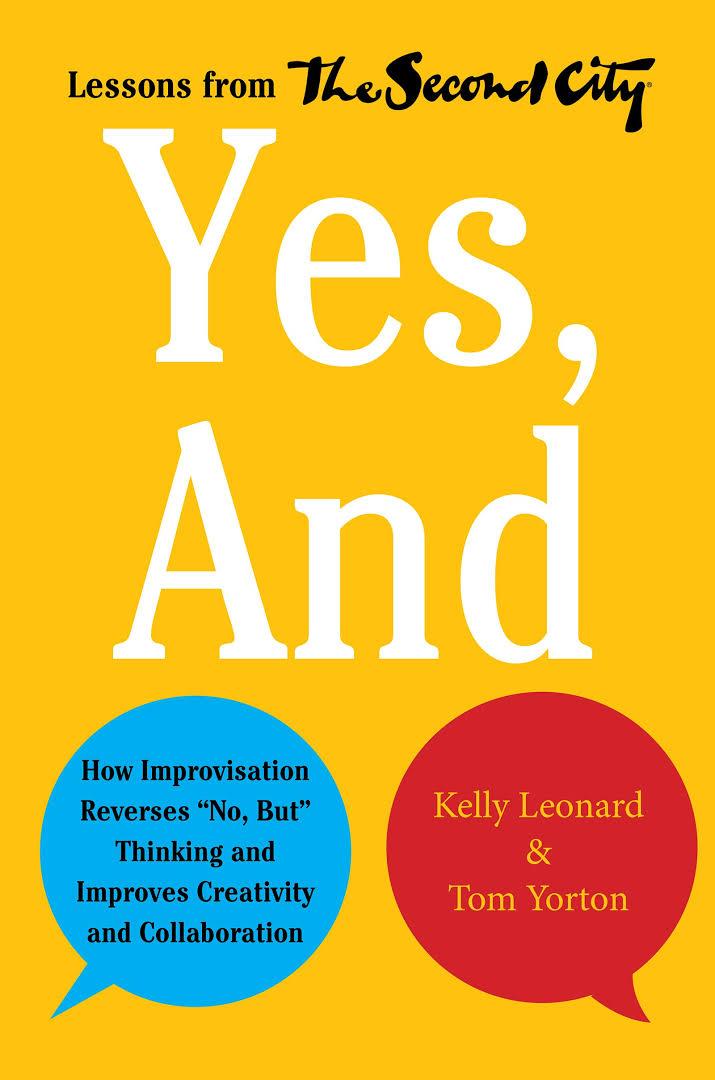
Yes, And
How Improvisation Reverses No, But Thinking and Improves Creativity and Collaboration
Kelly Leonard; Tom Yorton

Business Improv
Experiential Learning Exercises to Train Employees
Val Gee
The Actor's Book of Improvisation
Sandra Caruso; Paul Clemens

Comedy and Distinction
The Cultural Currency of a 'Good' Sense of Humour
Sam Friedman

Theatrical Improvisation
Short Form, Long Form, and Sketch-Based Improv
Jeanne Leep

Devising Performance
A Critical History
Deirdre Heddon; Jane Milling
Related Exercises
Repeat and Add
Repeat and Add is an exercise in which performers replay a sequence of actions or dialogue, adding one new element with each repetition. The growing accumulation trains memory, physical precision, and the ability to commit to established choices while continuing to build.
Three-Second Pauses
Three Second Pauses is an applied exercise in which participants practice inserting a deliberate three-second pause before responding to any question or statement, building the habit of active listening over reactive reply. The pause allows full processing of what was said before generating a response.
Paraphrase
Paraphrase is a partnered exercise in which each line of dialogue must first reiterate the essence of the scene partner's previous statement before adding new information. The reiteration functions as a literal version of "yes" and the new information serves as the "and." The exercise trains active listening by making it structurally impossible to ignore what a partner has just said, and it reveals how much richer scenes become when performers genuinely hear and acknowledge each other's contributions.
Last Word, First Word
Last Word First Word is an applied improv listening exercise in which each participant must begin their sentence with the last word spoken by the previous participant, carrying the conversation forward through this chain of shared language. The constraint makes end-of-utterance attention mandatory and creates a visible, audible record of how carefully each participant tracked their partner's contribution before responding.
What They Said
What They Said is an applied listening exercise in which participants must accurately paraphrase or repeat back what the previous speaker said before contributing their own point, training active listening, retention under pressure, and the discipline of understanding before responding.
Copy Line
Copy Line is a scene exercise in which one performer repeats back the exact words their partner just said before delivering their own new line. The mandatory echo forces performers to genuinely hear what was said before responding, building the habit of listening-before-speaking and preventing the common improv drift of planning the next line while the partner is still talking.
The Lineage
Explore the schools and structures that influenced or evolved from Repetition.
Yes, And (Kelly Leonard & Tom Yorton)
How to Reference This Page
The Improv Archive. (2026). Repetition. Retrieved September 28, 2026, from https://improvarchive.org/exercises/repetition
The Improv Archive. "Repetition." The Improv Archive, 2026. https://improvarchive.org/exercises/repetition.
The Improv Archive. "Repetition." The Improv Archive, 2026, https://improvarchive.org/exercises/repetition. Accessed September 28, 2026.
The Improv Archive is a systemically maintained repository. The archive itself acts as the corporate author.