Creatures of the Deep
Creatures of the Deep is a physicality exercise in which players create and embody imaginary sea creatures, exploring unusual movement patterns inspired by underwater life. The aquatic framing liberates players from habitual terrestrial movement habits, inviting exploration of slow, sustained, fluid motion as well as bursts of directional change that challenge the body's default patterns. The exercise is used to expand physical range and develop comfort with non-humanistic movement.
Structure
Setup
Players spread across the room. The coach guides them into imagining they are in an underwater environment: the resistance of water slows every movement, currents may pull in unexpected directions, and gravity behaves differently.
Creature Development
Each player develops their sea creature from a physical starting point: a specific movement quality (pulsing, undulating, darting, drifting), a body part that leads all motion, a repeating behavioral pattern, and a relationship to light or pressure. The creature may be recognizable (inspired by a jellyfish or eel) or entirely invented.
Inhabitation
Players move through the space as their creatures for five to ten minutes, encountering other creatures and responding to the environment. Interactions are physical and non-verbal.
Human Integration
The coach asks players to gradually introduce a human element: a need, a desire, a simple intent. The creature retains its physical logic while gaining a character impulse.
How to Teach It
Objectives
Creatures of the Deep targets physical range, non-habitual movement, and the exploration of character through physical logic rather than psychological backstory. It is useful for performers who default to upright, front-facing, human-proportioned movement.
How to Explain It
"You are a creature of the deep sea. You have never been to the surface. Everything about how you move is shaped by water, pressure, and depth. Find your creature from the outside -- find a movement first, then discover who you are."
Scaffolding
With beginners, start with recognizable creatures (jellyfish, sea horse, eel) before moving to invented ones. With advanced groups, challenge players to find creatures whose movement logic they cannot name or categorize.
Common Sidocoaching
- "What leads your movement? Is it your spine? Your hands? Your chest?"
- "The water resists you. Let it."
- "What does your creature want?"
Common Pitfalls
Players frequently import human upright posture and bilateral symmetry even when attempting non-human movement. Encourage exploration of asymmetry, different levels, and movement that does not originate from the center. Players who find a single movement and repeat it without variation should be prompted to respond to another creature or a change in the environment.
Worth Reading
See all books →
Embodied Playwriting
Improv and Acting Exercises for Writing
Hillary Haft Bucs; Charissa Menefee

Pirate Robot Ninja
An Improv Fable
Billy Merritt; Will Hines
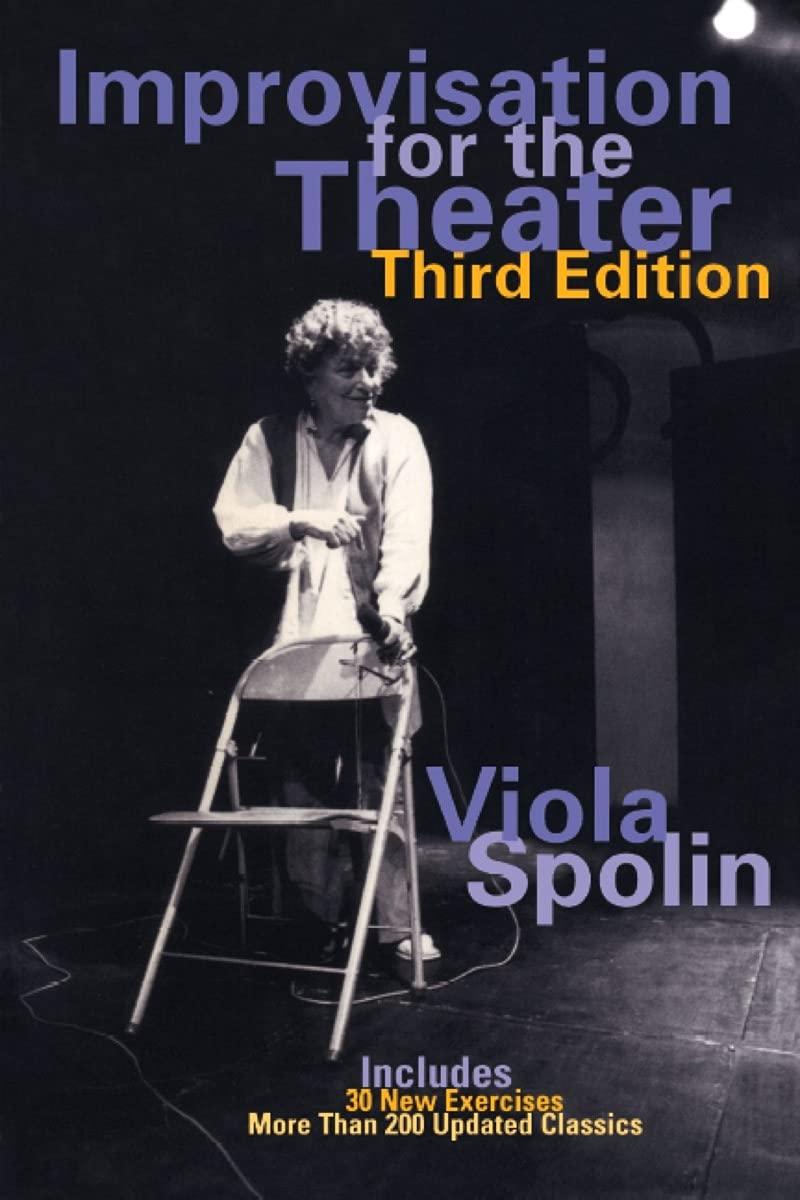
Improvisation for the Theater
A Handbook of Teaching and Directing Techniques
Viola Spolin

Mask Improvisation for Actor Training and Performance
the compelling image
Sears A. Eldredge
The Actor's Book of Improvisation
Sandra Caruso; Paul Clemens

The Improv Illusionist
Using Object Work, Environment, and Physicality in Performance
David Raitt
Related Exercises
Animals
Animals is a physical transformation exercise in which players move through the space embodying different animals called out by a facilitator or chosen by the participants. Each new animal demands a complete shift in physicality, tempo, weight, rhythm, and energy. Players explore how different creatures occupy space, move, breathe, and interact, using the animal as a gateway to expanded physical vocabulary and heightened commitment to transformation. The exercise appears across multiple performance traditions, from Augusto Boal's Games for Actors and Non-Actors to Seraphin Eldredge's mask improvisation work, and is a foundational component of both actor training and improv pedagogy. Animals develops range of physical expression, spatial awareness, and the ability to commit fully to a physical choice without self-consciousness.
Ahab and the Whale
Ahab and the Whale is a physical group exercise in which players enact the dramatic pursuit and capture of a whale, using synchronized movement and vocal sound effects. The exercise demands full physical commitment and ensemble coordination. It builds group energy and breaks down inhibitions through collective absurdity.
Animal Farm
Animal Farm is a physicality exercise in which each player adopts the movement, sounds, and behavioral patterns of a specific animal. Players explore the full range of an animal's physicality, then interact with other animals in the space, building character embodiment and ensemble responsiveness.
Barney
Barney is an energy and movement warm-up exercise in which players adopt an exaggerated, lumbering physical character and interact with the group through simple, playful commands. The exercise asks participants to embody a large, slow, friendly creature (often described as a dinosaur or monster) and move through the space with maximum physical commitment and minimum self-consciousness. The inherent silliness of the character lowers inhibitions quickly, making Barney effective as an early warm-up for groups that are new to physical work or uncomfortable with large physical choices. The exercise builds comfort with exaggerated movement, vocal projection, and the willingness to look ridiculous in front of others, all foundational skills for improv performance.
Ducks and Cows
Ducks and Cows is a trust and listening exercise in which blindfolded players are secretly assigned to be either a duck or a cow. Without guidance from the facilitator, they must navigate a shared space and find their group using only the sound of their assigned animal. The exercise builds listening acuity, trust in a chaotic environment, and comfort with physical vulnerability when vision is removed.
Predator/Defender
Predator Defender is an applied improvisation exercise from Putting Improv to Work in which each player secretly chooses one person as their predator and another as their defender. On the signal to move, everyone must keep their defender between themselves and their predator at all times, creating a dynamic, self-organizing system of constant movement.
How to Reference This Page
The Improv Archive. (2026). Creatures of the Deep. Retrieved October 14, 2026, from https://improvarchive.org/exercises/creatures-of-the-deep
The Improv Archive. "Creatures of the Deep." The Improv Archive, 2026. https://improvarchive.org/exercises/creatures-of-the-deep.
The Improv Archive. "Creatures of the Deep." The Improv Archive, 2026, https://improvarchive.org/exercises/creatures-of-the-deep. Accessed October 14, 2026.
The Improv Archive is a systemically maintained repository. The archive itself acts as the corporate author.