Group Order is a nonverbal exercise in which all players must arrange themselves into a specific sequence -- by height, birthday, shoe size, or another criterion -- without speaking. The exercise forces creative, nonverbal communication and collaborative problem-solving in real time. It builds patience, observation, and comfort with nonverbal interaction while revealing how a group self-organizes when verbal shortcuts are removed.
Structure
Setup
All players stand in an open space, mixed together without any particular arrangement. The facilitator announces the ordering criterion -- for example, by birthday (January through December) or by height (shortest to tallest) -- and states that the group must achieve the correct arrangement without speaking or writing.
The Exercise
Players communicate entirely through gesture, physical demonstration, and nonverbal signals. They cannot mouth words, whisper, or use written communication of any kind. The group must collectively discover its correct order.
The criterion determines the available signals: height can be indicated by gesture; birthday requires performers to communicate month and day through physicalized sequences, held fingers, or invented nonverbal codes that emerge in real time.
Verification
Once the group believes it has found its order, the facilitator invites each person to reveal their actual value (birthday, measurement, etc.) in sequence, left to right. The group discovers how close their arrangement was to correct.
Variations
Criteria can increase in difficulty: first name alphabetically (easy), last name alphabetically (harder), birth order within family (requires communicating birth order position plus sibling count). Multiple rounds can use different criteria.
Conclusion
The exercise ends after one or more ordering rounds. A debrief names what communication strategies emerged and what the group noticed about how it solved the problem together.
How to Teach It
Objectives
Group Order develops nonverbal communication, collaborative problem-solving, and group observation. It surfaces the strategies a group invents when its usual verbal shortcuts are removed and makes those strategies visible for reflection.
How to Explain It
"You need to get into order -- I'll tell you what order -- but you cannot speak. No mouthing words. No writing. Figure it out together."
Scaffolding
Begin with a criterion the group can communicate easily -- height or alphabetical first name -- before introducing criteria that require more complex nonverbal invention. The first round establishes confidence; subsequent rounds can push the group into genuinely difficult communication territory.
Common Pitfalls
Some participants assert leadership aggressively and organize the group around their own interpretation rather than listening to others' attempts at communication. Others withdraw entirely, deferring to the most active participants. The debrief can name these dynamics explicitly as a reflection of how the group typically organizes itself.
Worth Reading
See all books →
Group Improvisation
The Manual of Ensemble Improv Games
Peter Campbell Gwinn; Charna Halpern

Business Improv
Experiential Learning Exercises to Train Employees
Val Gee
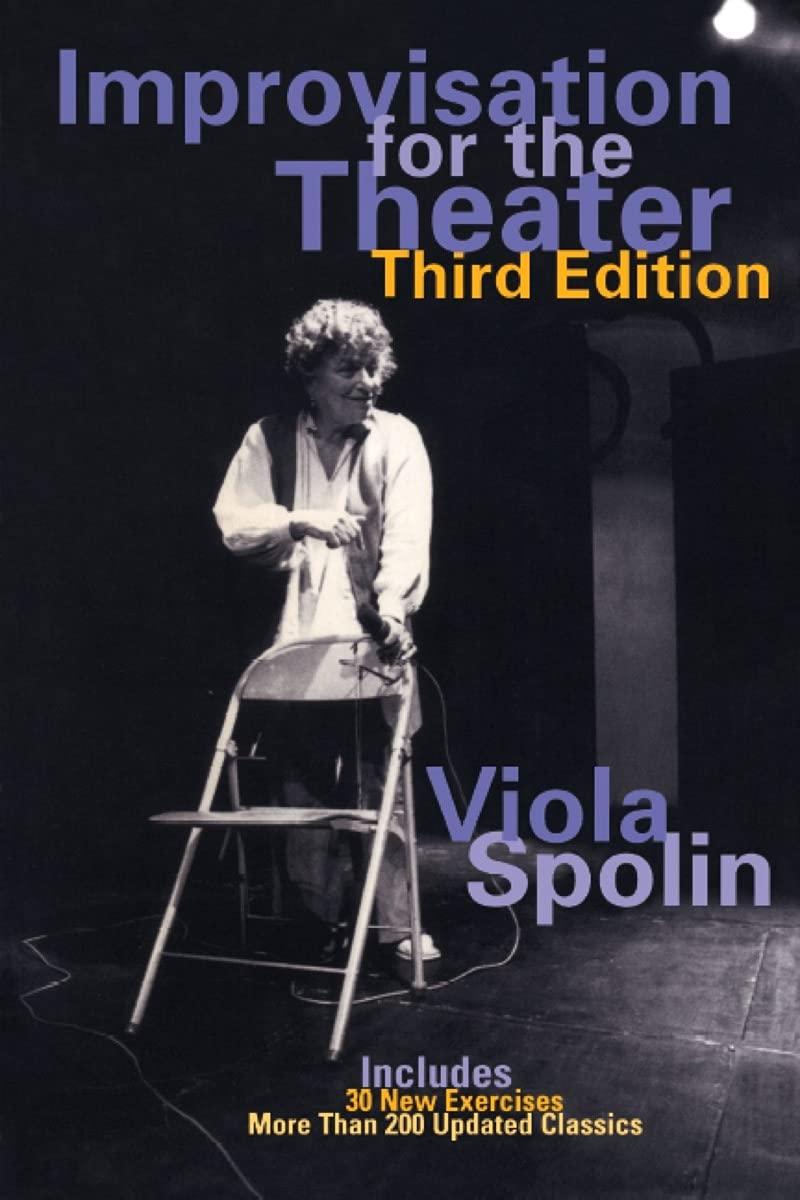
Improvisation for the Theater
A Handbook of Teaching and Directing Techniques
Viola Spolin
The Improvisation Game
Discovering the Secrets of Spontaneous Performance
Chris Johnston
Theater Games for Rehearsal
Viola Spolin

Playing Along
37 Group Learning Activities Borrowed from Improvisational Theater
Izzy Gesell
Related Exercises
Silent Organization
Silent Organization is an applied improvisation exercise in which the group must arrange themselves in a specific order without using any words, relying only on eye contact, gestures, and nonverbal negotiation. The exercise reveals how much communication is possible without language and how groups self-organize under constraint.
Nonverbal Communication
Nonverbal Communication is an applied improvisation exercise in which participants interact, negotiate, and collaborate without spoken language, relying entirely on gesture, facial expression, body positioning, and physical presence. The exercise reveals how much information is transmitted nonverbally and trains participants to read and use body language with greater awareness and precision.
Blind Line Up
Blind Line Up is a nonverbal communication exercise in which blindfolded players must arrange themselves in a specific order, such as by birthday or height, without speaking. The exercise demands creative problem-solving and alternative communication methods. It builds patience, cooperation, and trust.
Pecking Order
Pecking Order is a status exercise in which players are secretly assigned a numerical rank in a social hierarchy and must interact in scenes according to their position, treating those above them with deference and those below with authority. Observers attempt to determine the correct ranking from behavioral cues alone. The exercise develops physical and vocal markers of status and trains ensemble sensitivity to power dynamics.
Count Off
Count Off is a group focus exercise in which players attempt to count to a target number, one person speaking at a time, without any predetermined order or pattern. If two or more players speak simultaneously, the count restarts from one. No gestures, signals, or eye contact are permitted to coordinate turns. The exercise trains group sensitivity, the ability to read collective impulse, and the patience to find the right moment to contribute. Count Off reveals the ensemble's current level of attunement: a group that can consistently reach high numbers has developed a shared awareness that transfers directly to scene work.
No Doubles 1-10
No Doubles 1-10 is a group focus exercise in which participants attempt to count from one to ten as a collective, with only one person speaking each number at a time. If two or more people speak simultaneously, the count resets to one. The exercise trains group listening, patience, and the shared impulse awareness that underlies ensemble work.
How to Reference This Page
The Improv Archive. (2026). Group Order. Retrieved September 28, 2026, from https://improvarchive.org/exercises/group-order
The Improv Archive. "Group Order." The Improv Archive, 2026. https://improvarchive.org/exercises/group-order.
The Improv Archive. "Group Order." The Improv Archive, 2026, https://improvarchive.org/exercises/group-order. Accessed September 28, 2026.
The Improv Archive is a systemically maintained repository. The archive itself acts as the corporate author.