Introducing Association
Introducing Association is a name-learning exercise that combines self-introduction with word association. Each player introduces themselves by name and adds a word, image, or gesture that they associate with their name. Subsequent players repeat all previous names and associations before adding their own. The exercise simultaneously learns names and warms up the associative thinking required for improvisation, building memory through the concrete links that association provides.
Structure
Setup
Players stand or sit in a circle. The facilitator introduces the structure: each player will say their name along with a personal association -- a word, an image, a gesture, or a brief phrase connected to their name in some way. Subsequent players must repeat all previous names and associations in order before adding their own.
First Player
The first player says their name and their association: "I'm Alex -- and I associate my name with Alexander the Great" or "I'm Sam -- summer" or a gesture that sounds like or connects to the name.
Cumulative Round
The next player says the first player's name and association, then adds their own. The third player repeats the first two and adds the third. This continues around the circle until all players have introduced themselves.
Name Review
After the cumulative round, the facilitator may invite any player to name any other player -- testing whether the associations have helped the names land. The group may applaud successful recalls.
Conclusion
The exercise ends after the full circle is complete or after a brief name-review round. Players leave having been introduced to the group through an association that makes their name memorable.
How to Teach It
Objectives
Introducing Association develops memory for names through associative links, warms up lateral thinking, and builds group cohesion through the shared ritual of learning each other.
How to Explain It
"Say your name and something you associate with it. Anything -- a word, an image, a sound, a gesture. Then the next person repeats everyone who came before. The association is there to help the name stick."
Scaffolding
Model the format before asking players to participate -- demonstrate a name and association, then demonstrate repeating someone else's. The exercise is straightforward once the format is clear, but confusing without a demonstration.
Common Pitfalls
Players sometimes choose associations that are too subtle or abstract to be memorable -- a connection that makes sense to them personally but does not help others remember the name. The coaching note is that the best associations are vivid, physical, or sound-based rather than conceptual.
Worth Reading
See all books →
Playing Along
37 Group Learning Activities Borrowed from Improvisational Theater
Izzy Gesell

Improvisation Starters
A Collection of 900 Improvisation Situations for the Theater
Philip Bernardi

Business Improv
Experiential Learning Exercises to Train Employees
Val Gee

Group Improvisation
The Manual of Ensemble Improv Games
Peter Campbell Gwinn; Charna Halpern

The Improvisation Game
Discovering the Secrets of Spontaneous Performance
Chris Johnston
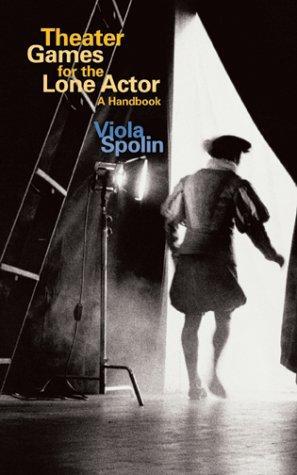
Theater Games for the Lone Actor
Viola Spolin
Related Exercises
Name Game
Name Game is a warm-up exercise in which players learn and reinforce each other's names through a structured pattern of call-and-response, rhythmic chanting, or physical gestures. Each player's name is paired with a movement, an alliterative adjective, or a rhythmic pattern that makes the name memorable and the learning process active. The exercise is a staple opening activity for new groups and builds the ensemble familiarity that supports strong scene work. Knowing every player's name and having a physical memory associated with it creates the foundation for personal connection within the group.
Alliteration Introduction
Alliteration Introduction is a name-learning exercise in which each player introduces themselves with an alliterative adjective preceding their name. The pairing of adjective and name creates a mnemonic that helps the group remember each other. It is a standard icebreaker for new ensembles and workshop groups.
Free Association Circle
Free Association Circle is a group exercise in which players standing in a circle pass words around the circle, each player saying the first word that comes to mind in response to the word just spoken. There is no topic, no narrative, and no correct direction -- only the unfiltered associative chain between one mind and the next. The exercise develops spontaneity, the suppression of the self-editing reflex, and the awareness of how the associative mind generates material.
Associatioin Chain
Association Chain is a circle exercise in which each player says a word inspired by the previous player's word, building a rapid chain of free associations. The exercise trains spontaneous, uncensored responses and reveals the connective leaps that drive improvised scene work. Speed is essential to prevent intellectual filtering.
Name and Motion
Name and Motion is a name-learning exercise in which each participant says their name while simultaneously performing a physical gesture or movement of their choosing. The group then mirrors both the name and the motion back in unison. The pairing of verbal and physical information creates multiple memory anchors, making name retention significantly more reliable than verbal-only introductions.
Association Jump
Association Jump is a variation on word association in which players physically move or jump to a new position in the space each time they offer a new word. The physical action reinforces the mental leap between ideas and keeps energy high. The exercise connects verbal spontaneity with full-body commitment.
How to Reference This Page
The Improv Archive. (2026). Introducing Association. Retrieved September 28, 2026, from https://improvarchive.org/exercises/introducing-association
The Improv Archive. "Introducing Association." The Improv Archive, 2026. https://improvarchive.org/exercises/introducing-association.
The Improv Archive. "Introducing Association." The Improv Archive, 2026, https://improvarchive.org/exercises/introducing-association. Accessed September 28, 2026.
The Improv Archive is a systemically maintained repository. The archive itself acts as the corporate author.