Let Go is an applied improv exercise in which participants practice releasing attachment to a fixed idea, plan, or direction and accepting a changed course offered by the group or a partner. Drawn from applied improv practice, the exercise trains adaptability and the psychological skill of redirecting investment from a discarded option toward a new one without resistance, resentment, or prolonged negotiation.
Structure
Setup
Participants work in pairs or small groups. The facilitator introduces a scenario in which each participant has a stated plan, intention, or preference for how a task or conversation will go.
Progression
Each participant articulates their plan briefly. A partner or the group then introduces a change: a different direction, a contradicting offer, a reframing of the task. The participant must practice letting go of their original plan and genuinely engaging with the new direction without dwelling on what was abandoned.
Multiple rounds cycle through different participants and different types of plan-changes, ranging from minor redirections to significant reversals.
Conclusion
The exercise concludes with a group debrief in which participants describe what it felt like to release their original plan and what made the letting go easier or more difficult across different rounds.
How to Teach It
Objectives
Let Go targets the adaptive response to plan disruption. The exercise trains the ability to recognize when a plan is no longer operative and to redirect genuine engagement toward a new direction without the intermediate stage of resistance or loss-processing.
How to Explain It
"You had a plan. The plan just changed. That's the whole exercise. Don't argue for the old plan, don't mourn it, don't keep finding ways to circle back to it. Find out what's actually available now and go there."
Scaffolding
Begin with low-stakes plan changes (what to do for lunch, which route to take) before introducing changes with higher personal investment. For groups with strong attachment to control or planning, the facilitator may debrief after each round before the group's emotional response to the disruption has fully subsided, capturing the raw experience before rationalization.
Common Pitfalls
Participants frequently perform letting go without genuinely doing it -- verbally accepting the change while continuing to steer the conversation back toward their original preference. Coach participants to notice the difference between saying "okay" and actually reorienting toward the new direction.
In Applied Settings
Learning Objectives
Let Go trains the adaptive capacity to release a fixed plan and genuinely engage with an alternative without the defensive, resistant, or prolonged processing that disrupted plans often trigger. The exercise targets the moment between disruption and adaptation -- a moment that, in organizational settings, frequently produces friction, negotiation, or passive resistance when it could produce realignment.
Workplace Transfer
In organizations, the ability to let go of a plan when circumstances change is a core adaptive capacity that distinguishes high-performing teams from those that become entangled in defending previous decisions. The Let Go exercise replicates the exact moment when a meeting agenda shifts, a project pivots, a strategy is reversed, or a proposal is rejected -- and trains the response of genuine reengagement rather than managed compliance. Participants who practice this exercise develop the physical and psychological experience of true release, which is different from reluctant acceptance.
Facilitation Context
Let Go is used in change management workshops, leadership development programs, team resilience training, and organizational culture sessions focused on agility and adaptability. It works well in contexts where a team or organization is undergoing transition, or where post-meeting or post-decision friction around rejected ideas or changed directions has been identified as a recurring problem. Groups of any size can participate in pairs or small groups.
Debrief Framing
After the exercise, ask: What was your plan and what happened when it changed? Where in your body did you notice the resistance? How long did it take before the new direction felt genuinely available to you? Where in your organization does attachment to a prior plan create friction after a decision has changed? The debrief should help participants name the experience of genuine release versus performed acceptance and connect it to specific organizational moments where the difference matters.
Skills Developed
Worth Reading
See all books →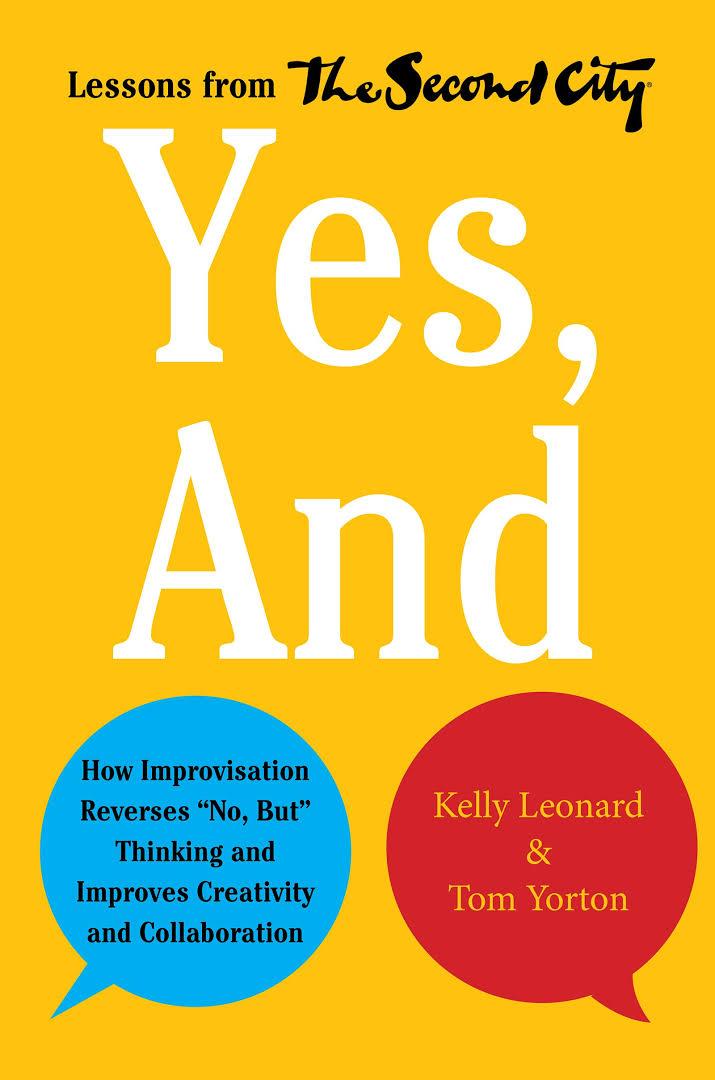
Yes, And
How Improvisation Reverses No, But Thinking and Improves Creativity and Collaboration
Kelly Leonard; Tom Yorton

Business Improv
Experiential Learning Exercises to Train Employees
Val Gee
The Actor's Book of Improvisation
Sandra Caruso; Paul Clemens

Comedy and Distinction
The Cultural Currency of a 'Good' Sense of Humour
Sam Friedman

Legislative Theatre
Using Performance to Make Politics
Augusto Boal

Theatrical Improvisation
Short Form, Long Form, and Sketch-Based Improv
Jeanne Leep
Related Exercises
Lets Not
Let's Not is a scene-work exercise in which performers practice recognizing and resisting the impulsive move -- the immediate next step that seems obvious after an offer is made -- and instead exploring what already exists in the scene before building further. The exercise counters the improv tendency to pile offer onto offer and trains performers to dwell productively in established scene reality.
Flexibility
Flexibility is a category of applied improv exercises designed to develop mental and behavioral flexibility when plans change unexpectedly. The exercises use improv's fundamental practice of responding to changing conditions -- rather than resisting or mourning them -- as a template for building the adaptive capacity that professional environments require when strategies, schedules, or circumstances shift without warning.
Acceptance
Acceptance is an applied improv exercise in which participants hear a new location, answer together with "Yes, let's," and immediately populate that environment as people or objects inside it. The exercise turns acceptance into visible behavior: participants must receive the new reality, enter it quickly, and adjust when someone else has already chosen the role they wanted.
Managing Change
Managing Change is an applied improv exercise that uses structured improvisation to help participants navigate and practice the psychological and behavioral responses to unexpected change in organizational contexts. The exercise creates controlled conditions of disruption and adaptation, training the specific skills of remaining present, communicating openly, and collaborating effectively when plans, expectations, or structures are suddenly altered.
Motivation
Motivation is an applied improv exercise that explores the distinction between intrinsic and extrinsic motivation by having participants play characters or engage in tasks driven by different types of motivational fuel. The exercise reveals how motivation quality affects group behavior, creative engagement, and collaborative generosity -- making the difference between performed participation and genuine contribution visible and discussable.
Adaptability
Exercises specifically designed to practice adapting to rapidly changing circumstances and unexpected developments.
The Lineage
Explore the schools and structures that influenced or evolved from Let Go.
Business Improv (Gee & Gee)
How to Reference This Page
The Improv Archive. (2026). Let Go. Retrieved September 28, 2026, from https://improvarchive.org/exercises/let-go
The Improv Archive. "Let Go." The Improv Archive, 2026. https://improvarchive.org/exercises/let-go.
The Improv Archive. "Let Go." The Improv Archive, 2026, https://improvarchive.org/exercises/let-go. Accessed September 28, 2026.
The Improv Archive is a systemically maintained repository. The archive itself acts as the corporate author.