Flexibility
Flexibility is a category of applied improv exercises designed to develop mental and behavioral flexibility when plans change unexpectedly. The exercises use improv's fundamental practice of responding to changing conditions -- rather than resisting or mourning them -- as a template for building the adaptive capacity that professional environments require when strategies, schedules, or circumstances shift without warning.
Structure
Plan Disruption Scenarios
Participants begin a task, presentation, or improvised project with a clear plan. Mid-execution, the facilitator introduces a significant change: the timeline is cut in half, a key resource is removed, the audience changes, or the goal is reframed entirely. Participants must continue without stopping, adapting in real time.
Yes-And the Change
When a plan change is introduced, participants practice the explicit Yes-And response: accepting the new condition as a given and building forward from it rather than resisting, explaining, or reverting to the original plan. The acceptance is active -- "Yes, the timeline is half and I am now doing this instead."
Constraint Generating
Participants deliberately remove a resource or option that was available to them (no verbal communication, no hands, one person must lead) and complete an exercise with the reduced toolkit. The constraint trains resourcefulness within limitation rather than reliance on familiar tools.
Conclusion
The exercises close with debrief focused on what was possible within the constraint that participants did not expect to be possible, and where the same capacity is needed in their professional lives.
How to Teach It
Objectives
Flexibility exercises target the specific response patterns that emerge when plans change: freezing, reverting, blaming, or disengaging. The improv frame reframes plan disruption as a creative challenge rather than a failure event, building the behavioral habit of continuing productively when conditions shift.
How to Explain It
"The plan just changed. That's not the problem -- that's the exercise. What do you do now with what you actually have?"
Scaffolding
Begin with small disruptions before introducing major ones. A minor constraint change (one fewer participant, five minutes less time) builds the adaptation reflex before a fundamental reframe (entirely new goal) is introduced.
Common Pitfalls
Participants sometimes focus on narrating the disruption rather than adapting to it -- they spend their time explaining what was lost rather than working with what remains. The coaching note is that narrating the change and adapting to it are mutually exclusive; productivity resumes only when explanation stops.
In Applied Settings
Learning Objectives
In applied settings, Flexibility exercises address one of the most common and costly professional behaviors: the inability to shift effectively when a plan does not unfold as intended. Organizations lose significant time and engagement to plan failures that are not the problem -- the problem is the inability to adapt to them quickly and continue productively. The exercises install the behavioral pattern that improv calls Yes-And, applied to the realities of organizational life: strategy shifts, budget cuts, personnel changes, and external disruptions.
Workplace Transfer
Participants who have practiced Plan Disruption scenarios develop faster, less defensive responses to unexpected change in real organizational contexts. They report reduced freeze responses, greater comfort with ambiguity, and the ability to find a productive path forward without requiring a return to the original plan. These capacities are foundational to agile work environments, crisis management, and any leadership role that requires decision-making under uncertainty.
Facilitation Context
Flexibility exercises are used in change management training, agile leadership programs, resilience workshops, and organizational effectiveness development. They are particularly valuable for teams or leaders navigating significant organizational transitions. Groups of 8 to 20 work well.
Debrief Framing
Ask participants: "What was your first response when the plan changed -- what happened in your body and your thinking? What did you do with it? What would have been different if you had practiced this response more? When in your work life does this situation recur?"
Skills Developed
Worth Reading
See all books →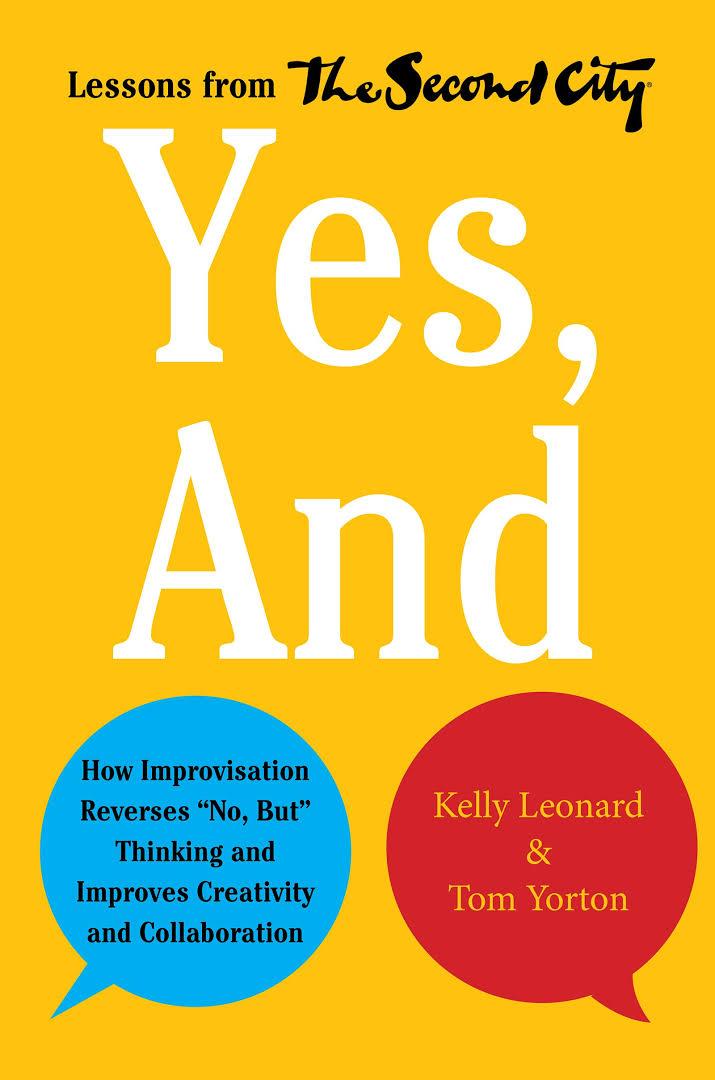
Yes, And
How Improvisation Reverses No, But Thinking and Improves Creativity and Collaboration
Kelly Leonard; Tom Yorton

Business Improv
Experiential Learning Exercises to Train Employees
Val Gee

Legislative Theatre
Using Performance to Make Politics
Augusto Boal

Theatrical Improvisation
Short Form, Long Form, and Sketch-Based Improv
Jeanne Leep

The Art of Chicago Improv
Short Cuts to Long-Form Improvisation
Rob Kozlowski

The Routledge Companion to Improvisation in Organizations
Miguel Pina e Cunha; Dusya Vera; António Cunha Meneses
Related Exercises
Adaptability
Exercises specifically designed to practice adapting to rapidly changing circumstances and unexpected developments.
Managing Change
Managing Change is an applied improv exercise that uses structured improvisation to help participants navigate and practice the psychological and behavioral responses to unexpected change in organizational contexts. The exercise creates controlled conditions of disruption and adaptation, training the specific skills of remaining present, communicating openly, and collaborating effectively when plans, expectations, or structures are suddenly altered.
Let Go
Let Go is an applied improv exercise in which participants practice releasing attachment to a fixed idea, plan, or direction and accepting a changed course offered by the group or a partner. Drawn from applied improv practice, the exercise trains adaptability and the psychological skill of redirecting investment from a discarded option toward a new one without resistance, resentment, or prolonged negotiation.
Stretching
Stretching is a physical warm-up practice in which performers release tension and increase range of motion through guided or self-directed body movement before a rehearsal or performance. The practice grounds players in their bodies, signals the transition from everyday life into creative readiness, and reduces the risk of physical strain during exercises that involve movement, physicality, or sustained ensemble work.
Do More with Less
Do More with Less is an applied improvisation exercise inspired by the improvisational principle that constraints generate creativity. Participants identify a real or hypothetical problem they face with limited resources, then use constraint-based thinking to generate solutions that work without the resources they think they need. The exercise challenges the assumption that more resources automatically produce better solutions.
Acceptance
Acceptance is an applied improv exercise in which participants hear a new location, answer together with "Yes, let's," and immediately populate that environment as people or objects inside it. The exercise turns acceptance into visible behavior: participants must receive the new reality, enter it quickly, and adjust when someone else has already chosen the role they wanted.
The Lineage
Explore the schools and structures that influenced or evolved from Flexibility.
Business Improv (Gee & Gee)
How to Reference This Page
The Improv Archive. (2026). Flexibility. Retrieved September 28, 2026, from https://improvarchive.org/exercises/flexibility
The Improv Archive. "Flexibility." The Improv Archive, 2026. https://improvarchive.org/exercises/flexibility.
The Improv Archive. "Flexibility." The Improv Archive, 2026, https://improvarchive.org/exercises/flexibility. Accessed September 28, 2026.
The Improv Archive is a systemically maintained repository. The archive itself acts as the corporate author.