New Object Name and Application
New Object Name and Application is an applied improvisation exercise in which participants are given an ordinary everyday object, assign it a completely new name, and then pitch a convincing use case for it under its new identity. The exercise trains spontaneous creative reframing, confident presentation under uncertainty, and the ability to find value in unexpected contexts.
Structure
Setup
The facilitator collects a handful of common objects -- a stapler, a mug, a shoe, a pen cap -- and places them where participants can see and handle them. Participants work individually or in pairs.
Progression
Each participant or pair selects an object, examines it, and invents a new name for it -- something that sounds plausible as a product name but bears no relation to the object's original function. Once the name is chosen, the participant develops a brief pitch: what the object does under its new identity, who would use it, and why it matters.
The pitch is delivered to the group with full commitment, as if presenting a real product. The audience listens and may ask clarifying questions in character as potential buyers or investors, which the presenter must answer in the moment.
Conclusion
After all pitches have been delivered, the group reflects on which reframings felt most convincing and what made them work. The facilitator connects the exercise to the broader skill of finding value in unfamiliar contexts.
How to Teach It
Objectives
New Object Name and Application develops the ability to reframe familiar things in unfamiliar ways, present ideas with conviction before they are fully formed, and respond to unexpected questions without preparation.
How to Explain It
"Pick up an object. Forget what it actually is. Give it a new name and tell us what it does now. Pitch it like you believe in it completely. We will ask you questions, and you will answer them as if this is your product."
Scaffolding
Begin with objects that have distinctive physical features -- unusual shapes, textures, or mechanisms -- so participants have sensory details to build on. For groups new to the exercise, allow 60 seconds of quiet preparation before the pitch. For advanced groups, remove preparation time entirely and have participants pitch on the spot. A further variation pairs participants and has one pitch while the other provides live support as a co-presenter.
Common Pitfalls
Participants sometimes hedge their pitches with disclaimers or laughter, signaling that they know the premise is absurd. Coach them to commit fully -- the exercise works only when the presentation is treated as genuine. A second common drift is participants choosing names that are jokes rather than plausible product names; encourage names that sound like something a company might actually call a product.
In Applied Settings
Learning Objectives
New Object Name and Application develops creative reframing, confident presentation under ambiguity, and the ability to generate and defend novel ideas in real time. These capacities map directly to innovation brainstorming, pitch culture, and adaptive problem-solving in professional settings.
Workplace Transfer
The exercise mirrors the cognitive demands of pitching new ideas, repurposing existing resources, and presenting confidently before a concept is fully developed. Teams that practice this exercise report increased comfort with brainstorming under time pressure and reduced self-censorship when proposing unconventional solutions. The question-and-answer component trains the ability to think on one's feet during stakeholder presentations.
Facilitation Context
New Object Name and Application is used in innovation workshops, product development offsites, sales training, and entrepreneurship programs. It works well with groups of 8 to 20 participants and scales easily by having pairs pitch rather than individuals. The exercise is particularly effective early in a workshop sequence because it lowers the stakes of creative risk-taking before more complex exercises follow.
Debrief Framing
Ask participants: "What made certain pitches feel convincing even though the premise was invented?" and "Where in your work do you need to present ideas before they are fully formed?" The debrief should surface the connection between commitment, confidence, and persuasion -- and the observation that audiences respond to conviction as much as content.
Skills Developed
Worth Reading
See all books →
Improv Yourself
Business Spontaneity at the Speed of Thought
Joseph A. Keefe

The Applied Improvisation Mindset
Tools for Transforming Individuals, Organizations, and Communities
Theresa Robbins Dudeck; Caitlin McClure

Improvisation Starters
A Collection of 900 Improvisation Situations for the Theater
Philip Bernardi

Business Improv
Experiential Learning Exercises to Train Employees
Val Gee

Something from Nothing
The Technique of Improvisation
Richard Goteri
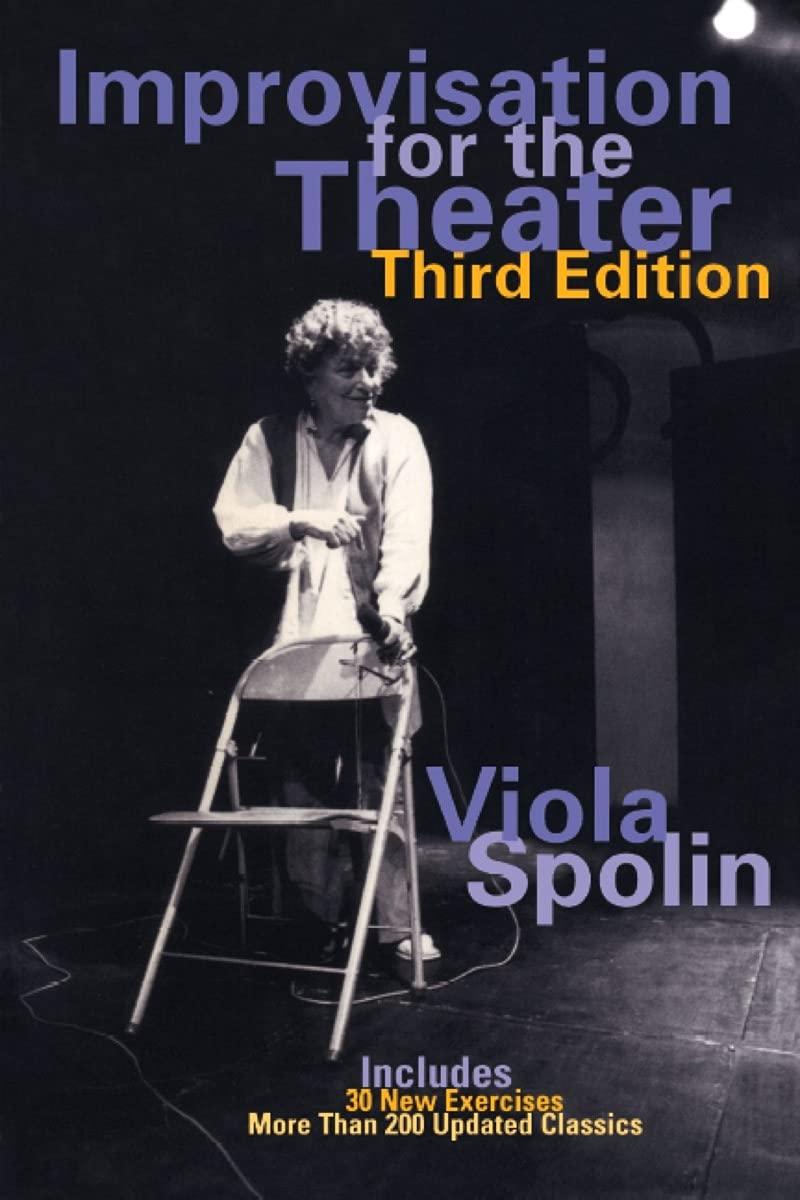
Improvisation for the Theater
A Handbook of Teaching and Directing Techniques
Viola Spolin
Related Exercises
New Object to Talk
New Object to Talk is a warm-up exercise in which participants pick up a random object and use it as a conversation starter, speaking to or about the object as if it has significance, purpose, or a story attached to it. The exercise trains spontaneous verbal commitment and the ability to generate content from minimal external stimulus.
The Pineapple
The Pineapple is an applied exercise in which a randomly named object becomes the shared focal point for a group brainstorm, with participants using the object as a springboard for generating connections, analogies, and ideas across any domain. The exercise trains lateral thinking and the habit of finding unexpected value in arbitrary starting points.
Out of the Box
Out of the Box is a partnered exercise in which one person leads another around the room, pointing to objects, and the other must immediately name each object as anything other than what it actually is. A chair becomes a volcano, a lamp becomes a saxophone. The exercise breaks habitual thinking patterns and trains participants to override the labeling instinct, building the rapid creative association that underlies strong improvisation and innovative thinking.
Name and Motion
Name and Motion is a name-learning exercise in which each participant says their name while simultaneously performing a physical gesture or movement of their choosing. The group then mirrors both the name and the motion back in unison. The pairing of verbal and physical information creates multiple memory anchors, making name retention significantly more reliable than verbal-only introductions.
Introducing Association
Introducing Association is a name-learning exercise that combines self-introduction with word association. Each player introduces themselves by name and adds a word, image, or gesture that they associate with their name. Subsequent players repeat all previous names and associations before adding their own. The exercise simultaneously learns names and warms up the associative thinking required for improvisation, building memory through the concrete links that association provides.
Name the Monster
Name the Monster is a reflective exercise in which participants identify and name the internal critic, fear, or resistance that arises for them in improvisation or creative work. By giving the inner critic a distinct name and persona, the exercise creates psychological distance from self-limiting thought patterns, making them easier to recognize and set aside during performance or rehearsal.
The Lineage
Explore the schools and structures that influenced or evolved from New Object Name and Application.
Improv Yourself (Joseph A. Keefe)
How to Reference This Page
The Improv Archive. (2026). New Object Name and Application. Retrieved September 28, 2026, from https://improvarchive.org/exercises/new-object-name-and-application
The Improv Archive. "New Object Name and Application." The Improv Archive, 2026. https://improvarchive.org/exercises/new-object-name-and-application.
The Improv Archive. "New Object Name and Application." The Improv Archive, 2026, https://improvarchive.org/exercises/new-object-name-and-application. Accessed September 28, 2026.
The Improv Archive is a systemically maintained repository. The archive itself acts as the corporate author.