Pass Yes
Pass Yes is a circle warm-up in which players attempt to say the word "yes" at the exact same moment as a partner. One player turns to a neighbor and both try to speak simultaneously, then the receiving player turns to the next person and repeats the process. The exercise trains listening, eye contact, and the willingness to synchronize with another person rather than lead or follow.
Structure
Setup
Players stand in a circle facing inward.
Progression
One player turns to the person on their right and makes eye contact. Both players attempt to say "yes" at precisely the same instant. Neither player should count down or give a verbal cue. The synchronization comes from reading the other person's body language, breath, and intention.
Once the pair achieves a simultaneous "yes," the receiving player turns to the next person in the circle and repeats the process. The word travels around the circle.
If a pair fails to synchronize, they simply try again without discussion or apology. The emphasis is on connection, not perfection.
Variations
A player may reverse direction at any time by turning back to the person who just passed to them, sending the "yes" the other way around the circle. Once the group is comfortable, the facilitator can replace "yes" with a simultaneous clap (Simulclap), a finger snap (Simulsnap), or a silent clapping gesture.
How to Teach It
Objectives
Pass Yes develops two foundational ensemble skills: reading nonverbal cues and surrendering control. Players cannot succeed by deciding when to speak. They succeed by tuning into their partner's readiness and meeting them in the middle. This makes the exercise a practical introduction to the concept of mutual agreement that drives all collaborative improv work.
How to Explain It
"Turn to the person next to you and try to say 'yes' at the exact same time. No counting, no signals. Just look at each other and find the moment together. When you get it, the next person turns and does the same thing."
Scaffolding
Begin with no time pressure. Let each pair take as long as they need. Once the group has completed a full rotation, encourage them to find the moment faster on the second pass. Speed will come naturally as players learn to trust their instincts.
For groups that struggle, suggest they pay attention to breath rather than facial expression. The inhale before speaking is often the clearest signal.
Common Pitfalls
The most common issue is one player consistently leading while the other waits and follows. This produces a slight delay rather than true simultaneity. Coach both players to take equal responsibility for initiating.
A second issue is players who treat failed attempts as embarrassing. Reframe failure as information. The miss tells both players something about their timing and helps them adjust.
Worth Reading
See all books →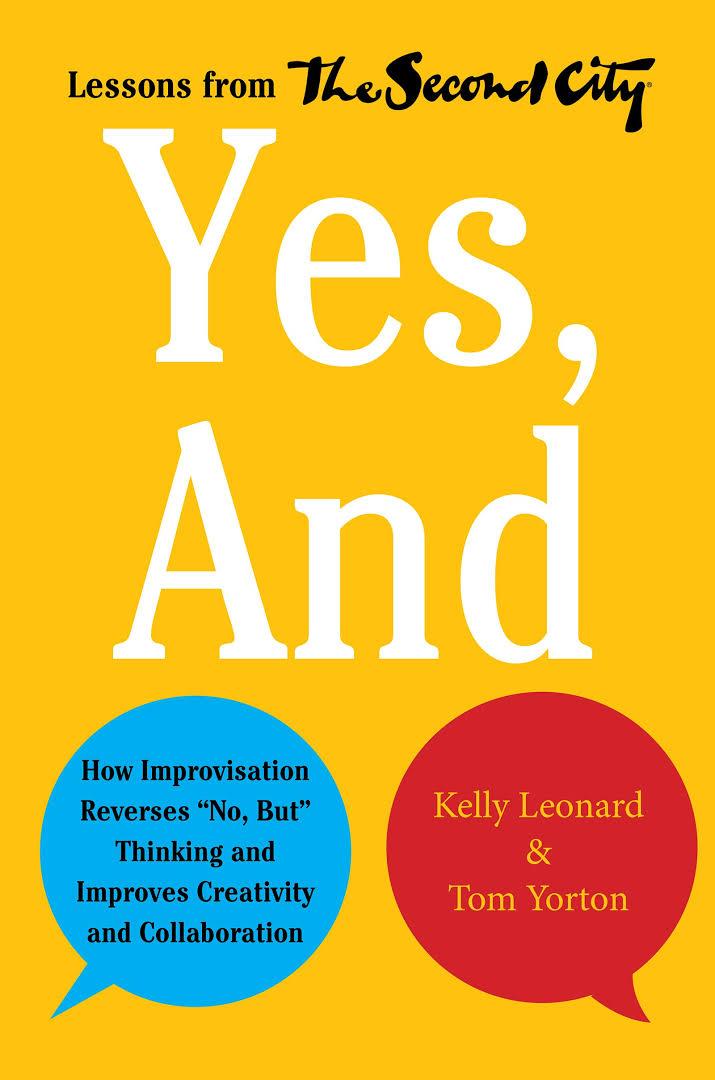
Yes, And
How Improvisation Reverses No, But Thinking and Improves Creativity and Collaboration
Kelly Leonard; Tom Yorton

You Can Teach Improv (Yes, You!)
The Ultimate Guide to Class Planning, Skill Building, and Helping Every Student Leave With a Win
Andrew Berkowitz

The "Yes And" Business Evolution
Improv Skills for Leadership and Life
Tracy Shea-Porter

Getting to Yes And
The Art of Business Improv
Bob Kulhan; Chuck Crisafulli

Playing Along
37 Group Learning Activities Borrowed from Improvisational Theater
Izzy Gesell

The 5 Elements of Improv
How to Take Your Improv to the Next Level
Andrew M. Spragge; Karen L. Eichler
Related Exercises
Pass the Clap
Pass the Clap is a focus exercise in which players pass a synchronized clap around a circle through eye contact alone. Two players coordinate to clap at precisely the same moment, producing a single unified sound that travels from person to person. The exercise trains nonverbal communication, attentiveness, and the ability to match a partner's timing without verbal cues.
Sign Pass
Sign Pass is a circle game in which participants pass focus and energy around the group through agreed-upon physical gestures and vocal sounds. Each gesture directs the flow to a specific person, requiring all players to maintain constant awareness of where the focus is traveling.
Pass Catch
Pass Catch is a circle warm-up in which players pass unique poses and sounds around the group. Each player receives an offer by mirroring the previous player's pose and sound exactly, then immediately invents a completely new pose and sound to send to the next person. The exercise builds comfort with silliness, sharpens the habit of fully accepting offers before generating new ones, and warms up physical expressiveness.
Pass Ball
Pass Ball is a circle warm-up exercise in which players toss a real or imaginary ball around the group while maintaining eye contact with the intended recipient. Additional balls may be introduced to increase complexity, requiring the group to track multiple objects simultaneously. The exercise builds focus, nonverbal communication, and the habit of making clear, directed offers to specific partners rather than throwing ideas into the void.
Yes And
Yes And is the foundational improv exercise and philosophical principle in which performers practice accepting a partner's offer (the "yes") and adding new information that builds on it (the "and"). One player makes a statement; the partner responds by first affirming the reality of that statement and then contributing something new. The exercise trains the most essential skill in improvisation and has become the defining principle of the entire art form.
Status Pass
Status Pass is a circle exercise in which participants pass status levels around the group, physically and verbally shifting between high and low status with each transfer. The exercise builds awareness of how status is communicated through body language, voice, and spatial positioning.
How to Reference This Page
The Improv Archive. (2026). Pass Yes. Retrieved September 28, 2026, from https://improvarchive.org/exercises/pass-yes
The Improv Archive. "Pass Yes." The Improv Archive, 2026. https://improvarchive.org/exercises/pass-yes.
The Improv Archive. "Pass Yes." The Improv Archive, 2026, https://improvarchive.org/exercises/pass-yes. Accessed September 28, 2026.
The Improv Archive is a systemically maintained repository. The archive itself acts as the corporate author.