Play Tag
Play Tag is a physical warm-up exercise that adapts the universal children's game of tag for an improv workshop setting. One player is designated as "it" and pursues others within the defined playing space; tagged players become "it" and must pursue the next player. The exercise builds physical energy, spatial awareness, and the embodied experience of ensemble interdependence before scene work begins.
Structure
Setup
A playing space is defined by boundaries. One player is designated as "it."
Exercise
The player who is "it" attempts to tag another player by touching them. When a tag is made, the tagged player becomes the new "it." The previous "it" then becomes a free player.
Play continues until the facilitator ends the exercise. The exercise has no winner; the objective is sustained physical activity and group spatial engagement rather than elimination.
Variations
Slomo Tag: All movement is in slow motion. The constraint transforms a high-intensity chase into a sustained practice of physical commitment and sustained effort. The variant is gentler for groups with physical limitations and produces a different quality of focus.
Walking Tag: As documented by Telander for creative drama with older adults, the exercise begins as a walking exercise through the space and is extended by adding a single "it" who attempts to tag others at walking pace. This version is accessible for groups who cannot run.
How to Teach It
How to Explain It
"You are it, or you are not. Move through the space. This is not pretend: actually try to tag someone, actually try not to be tagged. Let your body be genuinely present in the game."
Objectives
Play Tag builds physical readiness, spatial awareness, and the embodied experience of genuine ensemble presence. The exercise gets performers out of their analytical minds and into physical responsiveness before scene work begins. A group that has just played tag arrives in scene work more physically present and spatially aware than a group that began rehearsal seated.
Spolin's Ensemble Principle
Spolin's aphorism "You can't play tag alone!" captures the essential transfer from the warm-up to scene work: scene improvisation, like tag, is fundamentally an activity that requires other people. A performer who treats their scene partner as a set piece rather than as the person who makes the scene possible has misunderstood the art form in the same way that a tag player who ignores other players has misunderstood the game.
Adaptation for Different Groups
For groups with physical limitations or in small spaces, the walking variant reduces intensity without eliminating the core ensemble-awareness value. Telander's documentation of Play Tag with older adults demonstrates that the exercise is adaptable across age and physical capacity without losing its training function.
History
Tag is one of the oldest and most widely distributed children's games, found across cultures under various names ("it," "tiggy," "chase"). Its adaptation for drama and actor training warm-ups follows naturally from its physical properties: the game requires continuous movement, spatial awareness, and responsiveness to other players.
Viola Spolin used the concept of tag as a foundational metaphor for ensemble interdependence, arguing that performers must be genuinely present for each other in the same way that tag requires other players to exist: "You can't play tag alone!", as documented by Wasson in Improv Nation. Spolin's workshops at the Compass Players rehearsals and later at Second City used physical games including tag variants as tools for building ensemble awareness.
Telander documents the exercise explicitly in Acting Up as a warm-up for creative drama with older adults: an outgrowth of walking exercises that adds a single "it" pursuing other players.
Worth Reading
See all books →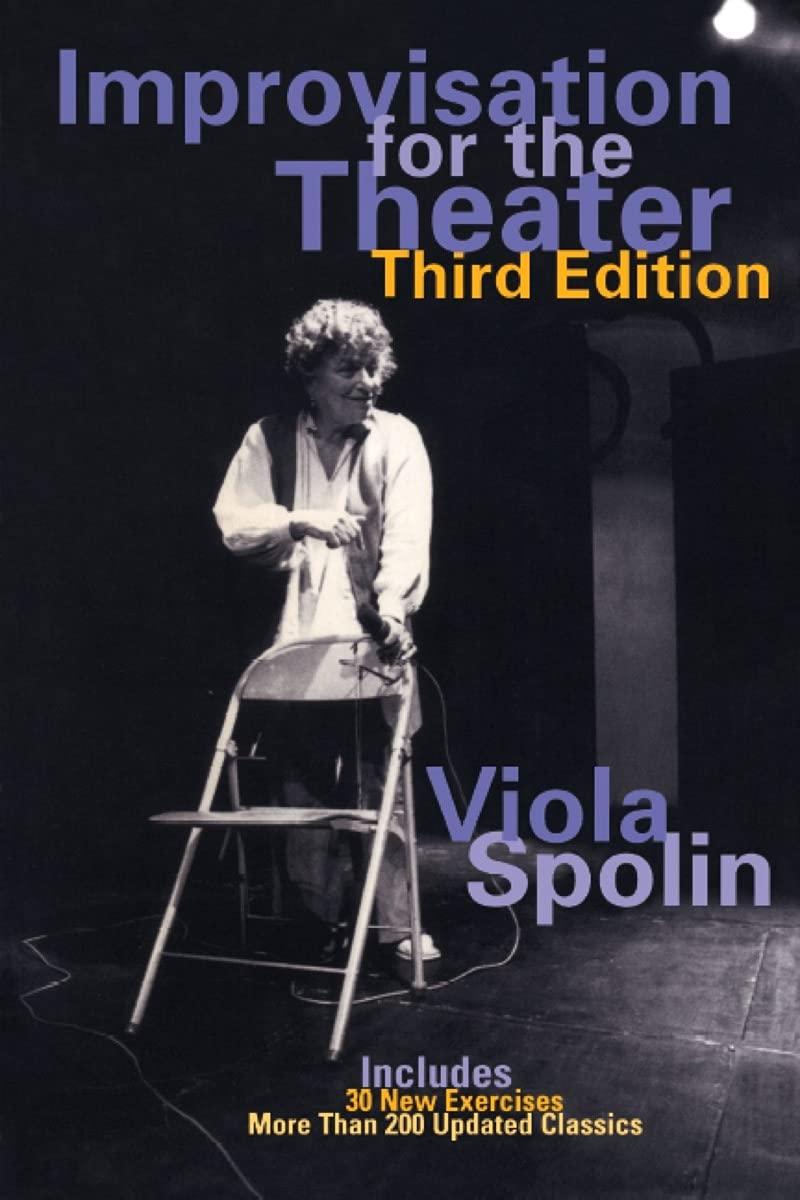
Improvisation for the Theater
A Handbook of Teaching and Directing Techniques
Viola Spolin

Mask Improvisation for Actor Training and Performance
the compelling image
Sears A. Eldredge

Playing Along
37 Group Learning Activities Borrowed from Improvisational Theater
Izzy Gesell

Drama Games and Improvs
Games for the Classroom and Beyond
Justine Jones; Mary Ann Kelley

The Young Actor's Book of Improvisation
Dramatic Situations
Sandra Caruso; Susan Kosoff

Embodied Playwriting
Improv and Acting Exercises for Writing
Hillary Haft Bucs; Charissa Menefee
Related Exercises
Slomo Tag
Slomo Tag is a warm-up exercise in which players play tag entirely in slow motion, pursuing and evading at a fraction of normal speed. The deliberate pace transforms a simple childhood game into an exercise in physical control, spatial awareness, and sustained commitment.
Freeze Tag Round One
Freeze Tag Round One is an applied improv exercise in which one person strikes a physical pose in the center of a circle and freezes. The next person enters and completes the picture -- adding themselves physically to create a scene with the frozen player. The exercise develops spatial reading, physical commitment, and the ability to find a scene within a tableau without verbal negotiation.
Category Tag
Category Tag is a variation on tag in which the player who is "it" calls out a category, and players can only be safe by shouting an item that fits. The cognitive demand of producing answers while running creates a dual challenge of mind and body. The exercise builds quick thinking under physical pressure.
Freeze Tag
Freeze Tag is one of the most widely performed short-form improv games across all traditions. Two players begin a scene; at any point, a player on the sidelines calls "Freeze" and the performers stop in their exact physical positions. The caller taps out one performer, assumes that performer's frozen pose, and initiates an entirely new scene inspired by the inherited body position. The game rewards quick associative thinking, bold physical initiations, and the ability to find new meaning in an existing tableau. Freeze Tag is a staple of short-form shows, improv classes, and workshop warm-ups worldwide.
Play Date
Play Date is an applied improvisation exercise in which participants engage in unstructured play together, rediscovering the value of spontaneity, curiosity, and shared joy. The exercise removes the pressure of productivity and invites adults to reconnect with the generative power of purposeless play.
Barney
Barney is an energy and movement warm-up exercise in which players adopt an exaggerated, lumbering physical character and interact with the group through simple, playful commands. The exercise asks participants to embody a large, slow, friendly creature (often described as a dinosaur or monster) and move through the space with maximum physical commitment and minimum self-consciousness. The inherent silliness of the character lowers inhibitions quickly, making Barney effective as an early warm-up for groups that are new to physical work or uncomfortable with large physical choices. The exercise builds comfort with exaggerated movement, vocal projection, and the willingness to look ridiculous in front of others, all foundational skills for improv performance.
How to Reference This Page
The Improv Archive. (2026). Play Tag. Retrieved September 28, 2026, from https://improvarchive.org/exercises/play-tag
The Improv Archive. "Play Tag." The Improv Archive, 2026. https://improvarchive.org/exercises/play-tag.
The Improv Archive. "Play Tag." The Improv Archive, 2026, https://improvarchive.org/exercises/play-tag. Accessed September 28, 2026.
The Improv Archive is a systemically maintained repository. The archive itself acts as the corporate author.