Play Date
Play Date is an applied improvisation exercise in which participants engage in unstructured play together, rediscovering the value of spontaneity, curiosity, and shared joy. The exercise removes the pressure of productivity and invites adults to reconnect with the generative power of purposeless play.
Structure
Setup
The facilitator creates a space with open floor area and optionally provides simple props: scarves, balls, blocks, or craft materials. No instructions are given about what to create or accomplish. Participants are told only that they have a set amount of time to play together.
Progression
Participants begin moving through the space and interacting with each other and any available materials. There is no assigned task. Some participants may begin building something, others may start a physical game, and others may simply explore the space. The facilitator does not intervene to structure the activity.
As the exercise continues, patterns emerge. Groups form and dissolve. Activities attract participants and then shift into something new. The facilitator may call brief pauses for participants to notice what they are doing and how they feel.
The exercise concludes with a reflection circle in which participants discuss what happened, what surprised them, and what the experience of unstructured play revealed about their habits around productivity and control.
Variations
A guided version provides one constraint such as "everything you do must involve a partner" or "you cannot use words." Another variation pairs experienced players with newcomers, allowing the comfort of one participant to model permission for the other.
How to Teach It
Objectives
Play Date develops comfort with ambiguity, willingness to initiate without a plan, and the capacity to follow emerging ideas rather than impose structure. The exercise demonstrates that productive collaboration often begins not with agenda-setting but with shared exploration.
How to Explain It
"For the next fifteen minutes, your only job is to play. There is no goal, no product, and no right way to do this. See what happens when you let yourself explore without a purpose."
Scaffolding
Many adult participants experience discomfort with the lack of structure. This is expected and valuable. Begin with a brief physical warm-up to lower self-consciousness. If the group freezes entirely, the facilitator can model playful behavior without directing others to follow.
Common Pitfalls
The most common issue is participants who immediately try to organize the group or assign tasks. Gently redirect by reminding them that there is no assignment. The discomfort of not knowing what to do is part of the exercise.
A second pitfall is participants who observe rather than participate. Encourage them to begin with small physical actions rather than waiting for an idea.
In Applied Settings
Play Date is used in corporate retreats, leadership development, and creative team building. The exercise helps teams experience unstructured collaboration, revealing how quickly groups default to hierarchy and task orientation even when no task exists. Facilitators use the debrief to connect the experience to workplace dynamics around innovation, risk-taking, and the value of exploration without immediate deliverables.
Skills Developed
Worth Reading
See all books →
Acting Up!
An Innovative Approach to Creative Drama for Older Adults
Marcie Telander; Flora Quinlan; Karol Verson

The Applied Improvisation Mindset
Tools for Transforming Individuals, Organizations, and Communities
Theresa Robbins Dudeck; Caitlin McClure

Playing Along
37 Group Learning Activities Borrowed from Improvisational Theater
Izzy Gesell
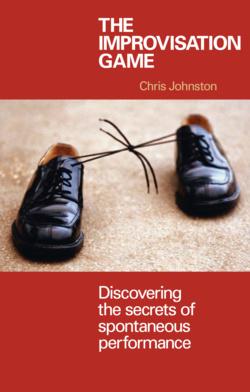
The Improvisation Game
Discovering the Secrets of Spontaneous Performance
Chris Johnston

Theater Games for Rehearsal
Viola Spolin

The Playbook
Improv Games for Performers
William Hall
Related Exercises
Play With
Play With is a scene exercise in which performers are directed to explore and heighten whatever elements have already emerged in a scene rather than driving toward a predetermined outcome. The coaching directive -- "play with it" -- asks players to treat each established detail, character behavior, or game pattern as material to revisit, expand, and discover rather than move past. The exercise trains the improv muscle of finding satisfaction in the present moment of a scene.
Motivation
Motivation is an applied improv exercise that explores the distinction between intrinsic and extrinsic motivation by having participants play characters or engage in tasks driven by different types of motivational fuel. The exercise reveals how motivation quality affects group behavior, creative engagement, and collaborative generosity -- making the difference between performed participation and genuine contribution visible and discussable.
Listening Game
Listening Game is a category of applied improv exercises that use game structures -- rules, constraints, competitive elements, or playful formats -- to make the practice of active listening engaging and its requirements concrete. The Listening Game as a distinct entry encompasses the range of structured listening activities used in applied improv that do not fit a single specific technique but share the common feature of making listening the primary and explicitly tested skill of the activity.
Play Tag
Play Tag is a physical warm-up exercise that adapts the universal children's game of tag for an improv workshop setting. One player is designated as "it" and pursues others within the defined playing space; tagged players become "it" and must pursue the next player. The exercise builds physical energy, spatial awareness, and the embodied experience of ensemble interdependence before scene work begins.
Flatmates Just Do Nothing
Flatmates Just Do Nothing is a scene exercise in which performers play roommates engaged in completely mundane, low-stakes activity -- watching television, eating cereal, folding laundry -- with no dramatic agenda imposed from outside. The exercise trains the ability to be fully present in an ordinary moment, to find authentic relationship texture in ordinary behavior, and to trust that genuine connection and specificity are sufficient engines for scene without the need for conflict or event.
Rituals
Rituals is a scene exercise in which performers explore the behavioral rhythms of repeated, patterned actions: the small ceremonies people perform when making coffee, setting a table, greeting a colleague, or preparing for sleep. By slowing down and physicalizing the precise sequence of a ritual, players develop attention to behavioral specificity and discover that the way a character moves through their routines reveals character, relationship, and emotional state as clearly as explicit dialogue.
The Lineage
Explore the schools and structures that influenced or evolved from Play Date.
The Applied Improvisation Mindset (Dudeck & McClure)
How to Reference This Page
The Improv Archive. (2026). Play Date. Retrieved September 28, 2026, from https://improvarchive.org/exercises/play-date
The Improv Archive. "Play Date." The Improv Archive, 2026. https://improvarchive.org/exercises/play-date.
The Improv Archive. "Play Date." The Improv Archive, 2026, https://improvarchive.org/exercises/play-date. Accessed September 28, 2026.
The Improv Archive is a systemically maintained repository. The archive itself acts as the corporate author.