Question Storming
Question Storming is an applied improvisation exercise from Max Dickins' Improvise! in which participants brainstorm questions rather than answers about a challenge. By reframing the creative process away from solutions and toward inquiry, the exercise reveals hidden assumptions, opens new angles of exploration, and demonstrates that asking the right question is often more valuable than generating quick answers.
Structure
Setup
The facilitator presents a challenge, problem, or topic to the group. This can be a real organizational issue or a creative prompt. Participants are told that they will generate only questions, never answers. The facilitator writes the challenge on a whiteboard or shared document.
Progression
Participants call out questions related to the challenge. Every contribution must be in question form. "Why do customers leave?" is valid. "Customers leave because of poor service" is not. The facilitator captures every question without evaluation.
The exercise runs for a set time, typically five to ten minutes. The goal is volume. Questions can be practical, philosophical, provocative, or absurd. "What if we did the opposite?" "Who benefits from this problem existing?" "What would a five-year-old ask about this?"
After the generation phase, the group reviews the questions and identifies the three to five most provocative or revealing ones. These become the starting points for a focused discussion or brainstorming session. The facilitator highlights how the best questions reframe the problem in ways that open new solution spaces.
Variations
A cascading version takes the best question from round one and uses it as the challenge for a second round of question storming. A category version organizes questions into types: assumption-challenging, perspective-shifting, scope-changing. A solo version has individuals journal questions before sharing with the group.
How to Teach It
Objectives
Question Storming builds the habit of inquiry before action, challenges the impulse to jump immediately to solutions, and reveals the assumptions embedded in how problems are framed. The exercise demonstrates that creative breakthroughs often begin with a better question rather than a better answer.
How to Explain It
"We are going to brainstorm, but instead of generating answers, we are only generating questions. No solutions allowed. Just questions. As many as possible in five minutes."
Scaffolding
Participants accustomed to solution-oriented thinking will struggle with the constraint at first. The facilitator should model diverse question types early: factual questions, provocative questions, "what if" questions, and questions that challenge the premise itself.
Common Pitfalls
The most common issue is participants who smuggle answers into question form: "Shouldn't we just hire more people?" is an answer disguised as a question. Coach the group toward genuine inquiry: "What would change if we had twice the staff?" opens exploration rather than closing it.
A second pitfall is stopping at surface-level questions. Push the group toward questions that challenge fundamental assumptions about the problem. The most valuable questions often feel uncomfortable because they expose what the group has been taking for granted.
In Applied Settings
Question Storming is used in innovation workshops, strategic planning sessions, and design thinking processes. The exercise helps teams break out of habitual thinking patterns and discover new approaches to persistent challenges. Facilitators use it to demonstrate that the quality of a team's questions determines the quality of their solutions, making it a foundational tool for creative problem-solving in organizational settings.
Skills Developed
Worth Reading
See all books →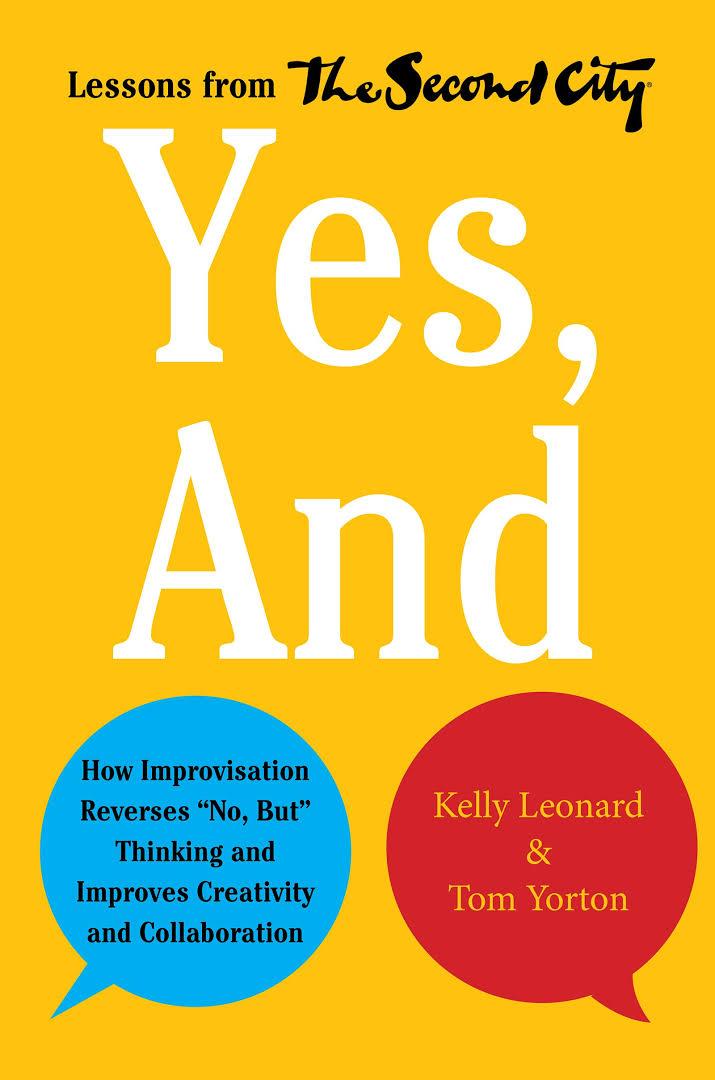
Yes, And
How Improvisation Reverses No, But Thinking and Improves Creativity and Collaboration
Kelly Leonard; Tom Yorton

The Applied Improvisation Mindset
Tools for Transforming Individuals, Organizations, and Communities
Theresa Robbins Dudeck; Caitlin McClure

Brain Disruption
Radical Innovation in Business Through Improv
Bruce Montgomery; Gail Montgomery
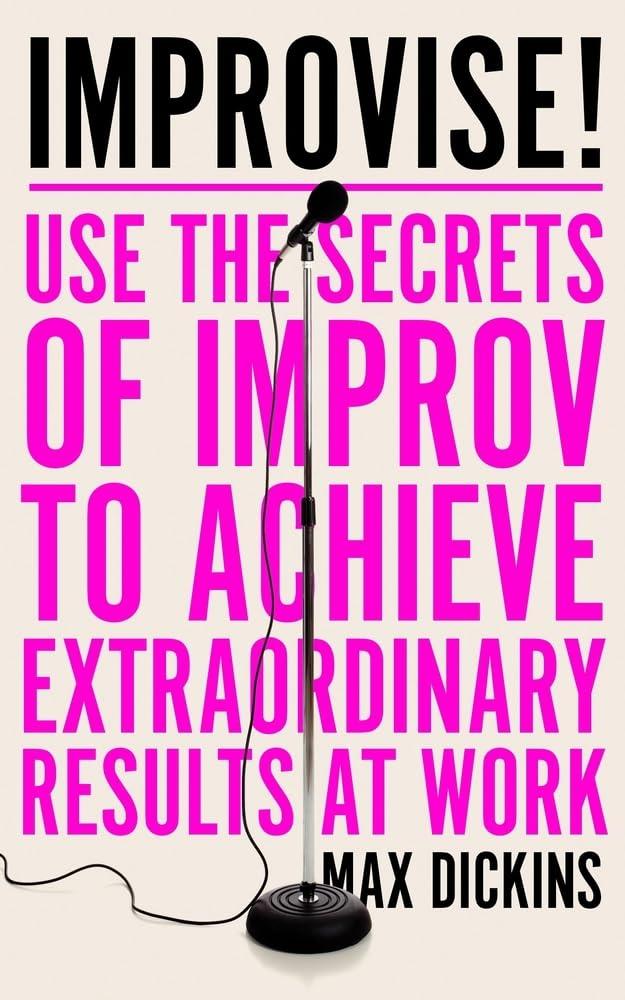
Improvise!
Use the Secrets of Improv to Achieve Extraordinary Results at Work
Max Dickins

The Improv Mindset
How to Make Improvisation Your Superpower for Success
Keith Saltojanes

The Art of Making Sh!t Up
Using the Principles of Improv to Become an Unstoppable Powerhouse
Norm LaViolette; Bob Melley
Related Exercises
Problem Solving
Problem Solving is an applied improvisation exercise from Business Improv in which teams tackle challenges using "Yes, And" principles and other improvisational techniques. Rather than following traditional analytical frameworks, participants generate solutions through rapid ideation, collaborative building, and the willingness to explore unconventional approaches.
Silo-Busting Exercise
Silo-Busting Exercise is an applied improvisation exercise in which a team facing a real challenge invites people from a completely separate department to join their brainstorming session. The outside participants bring fresh perspectives, unfamiliar frameworks, and no institutional assumptions, breaking the echo-chamber dynamic that limits innovation within isolated teams.
Critical Thinking
Critical Thinking is a category of applied improvisation exercises that practice the suspension of assumptions and the discipline of questioning answers rather than answering questions. The exercises use improvisational scenarios to develop analytical thinking within a live, unscripted context: participants must evaluate information, identify hidden assumptions, consider alternative interpretations, and resist the impulse to accept the first plausible explanation that presents itself.
Red Teaming
Red Teaming assigns specific team members the role of critics and challengers during a meeting or brainstorming session. By making the adversarial role explicit and sanctioned, the exercise removes the social risk of disagreement and surfaces objections that would otherwise remain unspoken.
Creative Solution Building
Creative Solution Building is an applied improvisation exercise in which participants use improvisational principles -- acceptance, building, and collaborative emergence -- to develop solutions to presented problems or scenarios. Rather than analyzing the problem and generating solutions individually, participants build solutions incrementally through a structured ensemble process, with each contribution extending and complying with what has already been offered.
Turbocharged Brainstorm
Turbocharged Brainstorm is an applied exercise in which participants generate ideas at maximum speed for a compressed time period, prioritizing volume and velocity over evaluation. The exercise uses time pressure and competition as catalysts to bypass the inner critic and access the full range of a group's generative capacity.
The Lineage
Explore the schools and structures that influenced or evolved from Question Storming.
Improvise! (Max Dickins)
How to Reference This Page
The Improv Archive. (2026). Question Storming. Retrieved September 28, 2026, from https://improvarchive.org/exercises/question-storming
The Improv Archive. "Question Storming." The Improv Archive, 2026. https://improvarchive.org/exercises/question-storming.
The Improv Archive. "Question Storming." The Improv Archive, 2026, https://improvarchive.org/exercises/question-storming. Accessed September 28, 2026.
The Improv Archive is a systemically maintained repository. The archive itself acts as the corporate author.