The Power of Questions
The Power of Questions is an applied exercise in which participants practice formulating genuinely open, curiosity-driven questions and experience how the quality of a question shapes the depth and direction of a conversation. The exercise trains the habit of asking questions that open rather than close, explore rather than confirm.
Structure
The Closed Question
Participants pair up. One person asks a series of closed questions about a topic the partner knows well: questions with yes/no or brief answers. Both observe the quality and depth of information that results.
The Open Question
Using the same topic, the questioner switches to open questions: questions beginning with how, what, tell me more, or describe. The same topic produces a different quality of conversation.
The Follow-Through
Participants practice following a single question into a depth of three: asking a follow-up question based on the answer, then a follow-up on that answer. The exercise demonstrates how sustained curiosity produces more useful information than a survey of surface questions.
The Debrief
Partners discuss what they noticed about the difference in conversation quality and what questions they are in the habit of asking in their professional and personal lives.
How to Teach It
Objectives
The Power of Questions develops the questioning habits that distinguish good listening from interrogation and genuine curiosity from information extraction. Participants discover that most habitual questions are either closed or rhetorical.
Facilitation Notes
The three-deep follow-through is the most powerful element of the exercise. It demonstrates that a single good question, pursued with genuine curiosity, produces more value than a dozen surface-level questions.
Common Pitfalls
Participants often embed answers in their questions: "Don't you think that...?" or "Isn't it true that...?" These are statements dressed as questions. Coach participants to notice when their questions are looking for confirmation rather than information.
In Applied Settings
Coaching and Mentoring Programs
The Power of Questions is used to develop the inquiry skills that distinguish effective coaches from advisors. The exercise builds the specific habit of following curiosity rather than agenda.
Sales and Client Development
Salespeople and consultants practice questions that uncover client needs and underlying motivations rather than surface preferences, discovering that deep questions generate the insight that standard needs-assessments miss.
Management and Leadership Training
Managers develop the questioning habits that build employee confidence and surface actionable information rather than the closed questions that confirm what the manager already believes.
Skills Developed
Worth Reading
See all books →
Business Improv
Experiential Learning Exercises to Train Employees
Val Gee

The "Yes And" Business Evolution
Improv Skills for Leadership and Life
Tracy Shea-Porter

Getting to Yes And
The Art of Business Improv
Bob Kulhan; Chuck Crisafulli

When I Say This, Do You Mean That?
Enhancing Communication
Cherie Kerr; Julia Sweeney
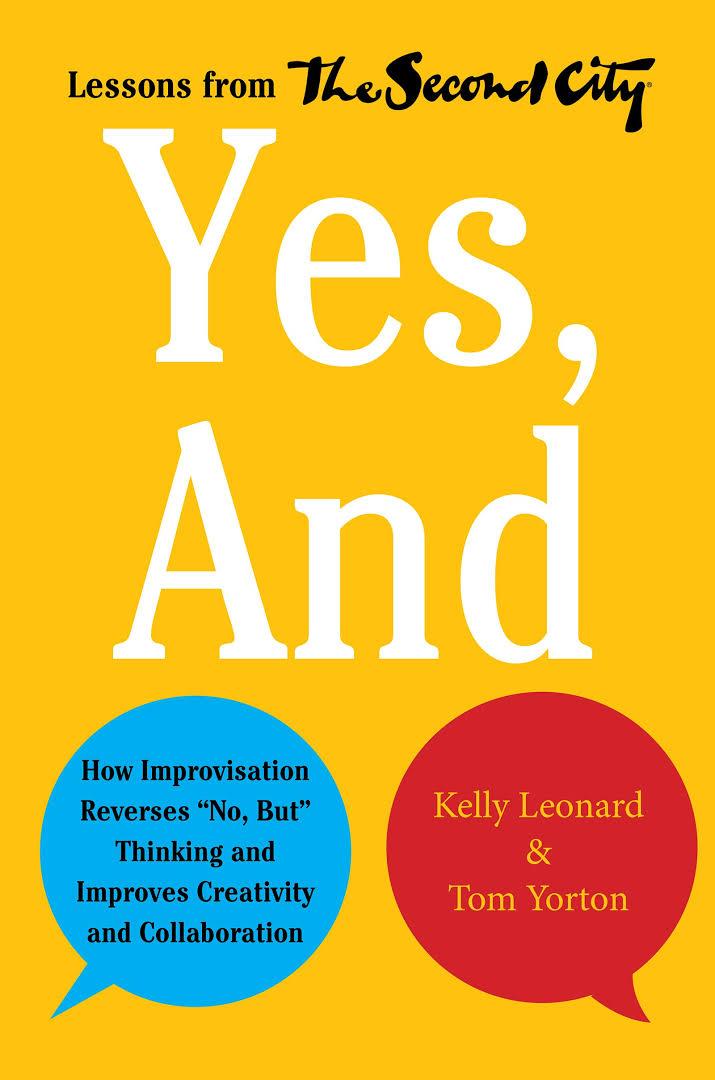
Yes, And
How Improvisation Reverses No, But Thinking and Improves Creativity and Collaboration
Kelly Leonard; Tom Yorton

The Improv Mindset
How to Make Improvisation Your Superpower for Success
Keith Saltojanes
Related Exercises
The Power of No
The Power of No is an applied exercise in which participants practice delivering clear, direct refusals without apology, justification, or softening. The exercise builds the skill of setting boundaries with conviction, addressing the tendency to over-explain or hedge that makes no sound like a negotiation rather than a decision.
The Cycle of Deep Yes And
The Cycle of Deep Yes And is an applied exercise in which participants practice full acceptance and active building in paired conversation, moving through multiple rounds that progressively deepen their commitment to the yes-and principle. The exercise trains the habit of genuine affirmation before contribution.
Question Storming
Question Storming is an applied improvisation exercise from Max Dickins' Improvise! in which participants brainstorm questions rather than answers about a challenge. By reframing the creative process away from solutions and toward inquiry, the exercise reveals hidden assumptions, opens new angles of exploration, and demonstrates that asking the right question is often more valuable than generating quick answers.
What?
What? is an exercise in which performers respond to each offer with genuine curiosity, exploring rather than accepting at face value. The exercise teaches the difference between blocking and curious investigation, building the habit of digging deeper into a partner's offers.
Performing Curiosity
Performing Curiosity is an applied improvisation exercise in which participants practice embodying genuine curiosity through three specific conversational directions: listening for what is new, asking open questions, and focusing attention outward. The core insight is that performing curiosity, even when it feels like pretending, generates genuine curiosity. The exercise develops listening, empathy, and the ability to shift attention away from internal judgment and toward a conversation partner.
Fish Sticks
Fish Sticks is a circle exercise in which players ask simple "Do you ... ?" questions while everyone tracks their own answers by lowering fingers. The round quickly reveals shared experiences, differences inside the group, and how honestly participants are listening to the question being asked.
The Lineage
Explore the schools and structures that influenced or evolved from The Power of Questions.
Business Improv (Gee & Gee)
How to Reference This Page
The Improv Archive. (2026). The Power of Questions. Retrieved October 14, 2026, from https://improvarchive.org/exercises/the-power-of-questions
The Improv Archive. "The Power of Questions." The Improv Archive, 2026. https://improvarchive.org/exercises/the-power-of-questions.
The Improv Archive. "The Power of Questions." The Improv Archive, 2026, https://improvarchive.org/exercises/the-power-of-questions. Accessed October 14, 2026.
The Improv Archive is a systemically maintained repository. The archive itself acts as the corporate author.