Rewind and Unblock
Rewind and Unblock is a coaching exercise in which a facilitator stops a scene at a point where it has stalled or gone off track, rewinds to a specific moment, and asks the performers to make a different choice. The exercise teaches performers to recognize blocking patterns and practice alternative responses in real time.
Structure
Setup
Two or more performers begin a scene. A facilitator or director watches from the side with the authority to stop the scene at any moment. The performers play normally, following their instincts.
Progression
When the facilitator identifies a moment where the scene has stalled, where a performer has blocked an offer, or where a more productive choice was available, they call "Rewind." The performers back up to the identified moment and the facilitator briefly names what happened: "You just denied that you were married. Replay from that line and accept the offer instead."
The performers resume from the identified moment, making a different choice. The scene continues from the new trajectory. The facilitator may stop the scene multiple times, rewinding to different moments and exploring how alternative choices produce different outcomes.
The exercise makes the cause-and-effect relationship between scene choices visible. Performers and observers see directly how a single blocked offer can derail an entire scene, and how accepting that same offer opens new possibilities.
Variations
A performer-driven version lets the performers themselves call rewind when they recognize they have made an unproductive choice. A multiple-path version rewinds to the same moment several times, exploring three or four different responses to the same offer. A group feedback version pauses the scene and asks the watching ensemble what alternative choices they see before the performers replay.
How to Teach It
Objectives
Rewind and Unblock develops self-awareness about blocking habits, the ability to recognize productive versus unproductive scene choices, and the skill of adjusting in the moment. It makes the abstract concept of "accepting offers" concrete and demonstrable.
How to Explain It
"Play a scene. I will watch. When I see a moment where the scene could go in a better direction, I will call rewind. You go back to that moment and try a different choice. We will see what happens."
Scaffolding
Begin by rewinding to obvious blocks: outright denials, negations of established reality, or refusals of emotional offers. Progress to subtler blocks: deflecting with humor, changing the subject, or failing to respond to an emotional shift. Advanced work addresses pattern blocks, where a performer habitually avoids certain types of offers.
Common Pitfalls
The facilitator must maintain a supportive tone. Rewinding can feel like criticism if not framed as exploration. Use language like "Let us try something different here" rather than "That was wrong." A second pitfall is rewinding too frequently, which prevents any scene from developing momentum. Allow scenes to run long enough that the block's consequences become visible before rewinding.
Worth Reading
See all books →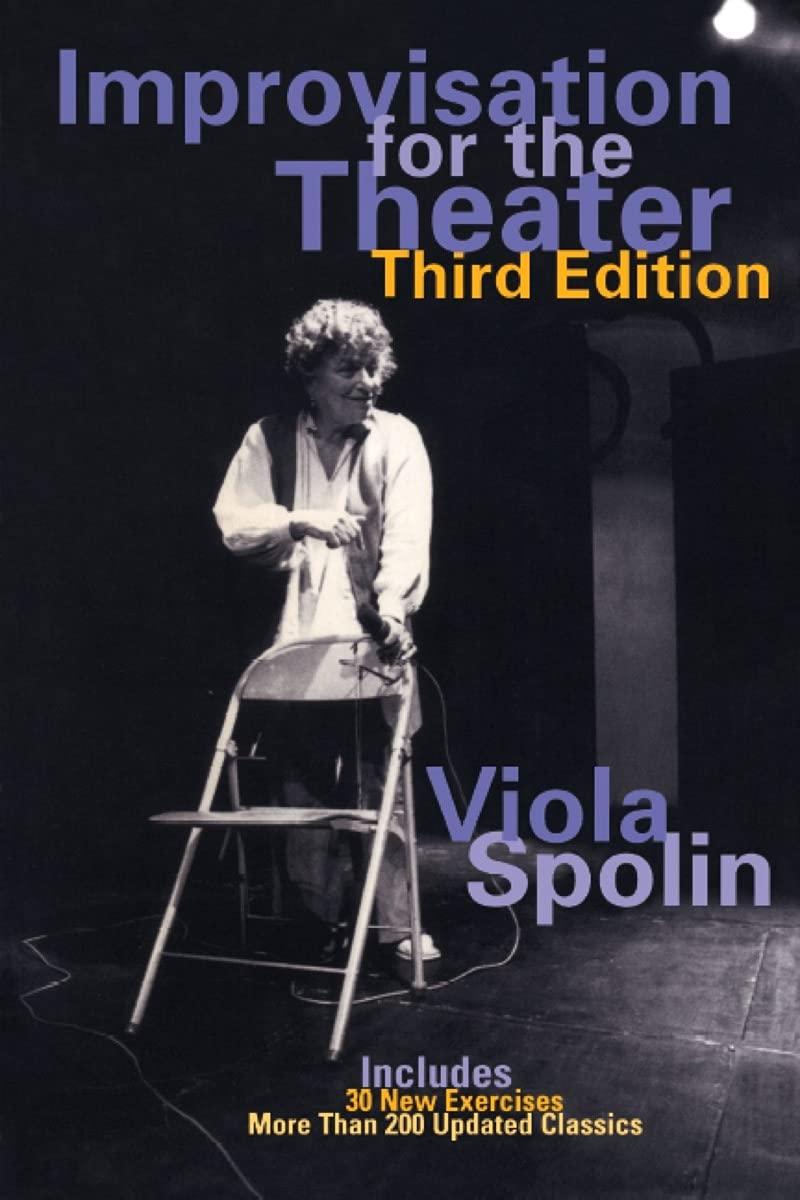
Improvisation for the Theater
A Handbook of Teaching and Directing Techniques
Viola Spolin

Directing Improv
Asaf Ronen
Theater Games for Rehearsal
Viola Spolin

Improvising Now
A Practical Guide to Modern Improv
Rob Norman

Improvisation Starters
A Collection of 900 Improvisation Situations for the Theater
Philip Bernardi

The 5 Elements of Improv
How to Take Your Improv to the Next Level
Andrew M. Spragge; Karen L. Eichler
Related Exercises
Blocked Vs. Unblocked Scenes
Blocked Vs. Unblocked Scenes is a comparative exercise in which performers play the same scene twice: once using denial and blocking, and once fully accepting every offer. The side-by-side contrast vividly demonstrates how blocking kills momentum while acceptance generates possibilities. It is one of the most effective tools for teaching the principle of agreement.
Move On
Move On is a scene exercise in which a facilitator calls out the directive to prompt performers to abandon their current scene beat and transition immediately to a new choice. The call forces performers to leave comfortable territory and advance the scene rather than circling the same material. The exercise builds editorial instincts about when a moment has been fully explored and trains the habit of moving forward rather than sideways. It develops the internal sense of pacing that distinguishes dynamic scene work from repetitive scene work.
Scene Repeater
Scene Repeater is an exercise in which performers replay the same scene multiple times with different constraints, adjustments, or stylistic shifts each round. The repetition reveals how changing a single variable transforms the entire scene, developing versatility and deepening understanding of scene mechanics.
Pivot
Pivot is a scene exercise in which performers identify the moment when a scene needs to shift direction and make a deliberate choice to change it. The facilitator may call "Pivot" to signal the moment, or players practice identifying pivot points themselves. The exercise develops editorial awareness and trains the skill of knowing when a scene needs to evolve rather than repeat.
Take That Back
Take That Back is an exercise in which players improvise a scene and when the leader rings a bell, the speaking actor must replace their last line with something different. The exercise trains performers to generate multiple possibilities for any moment and demonstrates that the first idea is rarely the best.
Lets Not
Let's Not is a scene-work exercise in which performers practice recognizing and resisting the impulsive move -- the immediate next step that seems obvious after an offer is made -- and instead exploring what already exists in the scene before building further. The exercise counters the improv tendency to pile offer onto offer and trains performers to dwell productively in established scene reality.
How to Reference This Page
The Improv Archive. (2026). Rewind and Unblock. Retrieved October 14, 2026, from https://improvarchive.org/exercises/rewind-and-unblock
The Improv Archive. "Rewind and Unblock." The Improv Archive, 2026. https://improvarchive.org/exercises/rewind-and-unblock.
The Improv Archive. "Rewind and Unblock." The Improv Archive, 2026, https://improvarchive.org/exercises/rewind-and-unblock. Accessed October 14, 2026.
The Improv Archive is a systemically maintained repository. The archive itself acts as the corporate author.