Move On
Move On is a scene exercise in which a facilitator calls out the directive to prompt performers to abandon their current scene beat and transition immediately to a new choice. The call forces performers to leave comfortable territory and advance the scene rather than circling the same material. The exercise builds editorial instincts about when a moment has been fully explored and trains the habit of moving forward rather than sideways. It develops the internal sense of pacing that distinguishes dynamic scene work from repetitive scene work.
Structure
Two or more performers begin a scene based on an audience suggestion or a facilitator's prompt. The performers play the scene normally, establishing characters, a relationship, and a situation.
At any point during the scene, the facilitator calls the directive. The performers must immediately shift to a new beat: a new topic of conversation, a new activity, a new emotional register, or a new location within the scene. The shift must be instantaneous. Performers cannot finish their current thought, wrap up the current moment, or transition gracefully. The call demands a hard cut.
The facilitator calls the directive whenever the scene circles, stalls, or stays in one emotional gear for too long. The call also comes when a scene beat has reached its peak and continuing would diminish it. The facilitator's timing teaches the performers what "too long" feels like at a physical, instinctive level.
As the exercise progresses, the performers internalize the facilitator's editorial instinct and begin moving on without being prompted. The facilitator reduces the frequency of calls as the performers develop their own sense of pacing.
Variations include performer-directed versions (one performer in the scene has the power to call the directive on the other), audience-directed versions (the audience calls the directive), and timed versions (the directive comes at fixed intervals regardless of the scene's state, forcing performers to work within compressed beats).
How to Teach It
How to Explain It
"You are in a scene. When you feel yourself returning to the same ground, choose to move forward instead. Something new has happened. Accept it. Keep going."
The exercise addresses one of the most common problems in improvised scenes: circling. Performers who find a comfortable dynamic, a reliable laugh, or a safe emotional register tend to stay there long past the point of maximum impact. The directive breaks this pattern by making forward motion mandatory.
Coach performers to treat the directive as a gift rather than an interruption. The call does not mean the current beat was bad; it means the scene is ready for the next discovery. Reframing the directive as opportunity rather than criticism helps performers respond with energy rather than deflation.
The exercise teaches the difference between horizontal and vertical scene movement. Horizontal movement adds new information at the same emotional level. Vertical movement deepens the scene by moving to a new emotional level. Coach performers to respond to the directive with vertical shifts rather than horizontal ones: change the emotional stakes, not just the topic.
The exercise develops the internal clock that experienced improvisers rely on. After enough repetitions, performers begin to feel when a beat has peaked and move on without external prompting. This instinct is one of the markers of performance maturity.
Worth Reading
See all books →
Business Improv
Experiential Learning Exercises to Train Employees
Val Gee

Theatrical Improvisation
Short Form, Long Form, and Sketch-Based Improv
Jeanne Leep
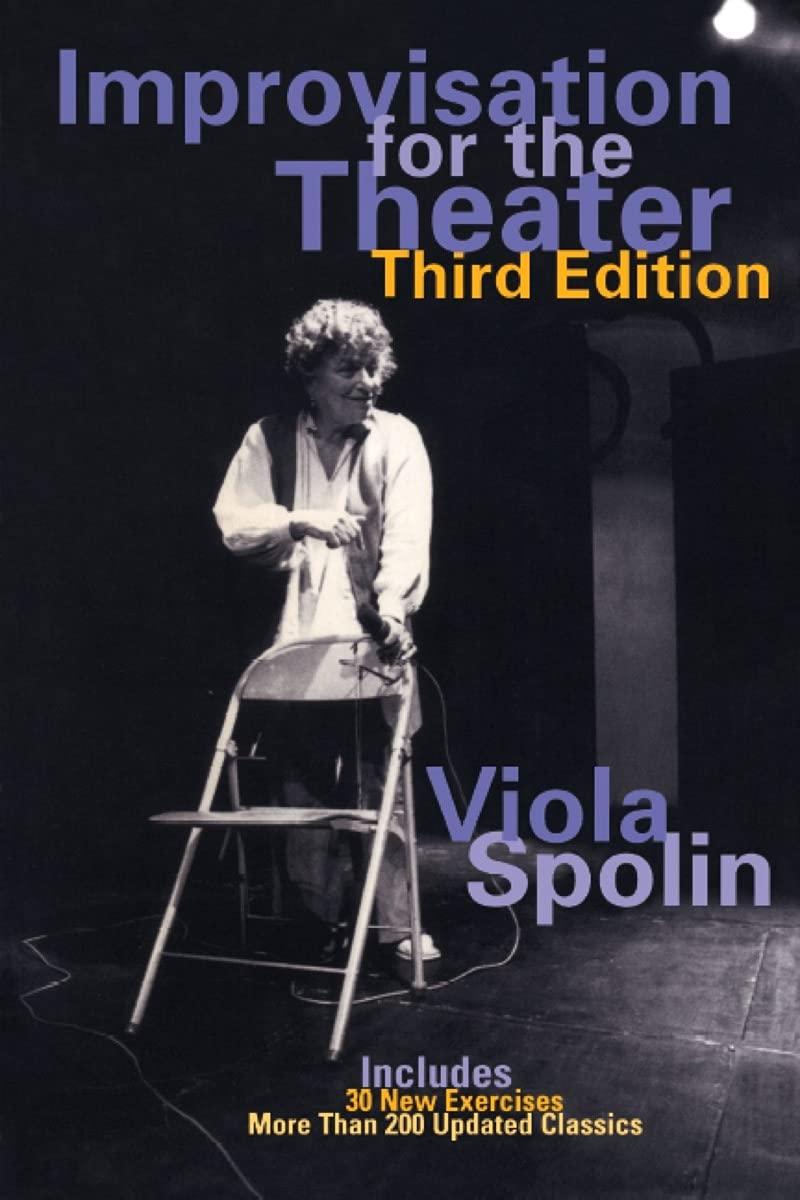
Improvisation for the Theater
A Handbook of Teaching and Directing Techniques
Viola Spolin

Mask Improvisation for Actor Training and Performance
the compelling image
Sears A. Eldredge

Acting Through Improv
Improv Through Theatresports
Lynda Belt; Rebecca Stockley

The Upright Citizens Brigade Comedy Improvisation Manual
Matt Besser; Ian Roberts; Matt Walsh
Related Exercises
Rewind and Unblock
Rewind and Unblock is a coaching exercise in which a facilitator stops a scene at a point where it has stalled or gone off track, rewinds to a specific moment, and asks the performers to make a different choice. The exercise teaches performers to recognize blocking patterns and practice alternative responses in real time.
Pivot
Pivot is a scene exercise in which performers identify the moment when a scene needs to shift direction and make a deliberate choice to change it. The facilitator may call "Pivot" to signal the moment, or players practice identifying pivot points themselves. The exercise develops editorial awareness and trains the skill of knowing when a scene needs to evolve rather than repeat.
Simple Continuation
Simple Continuation is a scene exercise in which a facilitator starts a scene with a basic premise and the performers continue from that point, practicing the skill of receiving an offer and building on it without the pressure of initiating from scratch.
Move a Player
Move a Player is an applied improv directing and scene-work exercise in which performers practice physically repositioning a scene partner -- with clear intention and the partner's full agreement -- to alter the scene's staging, visual composition, or relational dynamic. The exercise trains the awareness that physical position in space communicates meaning, and develops the confidence to actively shape a scene's spatial reality rather than accepting the first staging that emerges.
Leave for a Reason
Leave for a Reason is a scene-work exercise in which performers practice exiting a scene with a clear, character-driven motivation rather than leaving arbitrarily, being edited out by a director, or simply running out of things to say. The exercise trains performers to give every exit an active reason grounded in the world of the scene -- a destination, an impulse, an emotional necessity -- rather than treating exits as neutral or mechanical transitions.
Location, Relationship, Escalate, End
Location, Relationship, Escalate, End is a scene construction exercise in which performers build a scene through four discrete, progressive stages: first establishing a specific physical location, then establishing the specific relationship between the characters, then escalating the scene through increasing stakes or emotional intensity, and finally bringing it to a definitive end. The exercise provides a structured scaffold for scene construction and trains performers to execute each element with commitment and specificity before moving to the next.
How to Reference This Page
The Improv Archive. (2026). Move On. Retrieved September 28, 2026, from https://improvarchive.org/exercises/move-on
The Improv Archive. "Move On." The Improv Archive, 2026. https://improvarchive.org/exercises/move-on.
The Improv Archive. "Move On." The Improv Archive, 2026, https://improvarchive.org/exercises/move-on. Accessed September 28, 2026.
The Improv Archive is a systemically maintained repository. The archive itself acts as the corporate author.