Sound and Motion
Sound and Motion is a circle exercise in which participants pass abstract sounds with accompanying movements around a circle or across the space, building spontaneity, physical expressiveness, and the willingness to take creative risks without planning or rehearsing.
Structure
Setup
Participants stand in a circle. The facilitator explains the format: one person will make a sound while performing a physical movement, then pass it to the next person.
Basic Pass
The first participant creates a spontaneous sound and movement combination. The sound can be anything: a vowel, a consonant cluster, a rhythm, a noise. The movement can be a gesture, a full-body action, a facial expression, or any physical expression. The combination should be created in the moment rather than planned.
The next person in the circle receives the sound and movement, mirrors it briefly to acknowledge receipt, then transforms it into their own new sound and movement before passing to the next person. This cycle of receive, acknowledge, and transform continues around the circle.
Cross-Circle Variation
Instead of passing sequentially around the circle, participants may send their sound and movement across the circle to a specific person by making eye contact first. This variation adds the element of focus and connection while maintaining the spontaneous creation.
Escalation
The facilitator may encourage larger movements, louder sounds, or faster passing. The exercise can evolve from cautious, small gestures to full-bodied, room-filling expressions. Some versions allow two or more sounds and movements to travel simultaneously, requiring participants to track multiple streams.
Group Unison
In some variations, the entire group mirrors each person's sound and movement before the next participant transforms it. This adds a collective element and gives each contribution a moment of group validation.
How to Teach It
Objectives
Sound and Motion develops spontaneity, physical expressiveness, creative risk-taking, and the ability to respond to abstract stimuli without judgment. It trains performers to create without pre-planning and to accept whatever their impulse produces.
How to Explain It
"Make a sound. Make a movement at the same time. Pass it to the next person. They receive it, then change it into something new and pass that on. Do not plan. Do not think. Just make a sound and move your body."
Scaffolding
The facilitator should go first, modeling a sound and movement that is clearly unplanned and imperfect. This establishes the norm that the exercise is about spontaneity, not performance quality. Begin with sequential passing around the circle before introducing cross-circle options.
Common Pitfalls
The most common pitfall is participants who plan their sound and movement while waiting for their turn. Coach them to wait until the moment arrives and respond with whatever comes out. Another issue is participants who make very small, quiet offerings out of self-consciousness. Encourage bigger, bolder choices by celebrating them when they occur.
In Applied Settings
Team Building
Sound and Motion creates a shared experience of creative vulnerability. Participants who make silly sounds and big movements together develop a comfort with risk-taking that transfers to other collaborative contexts. The exercise is particularly effective at breaking down formality in teams that are overly cautious.
Creativity Workshops
The exercise demonstrates that creativity begins with impulse rather than deliberation. The constraint of combining sound and movement simultaneously bypasses the analytical mind and produces genuinely spontaneous creation. Debrief this principle for application to ideation processes.
Facilitation Notes
In applied settings, some participants will resist making "silly" sounds. Frame the exercise as a practice in responding to impulse rather than performing. Emphasize that the quality of the sound and movement does not matter. What matters is the willingness to create without planning.
Skills Developed
Worth Reading
See all books →
Improv Yourself
Business Spontaneity at the Speed of Thought
Joseph A. Keefe

The Upright Citizens Brigade Comedy Improvisation Manual
Matt Besser; Ian Roberts; Matt Walsh

Applied Improvisation
Leading, Collaborating, and Creating Beyond the Theatre
Theresa Robbins Dudeck; Caitlin McClure

Action Theater
The Improvisation of Presence
Ruth Zaporah

Playing Along
37 Group Learning Activities Borrowed from Improvisational Theater
Izzy Gesell
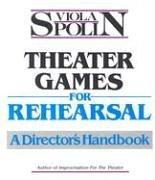
Theater Games for Rehearsal
Viola Spolin
Related Exercises
Sound Follow
Sound Follow is an exercise in which one player creates a continuous vocal sound and the rest of the group follows that sound with their bodies, allowing the sound to dictate their movement, tempo, and energy. The exercise trains the connection between auditory input and physical response.
Flow Circle
Flow Circle is a movement and listening exercise related to Gesture Circle, in which each player takes up the movement from where the previous player's gesture ended and creates a new movement that flows from that ending point. Rather than simply repeating or exaggerating what was received, the player begins from the physical endpoint of the previous gesture and invents a new movement that starts there. The exercise develops listening through the body, continuity of physical offer, and the creative skill of transformation rather than repetition.
Name and Motion
Name and Motion is a name-learning exercise in which each participant says their name while simultaneously performing a physical gesture or movement of their choosing. The group then mirrors both the name and the motion back in unison. The pairing of verbal and physical information creates multiple memory anchors, making name retention significantly more reliable than verbal-only introductions.
Gesture Circle
Gesture Circle is a movement and listening exercise in which each player in a circle creates an abstract, personally meaningful gesture, teaches it to the player beside them, and receives a gesture from the other side. The exercise passes gestures around the circle so that each gesture travels from person to person, being received, held, and handed on. The exercise develops listening through the body, the capacity for genuine repetition rather than imitation, and a quality of full physical attention to another person's movement.
Pass the Clap
Pass the Clap is a focus exercise in which players pass a synchronized clap around a circle through eye contact alone. Two players coordinate to clap at precisely the same moment, producing a single unified sound that travels from person to person. The exercise trains nonverbal communication, attentiveness, and the ability to match a partner's timing without verbal cues.
Rhythm Machine Part One: The Blank Machine
The Blank Machine is the first part of a three-part rhythm machine sequence in which participants build a group 'machine' by adding repeating sounds and movements one at a time. Each person contributes a distinct mechanical component, creating an interlocking system of rhythm, sound, and motion that represents the ensemble working as a unified whole.
The Lineage
Explore the schools and structures that influenced or evolved from Sound and Motion.
Applied Improvisation (Dudeck & McClure)
How to Reference This Page
The Improv Archive. (2026). Sound and Motion. Retrieved September 28, 2026, from https://improvarchive.org/exercises/sound-and-motion
The Improv Archive. "Sound and Motion." The Improv Archive, 2026. https://improvarchive.org/exercises/sound-and-motion.
The Improv Archive. "Sound and Motion." The Improv Archive, 2026, https://improvarchive.org/exercises/sound-and-motion. Accessed September 28, 2026.
The Improv Archive is a systemically maintained repository. The archive itself acts as the corporate author.