Standing on the Line
Standing on the Line is a scene exercise in which performers stand on a literal or imagined line on the stage floor, using their position on the line to establish spatial relationships, status dynamics, and physical constraints that shape the scene's development.
Structure
Setup
The facilitator marks or designates a line across the stage, either with tape or by indicating an imaginary boundary. Two or more performers take positions on or near the line. The line may represent a physical boundary (a fence, a counter, a border), a social boundary (a class divide, a relationship threshold), or simply a spatial constraint that limits movement.
Scene Work
Performers play a scene while maintaining awareness of the line and their relationship to it. Their position relative to the line carries meaning. Standing on the line might mean occupying a threshold or boundary. Moving away from it might represent retreat or departure. Crossing it might signal a significant shift in the scene's dynamics.
Physical Constraint
The line creates a physical limitation that forces creative choices. Performers who might normally roam the stage freely must instead find variety within a constrained space. This limitation produces more focused physical choices and sharper staging. Every step toward or away from the line becomes a meaningful action.
Status and Relationship
The line can define spatial relationships that reflect emotional or social dynamics. Two performers on the same side of the line share common ground. Performers on opposite sides are separated by whatever the line represents. The distance between performers and the line communicates closeness, tension, or avoidance.
Variations
The exercise can use multiple lines creating zones, or the line's meaning can shift during the scene. The facilitator might announce mid-scene that the line now represents something different, forcing performers to adapt their physical storytelling.
How to Teach It
Objectives
Standing on the Line develops spatial awareness, physical storytelling, and the ability to use stage geography as a narrative tool. It trains performers to find meaning in physical positioning and to let spatial relationships inform emotional dynamics.
How to Explain It
"There is a line across the stage. Play a scene on this line. Where you stand matters. Whether you are on the line, near it, or far from it tells us something. Let your position on or near the line be part of the story."
Scaffolding
Begin with a clear physical interpretation of the line: it is a fence between neighbors, a counter between customer and clerk. Once performers understand how a physical boundary shapes a scene, move to more abstract interpretations where the line represents a social or emotional boundary.
Common Pitfalls
The most common pitfall is performers who forget about the line entirely and play a scene as if it does not exist. The facilitator should remind them that their position relative to the line is always communicating something. Another issue is performers who are overly literal about the line, announcing what it means rather than letting its significance emerge through behavior.
Worth Reading
See all books →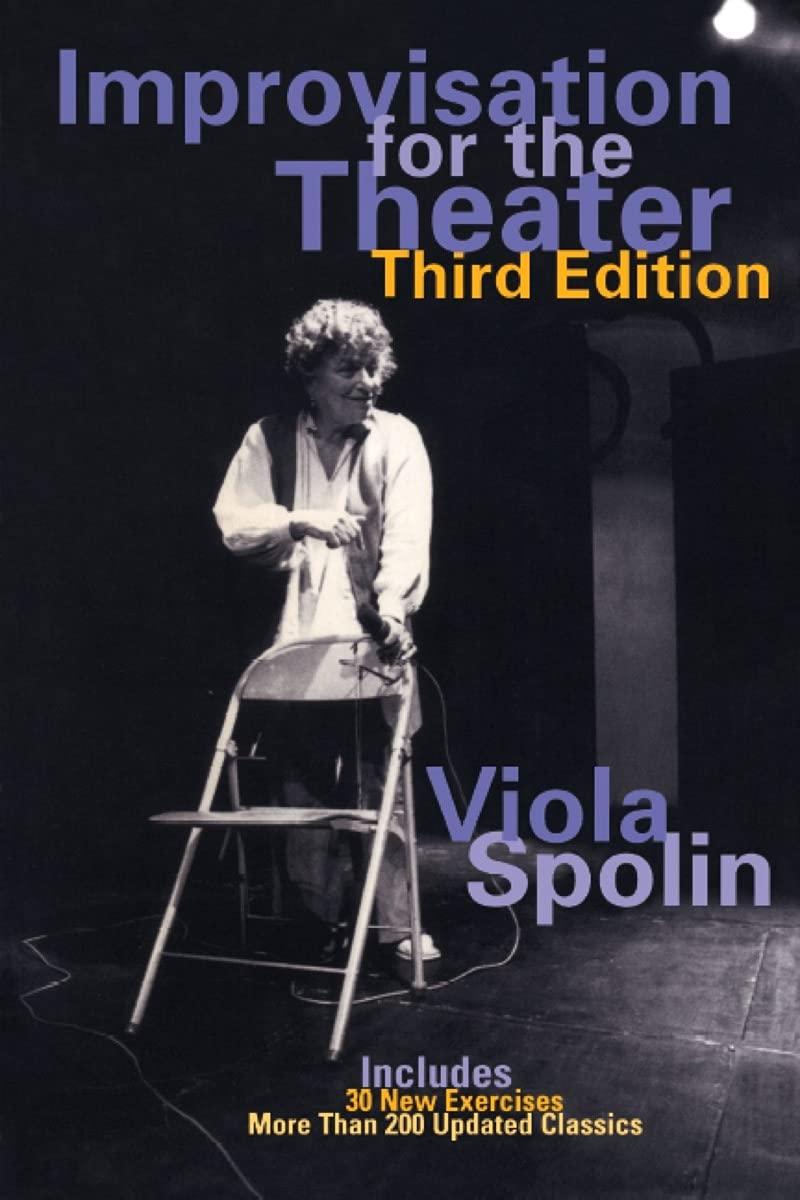
Improvisation for the Theater
A Handbook of Teaching and Directing Techniques
Viola Spolin
Theater Games for Rehearsal
Viola Spolin
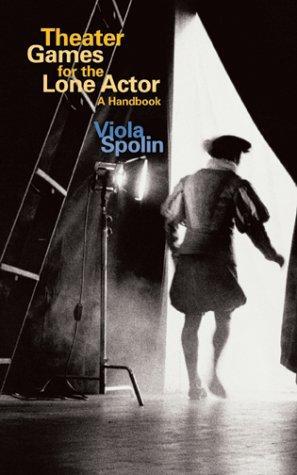
Theater Games for the Lone Actor
Viola Spolin

Improvising Now
A Practical Guide to Modern Improv
Rob Norman

Improvisation On the Edge
Notes from On and Off Stage
Ruth Zaporah
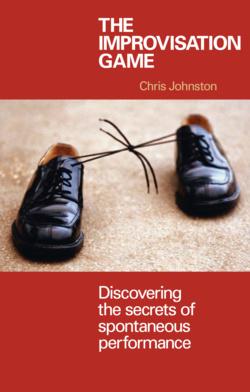
The Improvisation Game
Discovering the Secrets of Spontaneous Performance
Chris Johnston
Related Exercises
One Line Scene
One Line Scene is a scene-building exercise in which two or more performers create a complete scene using only one line of dialogue each. The constraint forces performers to make every word count, to communicate volumes through subtext, physicality, and relationship, and to find the essence of a scene without the luxury of extended dialogue.
Drawing the Line
Drawing the Line is an applied improvisation exercise in which participants explore personal and group boundaries through physical and verbal activities. Using the stage space and structured improvisational scenarios, participants develop practical awareness of where their own comfort limits are, how to name and communicate those limits clearly, and how to recognize and respect the limits of others. The exercise is used in ensemble-building, trust work, and applied settings focused on consent and professional boundary-setting.
Sitting Standing Lying
Sitting Standing Lying is a three-player scene exercise in which one performer must always be sitting, one standing, and one lying down. When any performer changes position, one of the others must immediately switch to maintain three distinct positions, creating a constant physical negotiation underneath the scene.
Sit Stand Lie Lean
Sit Stand Lie Lean is a scene exercise in which each performer must maintain a different physical position at all times. With four performers, one must be sitting, one standing, one lying down, and one leaning. Whenever one person changes position, someone else must adjust to maintain four distinct positions simultaneously.
Line Mirror
Line Mirror is a physical awareness and synchronization exercise in which participants stand in a line facing a partner line and mirror each other's movements simultaneously, without a designated leader. Unlike circle or pair mirror exercises, the line format creates additional complexity by requiring each participant to maintain synchronization with an immediate partner while also being observable by and influencing the rest of the line.
Location, Relationship, Escalate, End
Location, Relationship, Escalate, End is a scene construction exercise in which performers build a scene through four discrete, progressive stages: first establishing a specific physical location, then establishing the specific relationship between the characters, then escalating the scene through increasing stakes or emotional intensity, and finally bringing it to a definitive end. The exercise provides a structured scaffold for scene construction and trains performers to execute each element with commitment and specificity before moving to the next.
How to Reference This Page
The Improv Archive. (2026). Standing on the Line. Retrieved September 29, 2026, from https://improvarchive.org/exercises/standing-on-the-line
The Improv Archive. "Standing on the Line." The Improv Archive, 2026. https://improvarchive.org/exercises/standing-on-the-line.
The Improv Archive. "Standing on the Line." The Improv Archive, 2026, https://improvarchive.org/exercises/standing-on-the-line. Accessed September 29, 2026.
The Improv Archive is a systemically maintained repository. The archive itself acts as the corporate author.