Sitting Standing Lying
Sitting Standing Lying is a three-player scene exercise in which one performer must always be sitting, one standing, and one lying down. When any performer changes position, one of the others must immediately switch to maintain three distinct positions, creating a constant physical negotiation underneath the scene.
Structure
Setup
Three performers take the stage. Each adopts one of three positions: sitting, standing, or lying down. The facilitator explains the constraint: at all times, exactly one person occupies each position. The performers begin a scene while maintaining this rule.
Playing the Scene
The scene unfolds with normal dialogue and character interaction, but the physical constraint operates continuously. A performer who stands up from a seated position forces one of the other two to sit. A performer who lies down forces the previously prone performer to sit or stand.
These transitions happen organically as performers make scenic choices. A character who stands in outrage forces someone to drop. A character who collapses in despair opens a standing slot. The physical constraint creates involuntary scenic moments that performers must justify.
Justification
The comedy and craft come from how performers justify their mandatory position changes. Sudden lying down might be justified as fainting, ducking, or examining something on the floor. Forced standing might become a dramatic exit attempt or an excited reaction. The best performers turn constraint-driven movement into character-defining moments.
Variations
A speed version requires a position change every fifteen seconds. A silent version plays the exercise without dialogue, telling the story entirely through position changes and physical acting. An audience-directed version lets the audience call out which performer must change position next.
How to Teach It
Objectives
Sitting Standing Lying trains physical awareness, multitasking, and the ability to justify unexpected physical positions within a scene. It develops ensemble sensitivity as performers must constantly monitor each other's positions while maintaining their own scene work.
How to Explain It
"Three of you on stage. One sits, one stands, one lies down. That is always true. Play a scene. When someone changes, someone else has to move to keep all three positions filled. Find reasons for everything."
Scaffolding
Practice the physical constraint without dialogue first. Let the trio move through position changes silently, developing awareness of each other's positions. Then add a simple scene on top. This two-phase approach prevents the common problem of performers forgetting the constraint while engaged in dialogue.
Common Pitfalls
Performers sometimes wait for someone else to change, creating static scenes where everyone stays locked in position. The facilitator should encourage bold position changes that create scenic opportunities. Another pitfall is performers who prioritize the puzzle over the scene, changing positions mechanically without justifying the movement within the scene's reality.
How to Perform It
Visual Comedy
The exercise produces inherently funny stage pictures. Three performers at dramatically different heights create visual comedy even before dialogue begins. The mandatory position changes often produce perfectly timed physical comedy that looks choreographed but is entirely spontaneous.
Pacing the Changes
The strongest performances space position changes unevenly, allowing some settled moments between transitions. Constant changing becomes frenetic and prevents the scene from developing. Strategic changes at emotionally charged moments amplify both the comedy and the dramatic impact.
Worth Reading
See all books →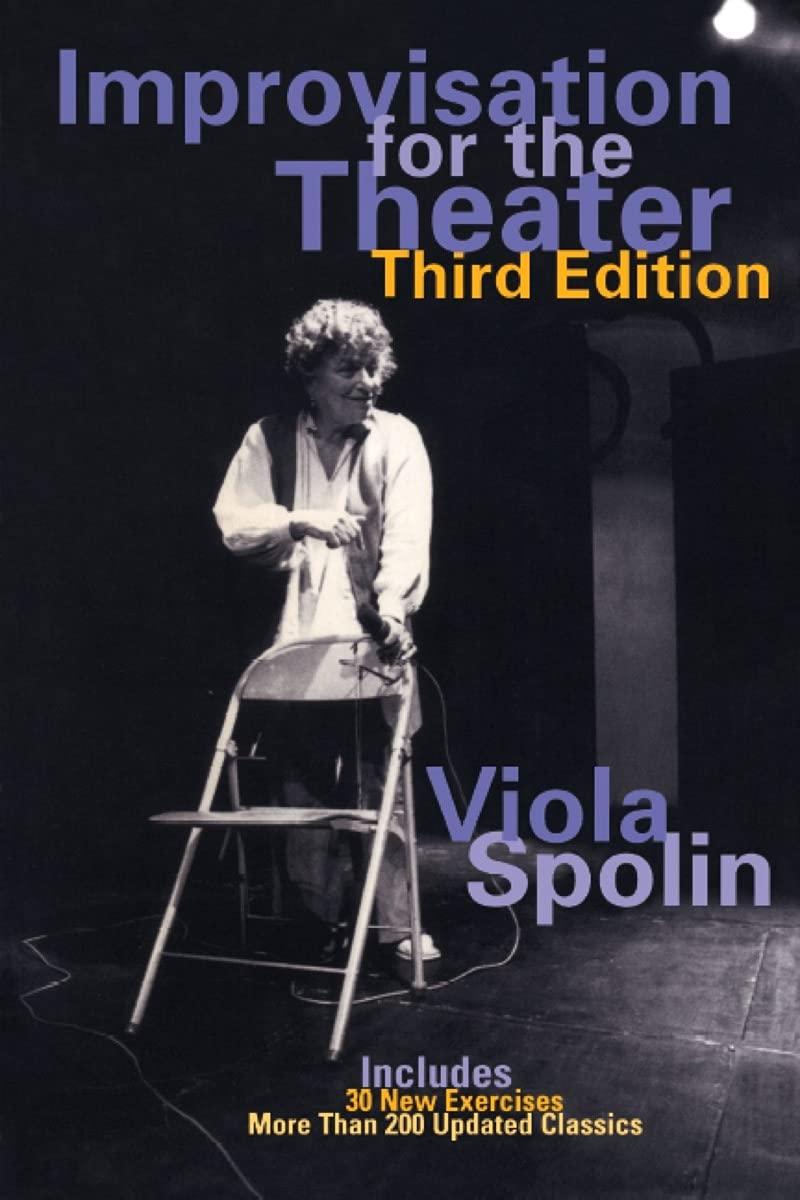
Improvisation for the Theater
A Handbook of Teaching and Directing Techniques
Viola Spolin

The Young Actor's Book of Improvisation
Dramatic Situations
Sandra Caruso; Susan Kosoff
Theater Games for Rehearsal
Viola Spolin
Theater Games for the Lone Actor
Viola Spolin

How to Improvise a Full-Length Play
The Art of Spontaneous Theater
Kenn Adams
112 Acting Games
Gavin Levy
Related Exercises
Sit Stand Lie Lean
Sit Stand Lie Lean is a scene exercise in which each performer must maintain a different physical position at all times. With four performers, one must be sitting, one standing, one lying down, and one leaning. Whenever one person changes position, someone else must adjust to maintain four distinct positions simultaneously.
Standing on the Line
Standing on the Line is a scene exercise in which performers stand on a literal or imagined line on the stage floor, using their position on the line to establish spatial relationships, status dynamics, and physical constraints that shape the scene's development.
Three Rules
Three Rules is a scene exercise in which the facilitator establishes three specific constraints that performers must maintain throughout their scene. The constraints can be physical (always touching the wall, never letting your hands go below your waist), verbal (never using the letter S, only asking questions), or behavioral (treat your partner as royalty, move as if underwater). The exercise demonstrates that limitations generate rather than restrict creative choices, and trains performers to divide attention between scene work and rule compliance.
Stand Up/sit Down
Stand Up/Sit Down is a scene exercise in which performers alternate between standing and sitting positions, with each change of posture prompting a shift in the scene's energy, topic, or emotional register. The exercise trains awareness of how physical position affects performance and teaches players to use body state as a storytelling tool.
Three Line Scenes
Three Line Scenes is an exercise in which pairs of performers create complete scenes using exactly three lines of dialogue each, totaling six lines. The extreme compression demands that every line establish character, relationship, environment, and conflict simultaneously, developing the skill of maximum impact with minimum words.
How to Reference This Page
The Improv Archive. (2026). Sitting Standing Lying. Retrieved September 28, 2026, from https://improvarchive.org/exercises/sitting-standing-lying
The Improv Archive. "Sitting Standing Lying." The Improv Archive, 2026. https://improvarchive.org/exercises/sitting-standing-lying.
The Improv Archive. "Sitting Standing Lying." The Improv Archive, 2026, https://improvarchive.org/exercises/sitting-standing-lying. Accessed September 28, 2026.
The Improv Archive is a systemically maintained repository. The archive itself acts as the corporate author.