Systems Check
Systems Check is a body awareness scan done while standing in which participants progressively notice and release tension from feet to head. The exercise develops physical self-awareness as a foundation for presence, grounded performance, and embodied communication.
Structure
Starting Position
Participants stand with feet hip-width apart, arms loose at their sides, eyes open or softly closed. The facilitator guides a slow, systematic scan of the body.
Lower Body
Begin at the feet. Notice weight distribution. Gently lock and release the knees to find a neutral, soft bend. Notice any tension in the calves or thighs and allow it to ease without forcing.
Pelvis and Core
Notice the pelvis position. Find neutral by releasing any holding in the lower back or glutes. Allow the belly to soften rather than gripping.
Chest and Shoulders
Notice any holding in the chest. Allow the shoulders to drop away from the ears. Notice the natural rise and fall of the breath rather than controlling it.
Arms and Hands
Allow the arms to hang with natural weight. Release any gripping in the hands. Notice where the arms tend to cross or brace and allow them to open.
Neck and Head
Allow the neck to lengthen. Notice the jaw and release any clenching. Let the eyes soften in their sockets. The head floats lightly on top of the spine.
Full Body Awareness
With the scan complete, participants stand in full-body awareness for a moment before the facilitator gently closes the exercise.
How to Teach It
Objectives
Systems Check develops the habit of noticing physical holding patterns before they interfere with performance or communication. Regular practice builds the performer's ability to find a grounded, available physical state on demand.
How to Explain It
"We are going to do a body scan from the ground up. Start at your feet. Do not force anything to change. Just notice what is there and allow it to soften."
Scaffolding
Begin with a longer, slower scan for groups new to body awareness work. As participants develop practice, the scan can be compressed to one or two minutes as a pre-performance or pre-workshop ritual.
Common Pitfalls
The most common issue is participants who try to force relaxation rather than simply noticing tension. The instruction is to observe and invite release, not to perform relaxation. Overcorrection creates new tension.
In Applied Settings
Pre-Meeting Presence Practice
A brief Systems Check before high-stakes meetings or presentations helps participants arrive in their bodies rather than their thoughts. The physical grounding reduces anxiety and improves the quality of attention available in the room.
Stress Management Training
The exercise teaches a portable somatic tool that participants can use independently. Unlike breathing exercises that can increase anxiety in some people, a body scan grounds through physical sensation rather than breath control.
Facilitation Notes
In professional settings, frame Systems Check as a focus practice rather than a relaxation technique. Many professional contexts are skeptical of relaxation exercises, but the concept of improving physical presence and attention is readily accepted.
Skills Developed
Worth Reading
See all books →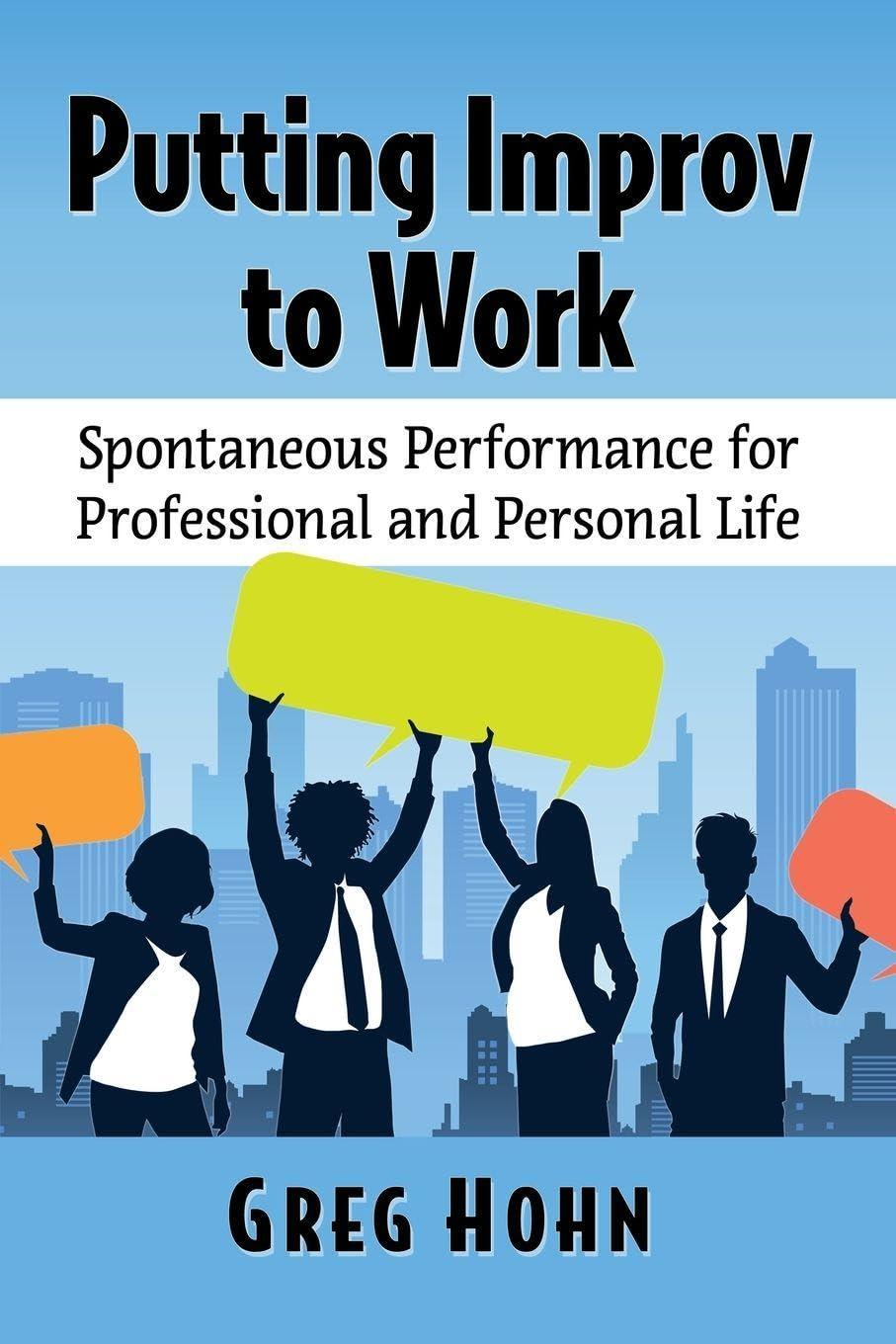
Putting Improv to Work
Spontaneous Performance for Leadership, Learning, and Life
Greg Hohn

Embodied Playwriting
Improv and Acting Exercises for Writing
Hillary Haft Bucs; Charissa Menefee
Theater Games for the Lone Actor
Viola Spolin

Spontaneous Performance
Acting Through Improv
Marsh Cassady

Action Theater
The Improvisation of Presence
Ruth Zaporah
Theater Games for Rehearsal
Viola Spolin
Related Exercises
Check-In
Group sits or stands in a circle and each person speaks briefly about how they are arriving. No interruptions. Can be enhanced with imaginary catch between speakers.
Complete Bodies
Complete Bodies is a physicality exercise in which players practice using their entire body to communicate rather than relying primarily on face and hands. The exercise challenges performers to express emotional states, status, and character through the spine, torso, hips, and legs as well as through their more habitual expressive channels. It builds physical range and presence for scene work and performance.
Learn to Be Looked At
Learn to Be Looked At is an applied improv exercise in which participants practice being the subject of others' attention without deflecting, performing, or withdrawing. The exercise addresses the discomfort most people feel when held in a sustained gaze and trains the capacity to remain present, open, and grounded while being observed -- a foundational skill for anyone who presents, leads, or regularly holds attention in professional or public settings.
Status Pass
Status Pass is a circle exercise in which participants pass status levels around the group, physically and verbally shifting between high and low status with each transfer. The exercise builds awareness of how status is communicated through body language, voice, and spatial positioning.
Loosen Up
Loosen Up is an applied improv physical warm-up exercise that targets the release of habitual physical tension, protective body posture, and the physical holding patterns that individuals bring into group settings. The exercise uses guided physical movement, shaking, and release to help participants arrive more fully in their bodies before group work begins, reducing the physical constriction that inhibits spontaneity, voice, and physical expressiveness.
Breathing
Breathing is a foundational warm-up exercise in which performers practice controlled inhalation and exhalation to release physical tension, quiet mental chatter, and center their focus before rehearsal or performance. Variations include diaphragmatic breathing, counted breath patterns, and synchronized group breathing in which an ensemble inhales and exhales together. The exercise builds awareness of the body as an instrument, training performers to recognize and release habitual tension patterns that restrict vocal production, physical freedom, and emotional availability. Breathing exercises appear across virtually every performance training tradition, from Viola Spolin's theatre games to Augusto Boal's actor preparation sequences, and remain one of the most universally practiced warm-up activities in both theatrical and applied improvisation contexts.
The Lineage
Explore the schools and structures that influenced or evolved from Systems Check.
Putting Improv to Work (Hohn)
How to Reference This Page
The Improv Archive. (2026). Systems Check. Retrieved September 28, 2026, from https://improvarchive.org/exercises/systems-check
The Improv Archive. "Systems Check." The Improv Archive, 2026. https://improvarchive.org/exercises/systems-check.
The Improv Archive. "Systems Check." The Improv Archive, 2026, https://improvarchive.org/exercises/systems-check. Accessed September 28, 2026.
The Improv Archive is a systemically maintained repository. The archive itself acts as the corporate author.