Tossing
Tossing is a circle warm-up exercise in which players pass real or imaginary objects around the group with clear physical intention. Each exchange requires specific attention to the give and the receive: the sender must establish the object's weight, size, and nature before releasing it; the receiver must honor those physical qualities in the catch and carry. The exercise trains physical specificity, eye contact, ensemble attention, and the fundamental habit of truly giving something to a partner.
Structure
Setup
The group stands in a circle with enough room to move comfortably. The facilitator introduces either a real object (a ball, a bean bag) or an imaginary object to begin.
Basic Form
Players pass the object around the circle, establishing eye contact with the receiver before each toss. The object must be treated as real: its weight, size, and fragility should be physically present in both the throw and the catch. Lazy miming (casual gestures that barely suggest an object exists) is the principal failure mode; the facilitator coaches toward specificity.
Object Transformation Variant
Sybil Noreen Telander documents a version in Acting Up (1996) in which players pass an imaginary ball while progressively changing its properties as it travels around the circle: size, weight, temperature, texture. The receiver must observe the transformation and commit to the new physical reality before passing it on. This variant deepens the exercise by requiring the group to collectively sustain a shared fiction about an object's nature while continuously evolving that fiction.
Scene Extension (Spolin)
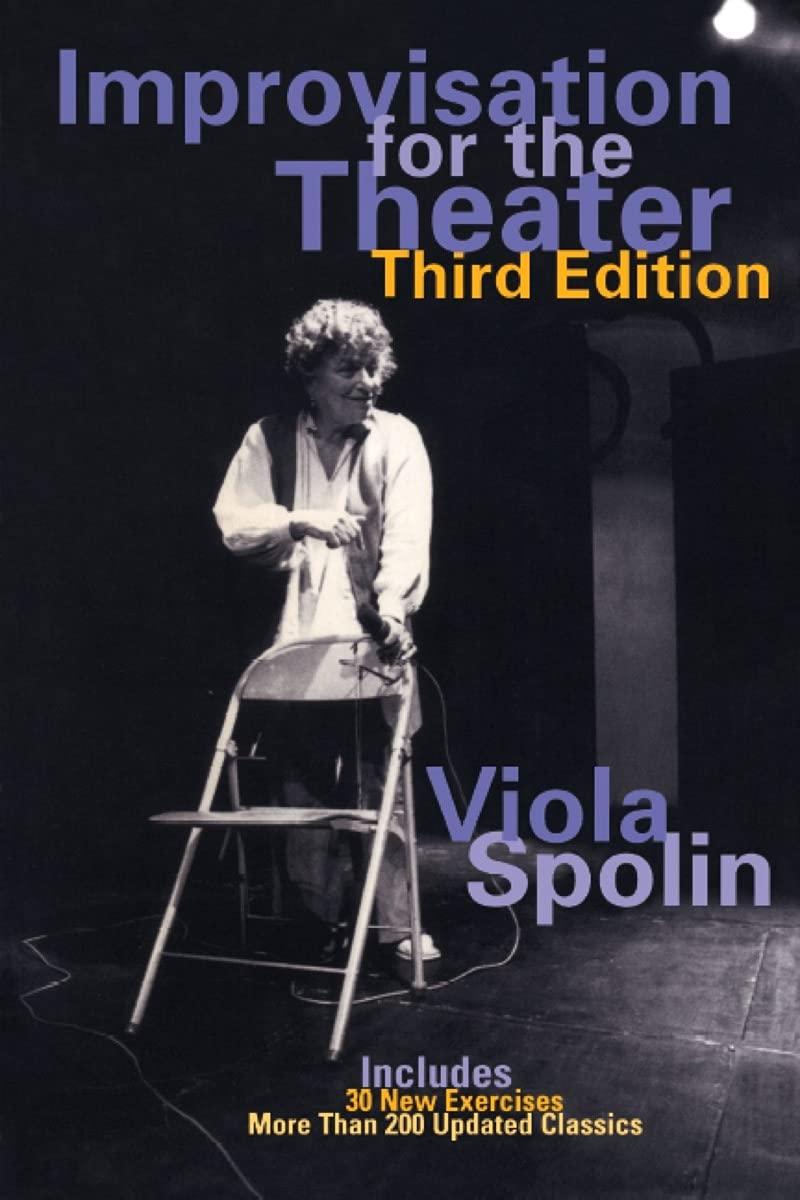
Viola Spolin uses object-tossing as a way to physicalize abstract or verbal content in scene work in Improvisation for the Theater (1963). Tossing a bean bag between scene players, for example, can physicalize a scene about passing blame or sharing responsibility, connecting the physical exercise to meaning-making within an improvised scene.
Progression
Begin with a single object; add a second; add a third. Multiple simultaneous objects in the circle require players to track and attend to more than one line of attention simultaneously, developing peripheral awareness alongside focused attention. An advanced variation has each player establish a completely different imaginary object: one player throws a heavy medicine ball, another returns a butterfly, another passes a hot coal.
How to Teach It
How to Explain It
"You are going to toss an object to someone across the circle. The object has weight, texture, fragility. It is real. Make sure the person you are throwing to is ready before you release. The receiver shows us what the object is by how they catch it."
Objectives
Tossing develops the physical vocabulary of giving and receiving, which underlies all partner-based improv work. A player who has learned to fully present an imaginary object to a specific person and wait for that person to register the gift before releasing it has internalized the physical discipline of listening in space: attending completely to another person before acting.
The exercise also develops specificity in mime, which is the foundation of effective object work in scenes. Vague, uncommitted mime tells an audience nothing; specific, weighted, physically present mime builds a world.
Scaffolding
Begin with real objects before moving to imaginary ones. The proprioceptive feedback of an actual ball in the hand calibrates the physical commitment that the imaginary version requires. Once players have felt the weight and trajectory of a real throw, they can reproduce those qualities in mime.
For the transformation variant, introduce a single property change at a time (size only, then weight only) before combining them. Rapid simultaneous transformation of multiple properties overwhelms players who haven't yet developed the baseline commitment.
Common Coaching Notes
- "Make eye contact before you throw. The throw doesn't start until they know it's coming."
- "You received something. Acknowledge the weight before you throw it on."
- "What does this object weigh? Let your body answer, not your voice."
- "If I cannot see the object in your hands, it does not exist for the audience."
History
The use of ball-passing and object-tossing as ensemble warm-up activities derives from physical education, sports training, and ensemble theatre pedagogy, all of which employ object exchange as a way to establish group attention before a session begins.
Viola Spolin incorporates object work and tossing throughout Improvisation for the Theater (1963), using bean bag tossing as both a warm-up mechanism and a device for physicalizing scene content. Spolin's approach treats every object as possessing genuine physical reality that must be honored in mime.
Sybil Noreen Telander documents the imaginary ball exercise with transforming properties in Acting Up: An Innovative Approach to Creative Drama for Older Adults (1996), presenting it as a warm-up energizer suitable for groups of mixed age and physical ability. The exercise appears in this context because imaginary object work does not require the physical fitness of a real tossed ball while still developing the same ensemble attention and physical imagination.
The tossing exercise in its various forms is a foundational element of ensemble theatre warm-up curricula across traditions, including physical theatre, applied theatre, and improv pedagogy. No single originator has been documented.
Worth Reading
See all books →
Business Improv
Experiential Learning Exercises to Train Employees
Val Gee

Theatrical Improvisation
Short Form, Long Form, and Sketch-Based Improv
Jeanne Leep
Improvisation for the Theater
A Handbook of Teaching and Directing Techniques
Viola Spolin

Mask Improvisation for Actor Training and Performance
the compelling image
Sears A. Eldredge

Acting Up!
An Innovative Approach to Creative Drama for Older Adults
Marcie Telander; Flora Quinlan; Karol Verson
Improv Nation
How We Made a Great American Art
Sam Wasson
Related Exercises
Passing Around Objects
Passing Around Objects is a circle exercise in which players create imaginary objects with distinct physical properties and pass them to their neighbors, who must receive and reproduce each object faithfully before sending it on. When objects return to their creators, the group examines what changed along the way. The exercise develops object work consistency, observation, and the discipline of treating a partner's physical choices as real.
Object Circle
Object Circle is a warm-up exercise in which participants stand in a circle and pass physical or mimed objects to each other, transforming each object through imagination as it travels. One participant sends an object with a specific size, weight, and character; the next participant receives it, uses it briefly, then transforms it into something new before passing it on. The exercise develops physical specificity, collaborative imagination, and the habit of accepting and building on what a partner offers.
Pass Ball
Pass Ball is a circle warm-up exercise in which players toss a real or imaginary ball around the group while maintaining eye contact with the intended recipient. Additional balls may be introduced to increase complexity, requiring the group to track multiple objects simultaneously. The exercise builds focus, nonverbal communication, and the habit of making clear, directed offers to specific partners rather than throwing ideas into the void.
Red Ball
Red Ball is a circle warm-up exercise in which participants mime passing an imaginary red ball around the group, with both thrower and catcher naming the object aloud. As the exercise progresses, additional imaginary objects are introduced simultaneously, training focus, multitasking, and group awareness.
Word Ball
Word Ball is a circle exercise in which participants pass an imaginary ball while simultaneously passing a word. The physical throw and the verbal word must match in speed, weight, and direction, creating a coordination challenge that links physical and verbal offer-making.
Ball Toss
Ball Toss is a circle exercise in which players throw a ball to one another while maintaining eye contact and calling the recipient's name. As the pace increases or multiple balls enter play, the exercise tests group focus and communication under mounting complexity. It is one of the most widely used workshop warm-ups.
How to Reference This Page
The Improv Archive. (2026). Tossing. Retrieved September 28, 2026, from https://improvarchive.org/exercises/tossing
The Improv Archive. "Tossing." The Improv Archive, 2026. https://improvarchive.org/exercises/tossing.
The Improv Archive. "Tossing." The Improv Archive, 2026, https://improvarchive.org/exercises/tossing. Accessed September 28, 2026.
The Improv Archive is a systemically maintained repository. The archive itself acts as the corporate author.