What's the Wrong Answer?
What's the Wrong Answer is an applied exercise in which participants rapidly generate deliberately incorrect, inappropriate, or absurd responses to a given question before attempting to find the correct one, training the suspension of evaluation, the generation of range, and the discovery of insight through deliberate wrongness.
Structure
The Prompt
The facilitator poses a question, problem, or challenge. Participants are instructed to answer it wrongly first.
The Wrong Answers
Participants call out responses that are wrong, silly, or obviously incorrect. No filtering for plausibility. The wrong answers accumulate rapidly.
The Pivot
After sufficient wrong answers have been generated, the facilitator invites participants to notice if any wrong answer contains a surprising insight or opens a new frame on the original problem.
How to Teach It
Objectives
What's the Wrong Answer trains participants to separate generation from evaluation by making evaluation temporarily impossible: all answers are supposed to be wrong. This removes the inhibition that makes brainstorming slow.
Facilitation Notes
The pivot phase often produces the most valuable material. Some wrong answers are genuinely wrong; others are reframings that look wrong from inside conventional thinking.
Common Pitfalls
Participants still filter their wrong answers, producing politely wrong responses rather than genuinely wrong ones. Encourage radical wrongness.
In Applied Settings
Innovation and Ideation
What's the Wrong Answer is used to prime ideation sessions by exhausting the wrong-answer space before entering the right-answer space. The exercise typically accelerates the quality of subsequent correct-answer generation.
Problem-Solving Workshops
Facilitators use wrong answers to surface assumptions: what would need to be true for this obviously wrong answer to be right? That question frequently reveals a useful constraint or insight.
Design and Creative Brainstorming
Design teams use the exercise to break attachment to the first reasonable solution by demonstrating that the solution space extends well beyond the obvious, making subsequent conventional solutions feel like choices rather than inevitabilities.
Skills Developed
Worth Reading
See all books →
Improvisation
Use What You Know, Make Up What You Don't
Brad Newton
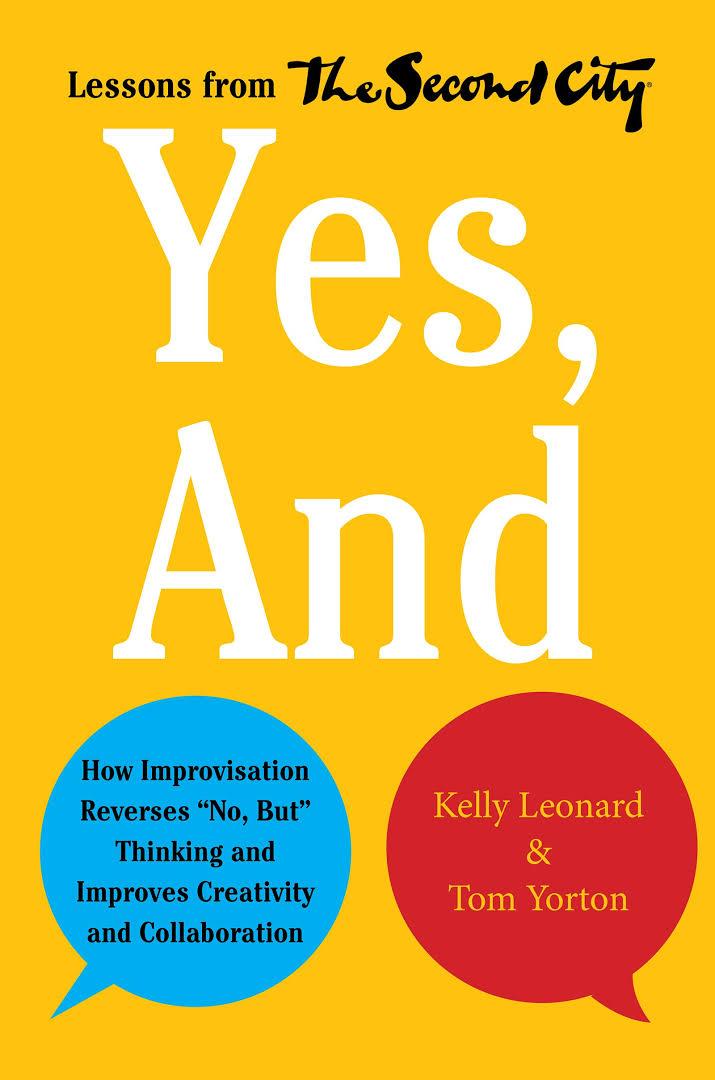
Yes, And
How Improvisation Reverses No, But Thinking and Improves Creativity and Collaboration
Kelly Leonard; Tom Yorton

Brain Disruption
Radical Innovation in Business Through Improv
Bruce Montgomery; Gail Montgomery

When I Say This, Do You Mean That?
Enhancing Communication
Cherie Kerr; Julia Sweeney

The Applied Improvisation Mindset
Tools for Transforming Individuals, Organizations, and Communities
Theresa Robbins Dudeck; Caitlin McClure

The "Yes And" Business Evolution
Improv Skills for Leadership and Life
Tracy Shea-Porter
Related Exercises
Question Storming
Question Storming is an applied improvisation exercise from Max Dickins' Improvise! in which participants brainstorm questions rather than answers about a challenge. By reframing the creative process away from solutions and toward inquiry, the exercise reveals hidden assumptions, opens new angles of exploration, and demonstrates that asking the right question is often more valuable than generating quick answers.
What?
What? is an exercise in which performers respond to each offer with genuine curiosity, exploring rather than accepting at face value. The exercise teaches the difference between blocking and curious investigation, building the habit of digging deeper into a partner's offers.
Riddles
Riddles is a creative thinking exercise in which participants solve lateral and logic riddles as a daily brain workout. The exercise practices open-minded thinking, the ability to reframe problems, and the discipline of avoiding the first obvious interpretation in favor of more creative solutions.
Bad Ad Product Game
Groups create a product and ad campaign for something that does everything wrong. By revolving an object to view its weird sides, players discover creativity through inversion.
Problem Solving
Problem Solving is an applied improvisation exercise from Business Improv in which teams tackle challenges using "Yes, And" principles and other improvisational techniques. Rather than following traditional analytical frameworks, participants generate solutions through rapid ideation, collaborative building, and the willingness to explore unconventional approaches.
What They Said
What They Said is an applied listening exercise in which participants must accurately paraphrase or repeat back what the previous speaker said before contributing their own point, training active listening, retention under pressure, and the discipline of understanding before responding.
The Lineage
Explore the schools and structures that influenced or evolved from What's the Wrong Answer?.
Improvise! (Max Dickins)
How to Reference This Page
The Improv Archive. (2026). What's the Wrong Answer?. Retrieved September 28, 2026, from https://improvarchive.org/exercises/whats-the-wrong-answer
The Improv Archive. "What's the Wrong Answer?." The Improv Archive, 2026. https://improvarchive.org/exercises/whats-the-wrong-answer.
The Improv Archive. "What's the Wrong Answer?." The Improv Archive, 2026, https://improvarchive.org/exercises/whats-the-wrong-answer. Accessed September 28, 2026.
The Improv Archive is a systemically maintained repository. The archive itself acts as the corporate author.