Flock Dance
Flock Dance is a group movement exercise in which all players move through the space together like a murmuration of birds or a school of fish, with leadership passing organically from player to player without spoken negotiation. Whoever is at the front of the group leads; as the group turns, a different player takes the front and assumes leadership automatically. The exercise trains ensemble sensitivity, the ability to lead and follow simultaneously, and group responsiveness without verbal coordination.
Structure
Setup
All players stand in an open space, spread loosely. Soft, continuous music helps but is not required.
Progression
Players begin moving through the space together, maintaining proximity and moving as a single organism. The player at the leading edge of the group -- whoever is physically in front of the direction of travel -- establishes the movement quality: the speed, the direction, the gesture, the shape of the path.
As the group turns and shifts, different players naturally move to the front. The new leader takes over immediately, without announcement, and the group responds to their lead. The transition is seamless -- leadership dissolves into followership and back again as the flock moves.
The facilitator may introduce variations: the group splits into two flocks that must avoid or merge with each other, or a leader is designated temporarily before leadership returns to an organic process.
Conclusion
The exercise ends when the facilitator brings the group to stillness. The close should emerge from the movement rather than interrupting it -- a gradual slowing and quieting.
How to Teach It
Objectives
Flock Dance develops the capacity to lead and follow simultaneously, the sensitivity to read group movement and respond in real time, and the trust required to relinquish leadership the moment another takes it. It also develops spatial awareness and group attunement.
How to Explain It
"Whoever's at the front leads. The moment someone else is at the front, they lead. No announcements -- the front is the leader, and the front is always changing."
Scaffolding
Begin with a slow pace and a single leader for the first thirty seconds before allowing leadership to pass organically. This gives the group a felt sense of leading and following separately before they need to hold both simultaneously.
Common Pitfalls
Groups sometimes fragment into small clusters moving independently rather than functioning as a single organism. The coaching note is to maintain proximity -- the flock's coherence depends on all members remaining within a visible range of each other. Players who drift to the periphery and begin moving independently have left the flock.
Worth Reading
See all books →
Group Improvisation
The Manual of Ensemble Improv Games
Peter Campbell Gwinn; Charna Halpern
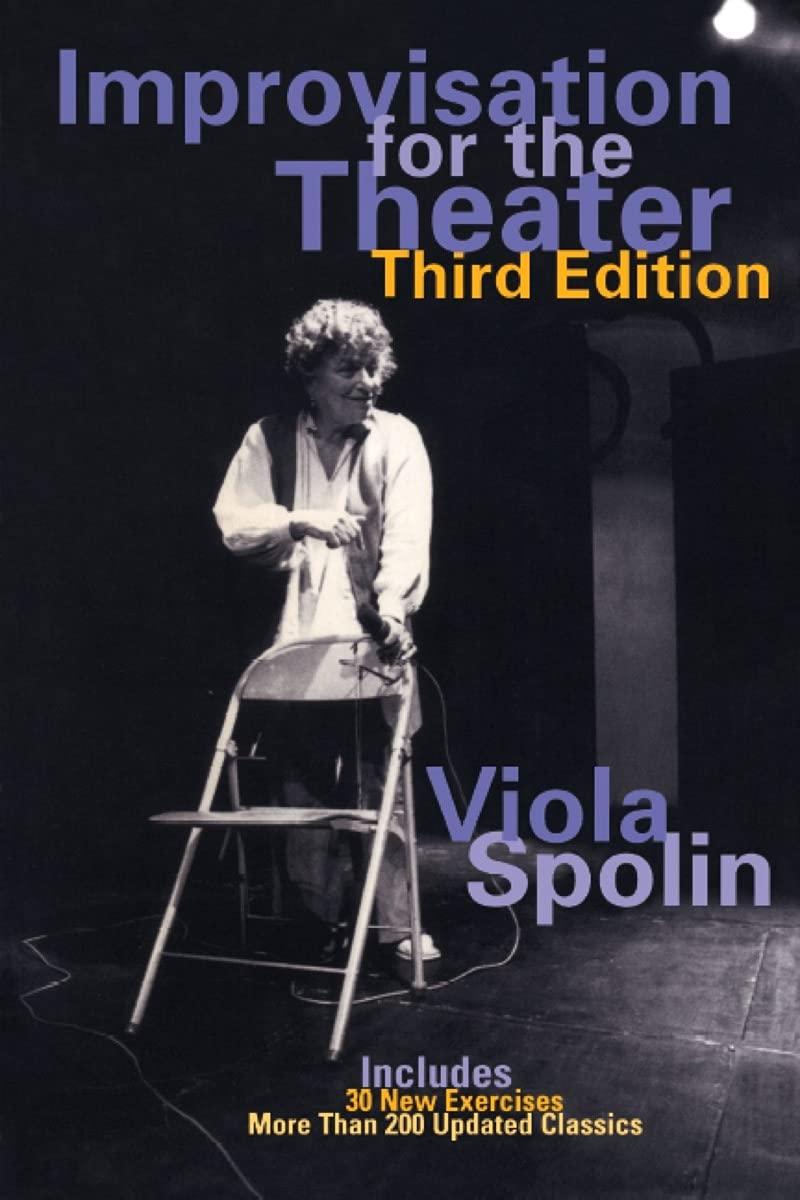
Improvisation for the Theater
A Handbook of Teaching and Directing Techniques
Viola Spolin

Improv Leadership
How to Lead Well in Every Moment
Stan Endicott; David A. Miller; Cory Hartman

Playing Along
37 Group Learning Activities Borrowed from Improvisational Theater
Izzy Gesell

Directing Improv
Asaf Ronen
Theater Games for Rehearsal
Viola Spolin
Related Exercises
Leadership
Leadership is an applied improv exercise that uses structured group movement and voluntary leader emergence to explore how leadership authority is claimed, transferred, and recognized within a group. Participants move through the space or perform actions in which any member of the group may step into a leadership role at any moment, and the group must recognize and follow the shift without verbal announcement. The exercise surfaces the dynamics of organizational leadership through an embodied, real-time demonstration.
Synchronised Dance
Synchronised Dance is an exercise in which players attempt to move and dance together without choreography or a designated leader. The group must develop collective movement awareness, finding shared rhythm and motion through mutual observation and response.
Synchro Clap
Synchro Clap is a group focus exercise in which players attempt to clap simultaneously without any verbal coordination or designated leader. The exercise develops ensemble awareness and the ability to read and respond to the group's collective energy.
Follow the Follower
Follow the Follower is an applied improv exercise in which a group sits in a circle and simultaneously makes sounds and movements while attempting to mimic everyone else -- with no designated leader and no pre-assigned role of follower. Because everyone is following everyone at once, leadership emerges organically from small initiations that the group collectively amplifies. The exercise makes visible how group behavior self-organizes without authority, and how individual actions propagate through a collective system.
Copy Dance
Copy Dance is a mirroring exercise in which one player dances freely while a partner replicates their movements as precisely as possible. The exercise builds physical attunement, partner listening through the body, and comfort with being both mover and follower. It is used as a physicality warm-up and as a partner connection exercise early in rehearsal.
Alliances
Alliances is a spatial awareness exercise in which each player secretly selects one person in the group as their ally and another as their enemy, then moves through the space trying to keep the ally positioned between themselves and the enemy at all times. No one announces their choices, so the resulting group movement becomes complex, organic, and unpredictable as every participant simultaneously pursues their own spatial objective. The exercise produces a constantly shifting formation that resembles flocking behavior, with sudden accelerations, direction changes, and clusters forming and dissolving. Alliances develops spatial awareness, peripheral vision, and the ability to read and respond to group movement patterns without verbal communication. It also demonstrates how simple individual rules can generate complex group behavior, a principle that applies directly to ensemble scene work.
How to Reference This Page
The Improv Archive. (2026). Flock Dance. Retrieved September 28, 2026, from https://improvarchive.org/exercises/flock-dance
The Improv Archive. "Flock Dance." The Improv Archive, 2026. https://improvarchive.org/exercises/flock-dance.
The Improv Archive. "Flock Dance." The Improv Archive, 2026, https://improvarchive.org/exercises/flock-dance. Accessed September 28, 2026.
The Improv Archive is a systemically maintained repository. The archive itself acts as the corporate author.