Gorilla Theatre
Gorilla Theatre is a competitive long-form format created by Keith Johnstone in which individual directors pitch scene ideas to the audience, then direct other performers in executing them. The audience votes on the results, and the director of the least successful scene receives a comedic forfeit. The format combines the creative risk of directing with the accountability of audience judgment, creating a high-stakes dynamic in which directors must balance artistic ambition with crowd-pleasing instincts. Gorilla Theatre foregrounds the director's role in improvisation, making visible a creative function that most formats keep hidden.
Structure
Each performer in the ensemble takes a turn as director. The director steps forward and pitches a scene idea to the audience: a premise, a genre, a challenge, or a stylistic constraint. The pitch is brief and must sell the audience on the scene's potential.
The audience votes (by applause or show of hands) on whether to see the pitched scene. If approved, the director casts the scene from the remaining ensemble members and directs it in real time, side-coaching performers, calling for adjustments, and shaping the scene as it unfolds.
After each scene, the audience rates the result. At the end of the show, the director whose scene received the lowest rating faces a forfeit: a humiliating task, a silly punishment, or (in Johnstone's original version) wearing a gorilla costume. The forfeit adds comedic stakes and motivates directors to take creative risks that serve the audience.
The format cycles through all ensemble members as directors, creating a full show of director-driven scenes. Each director brings a different sensibility, creating natural variety in tone, style, and ambition across the performance.
The host or emcee manages the voting process, maintains energy between scenes, and enforces the forfeit at the show's conclusion.
How to Teach It
How to Explain It
"In Gorilla Theatre, the audience directs. If you see a scene and you know what should happen next, come up and tap out a performer. Step in and take their place. The scene continues. Anyone can jump in at any time. The stage belongs to everyone."
Gorilla Theatre develops directing skills that are rarely addressed in standard improv training. Most improv education focuses on performing, leaving the directing function to be learned through trial and error. This format provides a structured environment for practicing real-time direction.
The format also teaches pitching, a skill that extends beyond improv into professional presentation and idea advocacy. Directors learn to read an audience, frame an idea compellingly, and sell a creative vision in a short window.
The competitive element must be managed carefully. The forfeit should be embarrassing but not humiliating, and the voting should feel consequential but not cruel. The goal is productive pressure, not anxiety. Johnstone's philosophy treats failure as a gift: the losing director gets the biggest laugh of the night.
The format works best with experienced performers who can respond to direction quickly and with performers who have some directing experience. Introducing the format to newer performers as a workshop exercise (without the competitive element) builds the directing skills before adding performance pressure.
How to Perform It
The Ensemble
The format requires a minimum of four performers: one director and at least three performers to cast from. Six to eight performers provide optimal flexibility for casting varied scenes. A host or emcee manages the voting and transitions between scenes.
All ensemble members must be willing to both direct and perform, as the format rotates these roles throughout the show. Directors with distinct sensibilities create the most varied and engaging shows.
The pitch is the format's critical moment. Directors who pitch clear, compelling ideas generate audience enthusiasm that carries into the scene. Vague or overly complex pitches lose the audience before the scene begins. The best pitches are simple enough to explain in two sentences and ambitious enough to make the audience curious.
Directing in real time requires a different skill set from performing. Directors must watch the scene from the audience's perspective, identify what is working and what is not, and make adjustments without disrupting the performers' flow. Effective side-coaching is specific and actionable: "slow down" or "look at each other" rather than abstract notes about tone or energy.
The competitive element should enhance rather than dominate the show. Directors who play only for laughs to win the vote produce shallow scenes. Directors who pursue ambitious, risky work and succeed create the show's peak moments. The forfeit provides a safety net: even failure has entertainment value.
The ensemble's responsiveness to direction determines the format's quality. Performers who resist or ignore their director's coaching undermine the format's premise. The ensemble must commit to executing the director's vision, even when the direction is unconventional.
How to Promote It
Gorilla Theatre puts the audience in charge. Directors pitch their boldest scene ideas, the audience decides which ones get performed, and the director of the worst scene faces a forfeit. Every show is a high-stakes creative competition in which artistic ambition meets audience judgment, and someone always loses spectacularly. Created by Keith Johnstone, the inventor of Theatresports.
History
Keith Johnstone created Gorilla Theatre as part of his ongoing exploration of competitive improvisation formats. The format emerged from the same creative impulse that produced Theatresports and Micetro Impro: the recognition that competition and audience judgment create a productive pressure that drives performers to take bigger risks. Gorilla Theatre specifically isolates the directing function, giving it the visibility and accountability that Johnstone believed was essential to developing strong improvisational directors. The format takes its name from the gorilla costume worn by the losing director in Johnstone's original productions, a forfeit that embodied his philosophy that creative failure should be celebrated rather than feared. The format is documented in Johnstone's Impro for Storytellers and has been adopted by companies worldwide, often with local variations to the forfeit system.
Worth Reading
See all books →
Theatrical Improvisation
Short Form, Long Form, and Sketch-Based Improv
Jeanne Leep

The Improv Handbook
The Ultimate Guide to Improvising in Comedy, Theatre, and Beyond
Tom Salinsky; Deborah Frances-White

Applied Improvisation
Leading, Collaborating, and Creating Beyond the Theatre
Theresa Robbins Dudeck; Caitlin McClure
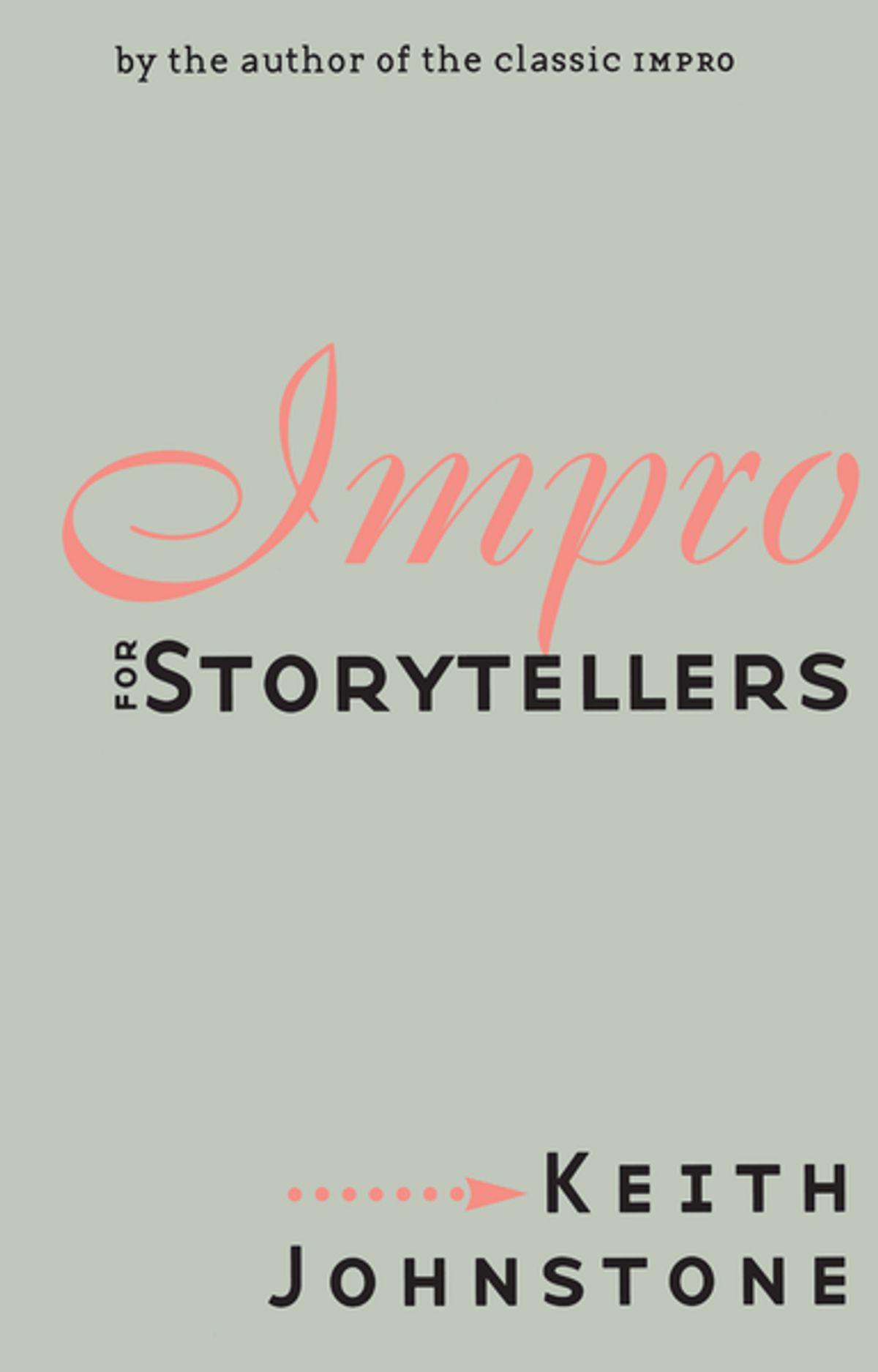
Impro for Storytellers
Keith Johnstone

Acting Through Improv
Improv Through Theatresports
Lynda Belt; Rebecca Stockley

Impro
Improvisation and the Theatre
Keith Johnstone
Related Formats
Theatresports
TheatreSports is a competitive long-form format in which two or more improv teams perform scenes judged by an audience or panel, with scoring, fouls, and challenges drawn from the conventions of athletic competition. Created by **Keith Johnstone** in Calgary in the 1970s, TheatreSports is one of the most widely performed improv formats in the world and the foundation of a global network of licensed companies operating under the International Theatresports Institute.
Comedysportz
ComedySportz is a competitive short-form improv format in which two teams perform improv games head-to-head, with the audience voting to determine the winner of each round. A referee moderates the show, selects games, enforces rules, and calls fouls for jokes that cross established content boundaries. The format frames improvisation as a spectator sport, complete with team names, uniforms, score-keeping, and crowd participation. ComedySportz makes improv accessible to audiences unfamiliar with the art form by providing a clear competitive structure, audience agency through voting, and a family-friendly entertainment guarantee enforced by the foul system.
Montage
Montage is a long-form improvised format in which performers present a series of thematically connected scenes inspired by a single audience suggestion. Scenes are linked by shared ideas, recurring motifs, emotional resonances, or occasional character callbacks rather than a continuous plot. The format's strength is its flexibility: any scene can follow any scene as long as the thematic connection holds. Montage is one of the foundational structures in Chicago-tradition long-form improvisation and is among the most widely performed long-form formats worldwide.
Micetro
Micetro is a competitive long-form format created by Keith Johnstone. A large cast of improvisers performs scenes that are scored by the audience, and the lowest-scoring performers are progressively eliminated until a single winner remains. The format combines the spontaneity of improvisation with the tension of a tournament structure.
The Lineage
Explore the schools and structures that influenced or evolved from Gorilla Theatre.
Impro for Storytellers (Johnstone)
How to Reference This Page
The Improv Archive. (2026). Gorilla Theatre. Retrieved September 28, 2026, from https://improvarchive.org/formats/gorilla-theatre
The Improv Archive. "Gorilla Theatre." The Improv Archive, 2026. https://improvarchive.org/formats/gorilla-theatre.
The Improv Archive. "Gorilla Theatre." The Improv Archive, 2026, https://improvarchive.org/formats/gorilla-theatre. Accessed September 28, 2026.
The Improv Archive is a systemically maintained repository. The archive itself acts as the corporate author.