Disc (1) is a short-form game involving a frisbee, disc, or similar object that serves as a scene-shifting device. The disc may be passed between performers to transfer narrative control, or its arrival may trigger a new scene or character entrance. The physical prop adds a kinetic element to scene transitions.
Structure
Setup
- One or more performers have access to a frisbee, disc, or other throwable object.
- The disc functions as a scene-shifting or narrative-control device, defined by the host at the start of the game.
- Two or more scenes or performers are active in the playing space.
How the Disc Works
- When the disc is passed, thrown, or arrives, it triggers a defined scene change: a new scene begins, narrative control transfers, or a new character enters.
- The specific rule can vary: the disc transfers speaking rights, initiates a new relationship, or ends one scene and begins another.
- Performers without the disc continue what they are doing until the disc comes to them.
Common Disc Rules
- The person who holds the disc is the only one who may speak. Passing the disc passes the voice.
- The disc arriving in a scene means a new character enters. The disc leaving means they exit.
- The disc is a scene button: whenever it is thrown, the scene it just left is complete.
Variations
- Multiple discs in play allow multiple simultaneous conversations.
- The disc carries a character: whoever catches it must play the character defined by the disc's assigned trait.
How to Teach It
How to Explain It
"The disc controls the scene. [Explain the specific rule being used.] When the disc arrives, that is when [the new rule takes effect]. Play the scene around that rule. The disc tells you when things change."
Common Notes
- Establish the specific disc rule before the game begins. The rule should be simple and immediately observable.
- Physical commitment to the disc is essential. Casual or tentative throws and catches undermine the game's stakes.
- The game becomes more interesting when performers begin to use the disc strategically: throwing it at a moment of maximum scene tension.
Common Pitfalls
- The disc rule is too complicated to track during a scene. One simple rule is more playable than multiple interacting rules.
- Performers focus on the physical disc handling at the expense of scene commitment. The disc should enhance scene work, not replace it.
- The disc arrives randomly with no regard for scene timing. Performers should develop a feel for when disc transfers serve the scene.
How to Perform It
Audience Intro
"In this game, the disc controls the scene. [State the specific rule simply.] Everything follows from where the disc is. Give us a suggestion to start."
Cast Size
- Ideal: Three to five performers.
- More performers allow for more complex disc-passing networks but increase the chance of lost balls.
Staging
- Playing space should be clear of obstacles to allow safe disc throws.
- The host explains the disc rule clearly before the game starts.
Wrap Logic
- The host ends the game on a satisfying disc transition or when a clear button lands.
Variations
Known variants of Disc with distinct rules or structure.
Disc (2)
Disc (2) is a variant of the disc game that modifies the rules governing how the disc transfers focus or alters the scene. The variation may change what happens when the disc is caught, dropped, or deflected. Like its parent game, it uses a physical object to externalize scene control.
Worth Reading
See all books →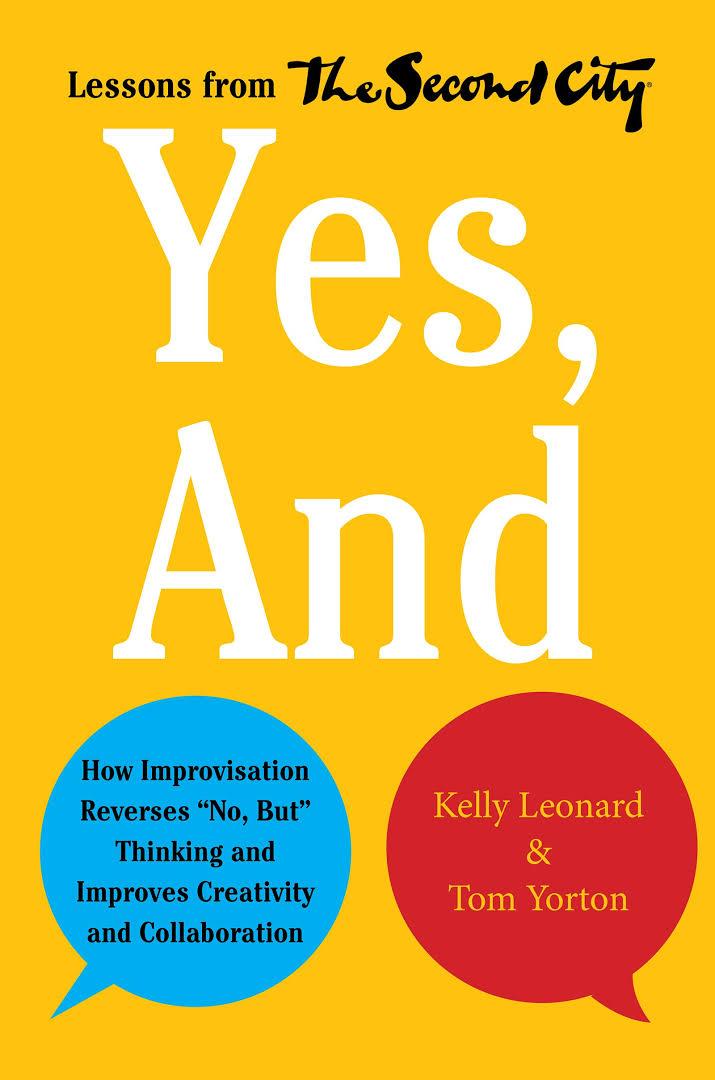
Yes, And
How Improvisation Reverses No, But Thinking and Improves Creativity and Collaboration
Kelly Leonard; Tom Yorton

Brain Disruption
Radical Innovation in Business Through Improv
Bruce Montgomery; Gail Montgomery

The Improv Handbook
The Ultimate Guide to Improvising in Comedy, Theatre, and Beyond
Tom Salinsky; Deborah Frances-White

Something Wonderful Right Away
An Oral History of The Second City and The Compass Players
Jeffrey Sweet

Improvisations in Creative Drama
A Program of Workshops
Betty Keller
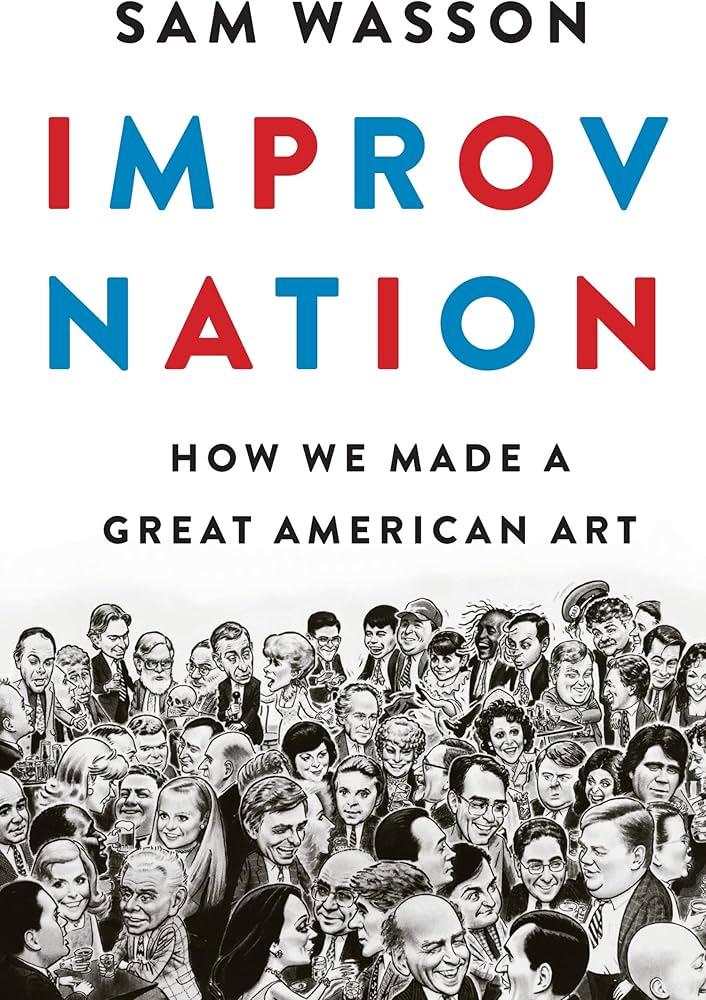
Improv Nation
How We Made a Great American Art
Sam Wasson
Related Games
Dubbed Movie
Dubbed Movie is a scene game in which one set of performers provides the physical action while a separate group supplies all voices from offstage or from the side. The disconnect between bodies and voices generates comedy through mismatched timing, unexpected interpretations, and the challenge of physical performers having to commit fully to words they cannot predict. The game trains both physical storytelling and vocal responsiveness.
Dubbing
Dubbing is a performance game in which one performer provides the physical actions for a character while a separate performer supplies that character's voice from offstage or from behind. The deliberate separation of voice and body creates inherent comedy as the two performers attempt to synchronize, producing a character that appears to have a mind of its own. Dubbing trains complementary skills: the body performer must generate clear, readable physical actions, while the voice performer must interpret and justify those movements through dialogue. The game appears across many short-form formats and is one of the most audience-accessible improv games due to its immediately visible comic mechanism.
Narrator
Narrator is a short-form game in which one performer serves as an omniscient narrator who describes and directs the action while other players act out whatever is narrated. The performers must physicalize the narrator's words instantly, even when the descriptions become absurd, contradictory, or physically challenging. The game generates comedy from the tension between what is narrated and what the performers can actually do, and from the narrator's power to control the scene's reality with a single sentence. The game rewards quick physical commitment from the actors and creative, descriptive language from the narrator.
Cd Shop
CD Shop is a short-form game in which performers play characters browsing or working in a music store, using musical genres and band references as a springboard for character and comedy. The setting provides natural opportunities for musical performance, strong opinions, and cultural clashes. The game rewards pop culture knowledge and distinct character voices.
Cut
Cut is an editing technique used as both a game mechanic and a training exercise. A caller says "cut" to end a scene and immediately begin a new one, or to replay a moment with a different choice. When practiced as an exercise, it trains performers to recognize scene endings and to make clean, decisive transitions.
How to Reference This Page
The Improv Archive. (2026). Disc. Retrieved September 28, 2026, from https://improvarchive.org/games/disc
The Improv Archive. "Disc." The Improv Archive, 2026. https://improvarchive.org/games/disc.
The Improv Archive. "Disc." The Improv Archive, 2026, https://improvarchive.org/games/disc. Accessed September 28, 2026.
The Improv Archive is a systemically maintained repository. The archive itself acts as the corporate author.