Human Props
Human Props is a short-form game in which audience volunteers are used as physical props within a scene, shaped and positioned by the performers to serve as furniture, doors, vehicles, or other objects. The game creates comedy through the awkwardness and absurdity of using real people as inanimate objects. It is a staple of audience-participation shows.
Worth Reading
See all books →
The Improv Illusionist
Using Object Work, Environment, and Physicality in Performance
David Raitt

Drama Games and Improvs
Games for the Classroom and Beyond
Justine Jones; Mary Ann Kelley

Acting Through Improv
Improv Through Theatresports
Lynda Belt; Rebecca Stockley
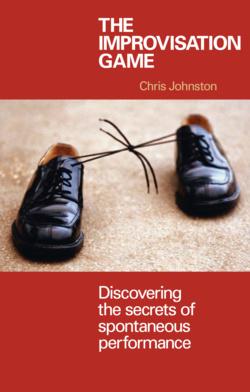
The Improvisation Game
Discovering the Secrets of Spontaneous Performance
Chris Johnston

Theatrical Improvisation
Short Form, Long Form, and Sketch-Based Improv
Jeanne Leep

The Playbook
Improv Games for Performers
William Hall
Related Games
Props
Props is a short-form game in which teams of performers are given unusual objects and must quickly create as many comedic uses for them as possible. Each use is presented as a brief sketch or visual gag. The game was a signature element of Whose Line Is It Anyway and rewards speed, creativity, and physical commitment to absurd transformations.
Prop-aholic
Prop-aholic is a game in which performers use a collection of everyday objects as stand-ins for entirely different items, finding as many creative uses for each prop as possible. The comedy comes from the inventiveness and commitment with which players transform mundane objects. The game rewards quick lateral thinking and physical specificity.
Objects
Objects is an ensemble exercise and short-form game in which players use their bodies to form the physical shape of an audience-suggested object. Players enter one at a time, each adding themselves to the growing sculpture until the group collectively represents the object in physical space. The exercise builds spontaneous physicality, spatial awareness, and the ensemble skill of offering and accepting physical contributions without verbal negotiation.
Spelling Bee
Spelling Bee is a short-form game in which performers participate in a mock spelling bee, but instead of simply spelling words they must perform scenes, songs, or physical demonstrations triggered by each word. The game uses the familiar competition format as a springboard for improvised content and rewards quick creative connections.
Helping Hands
Helping Hands is a short-form game in which one performer stands in front of another and extends their arms through the front performer's sleeves or from behind, so that the back performer's hands serve as the front performer's arms. The front performer speaks and reacts while the back performer's hands gesture, handle props, and physically enact whatever the scene requires. The dissonance between speech and gesture -- and the unpredictable behavior of the "helping hands" -- generates the game's comedy.
Arms
Arms is a short-form game in which one player stands behind another, extending their arms through the front player's sleeves to serve as their hands. The front player speaks and reacts while the hidden player's arms create unpredictable physical business. It is one of the most recognized and widely performed short-form games.
How to Reference This Page
The Improv Archive. (2026). Human Props. Retrieved September 28, 2026, from https://improvarchive.org/games/human-props
The Improv Archive. "Human Props." The Improv Archive, 2026. https://improvarchive.org/games/human-props.
The Improv Archive. "Human Props." The Improv Archive, 2026, https://improvarchive.org/games/human-props. Accessed September 28, 2026.
The Improv Archive is a systemically maintained repository. The archive itself acts as the corporate author.