Props
Props is a short-form game in which teams of performers are given unusual objects and must quickly create as many comedic uses for them as possible. Each use is presented as a brief sketch or visual gag. The game was a signature element of Whose Line Is It Anyway and rewards speed, creativity, and physical commitment to absurd transformations.
Structure
Setup
- Two teams of two performers each are given identical unusual objects: items chosen for their non-obvious use potential.
- Teams alternate presenting brief sketches or visual gags in which they use the object as something other than what it is.
- The host signals when each team's time is up and the other team presents.
How the Game Works
- Each use of the prop is a brief scene or visual gag, typically thirty seconds to two minutes.
- Performers must commit physically to each use, treating the object as what they claim it to be.
- The humor comes from the creativity and speed of the transformations, not from lengthy performances.
- Props rewards high volume: teams that generate many uses in the time available tend to produce more memorable moments.
Prop Selection
- The best props are large enough to be visible but ambiguous in shape: they could be many different things.
- Common effective props: giant inflatable items, odd-shaped foam objects, unusual tools, oversized accessories.
- Props that have only one or two obvious uses tend to exhaust their possibilities quickly.
Scoring and Competition
- Teams may be scored by audience applause after each round, with the higher-applause team winning the round.
- Alternatively, the game runs without competitive scoring, with both teams simply presenting uses in alternation.
How to Teach It
How to Explain It
"You have this object. It can be used as anything except what it actually is. Every time you present a use, commit to it completely: if it's a lawnmower, run it like a lawnmower. Speed matters. You want as many distinct uses as you can produce."
Common Notes
- Commitment is the single most important element. A performer who tentatively suggests what an object might be while holding it awkwardly is not playing Props.
- Speed of transition between uses matters as much as creativity. Teams that dwell on a single mediocre use fall behind teams that cycle quickly through many attempts.
- Encourage physical transformation, not just verbal declaration. Showing the object as a megaphone is more effective than saying "this is a megaphone."
Common Pitfalls
- Teams produce long scenes instead of quick gags. Props is a rapid-fire game, not a scene game.
- Performers choose uses that are too obvious or too similar to each other. The game rewards range: domestic objects, weapons, musical instruments, vehicles.
- Teams use the object as itself and just give it a different name. The physical transformation must be real.
How to Perform It
Audience Intro
"Each team gets one of these [unusual objects]. Their job is to use it as anything except what it is. We're going to alternate back and forth, and you get to decide who's more creative. [Team A], you're up first."
Cast Size
- Ideal: Two teams of two performers each, with a host running the competition.
Staging
- Teams stand on opposite sides of the stage.
- The host stands center with a clear signal to end each team's turn.
Wrap Logic
- The game ends after an agreed number of rounds or when the host calls a final round and the audience votes a winner.
Worth Reading
See all books →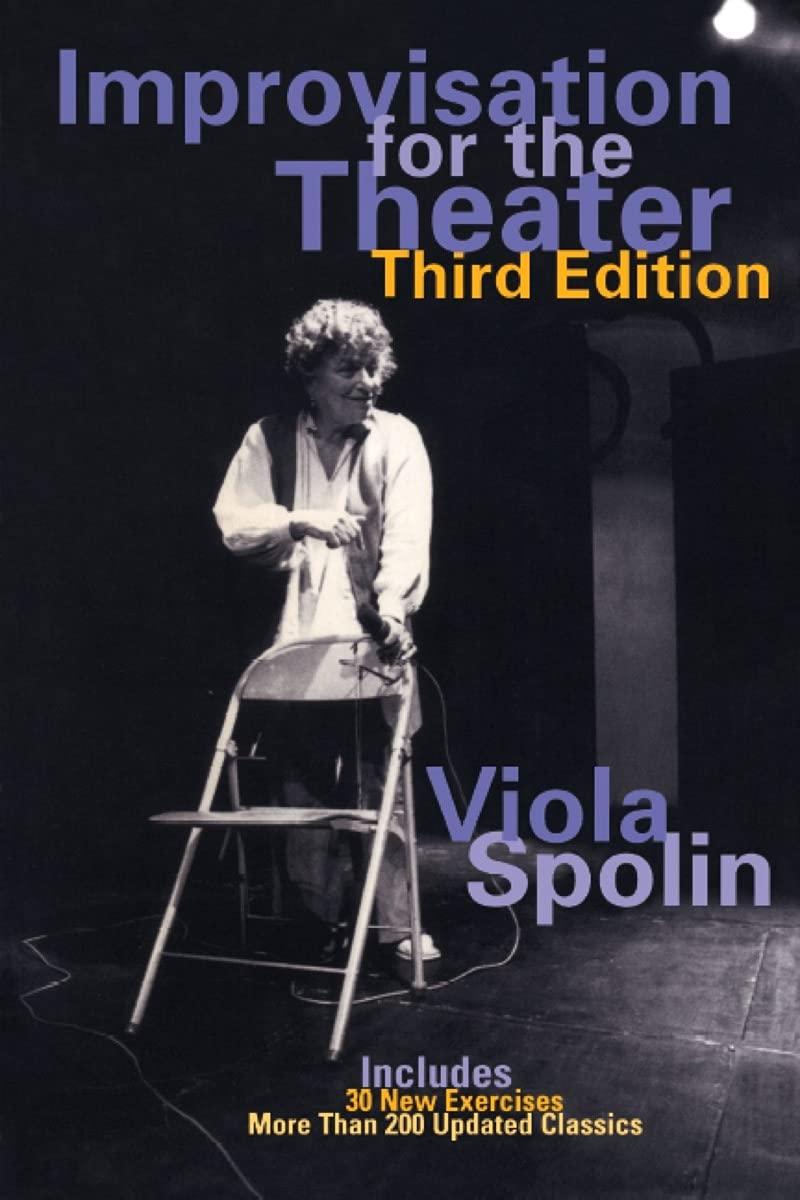
Improvisation for the Theater
A Handbook of Teaching and Directing Techniques
Viola Spolin

Drama Games and Improvs
Games for the Classroom and Beyond
Justine Jones; Mary Ann Kelley
The Improvisation Game
Discovering the Secrets of Spontaneous Performance
Chris Johnston

The Young Actor's Book of Improvisation
Dramatic Situations
Sandra Caruso; Susan Kosoff

Acting Through Improv
Improv Through Theatresports
Lynda Belt; Rebecca Stockley
Theater Games for Rehearsal
Viola Spolin
Related Games
Human Props
Human Props is a short-form game in which audience volunteers are used as physical props within a scene, shaped and positioned by the performers to serve as furniture, doors, vehicles, or other objects. The game creates comedy through the awkwardness and absurdity of using real people as inanimate objects. It is a staple of audience-participation shows.
Ding
Ding is a short-form game in which a host rings a bell or buzzer to signal a performer to replace their last line of dialogue with a new one. The host can ring repeatedly, demanding multiple replacements for the same moment, each new line erasing the previous one within the scene's reality. The game is one of the most widely performed short-form games in the world, popularized through its frequent appearance on Whose Line Is It Anyway? Ding rewards fast verbal invention, the ability to generate multiple alternatives under pressure, and the willingness to abandon a safe choice in favor of a riskier, funnier one.
The Bag
The Bag is a short-form game in which performers draw random objects from a bag and must immediately incorporate each item into an ongoing scene, finding justification for the object's presence within the established narrative. The objects are typically collected from audience members' pockets and belongings before the show, giving the game an element of authentic surprise. The game trains rapid object integration and the improvisational habit of treating unexpected material as an offer.
Arms
Arms is a short-form game in which one player stands behind another, extending their arms through the front player's sleeves to serve as their hands. The front player speaks and reacts while the hidden player's arms create unpredictable physical business. It is one of the most recognized and widely performed short-form games.
Pillars
Pillars is a short-form game in which two or more players stand stock-still onstage as human pillars. Scene players perform a two-person scene, and whenever a scene player taps a pillar, that pillar delivers a random line of dialogue. The scene player must immediately accept and incorporate the line into the scene. The unpredictable verbal intrusions test the performer's ability to justify bizarre offers on the spot and maintain scene logic under pressure.
The Lineage
Explore the schools and structures that influenced or evolved from Props.
Whose Line Is It Anyway?
How to Reference This Page
The Improv Archive. (2026). Props. Retrieved September 28, 2026, from https://improvarchive.org/games/props
The Improv Archive. "Props." The Improv Archive, 2026. https://improvarchive.org/games/props.
The Improv Archive. "Props." The Improv Archive, 2026, https://improvarchive.org/games/props. Accessed September 28, 2026.
The Improv Archive is a systemically maintained repository. The archive itself acts as the corporate author.