What Happens Next
What Happens Next is a game in which performers build an improvised story or scene through a series of offers, with a coach or host prompting each new development by asking "What happens next?" Each offer is accepted, echoed, and built upon before the next prompt arrives. The game trains offer acceptance, narrative momentum, and the collective instinct to advance rather than stall a story.
Structure
Setup
The full ensemble or a designated group of performers begin an improvised adventure or story. A coach or host stands outside the playing space. The performers receive a starting point (a location, a character, or a situation) and begin building the world.
Gameplay
James Mark in Creating Improvised Theatre documents the mechanics: when any actor makes an offer (a narrative suggestion or action), all the other actors shout "Yes!" and echo the offer aloud, affirming it as the shared reality. The coach then asks "What happens next?" and another actor makes the next offer, which advances the story. Each offer is again affirmed by the group before the next prompt arrives.
This call-and-response structure creates collective authorship: no single performer controls the narrative, and each offer is immediately ratified by the ensemble before the story continues. The coach's repeated question creates a rhythm that drives the story forward, preventing performers from dwelling in any single moment.
In the audience-directed version, audience members call out suggestions at each "What happens next?" prompt, and performers execute them with full commitment. This variant makes the game more explicitly performative: the audience becomes a co-author whose directives the performers must interpret and justify in real time.
Katie Goodman in Improvisation for the Spirit names the game and frames it around flexibility: "All improv games require flexibility. There's a game called, simply enough, 'What Happens Next.'" Goodman presents the game as a vehicle for the core improv skill of adapting to unexpected material.
Debrief
After the game, players discuss the offers: which ones moved the story forward versus which ones restated or stalled the existing narrative. The debrief focuses on the difference between an offer that advances (adding new information or consequence) and one that merely elaborates.
How to Teach It
How to Explain It
"We are building a story together. I start with a setup. Then I say: 'And then...' and point to someone. That person adds the next moment. Then we all say 'Yes!' together, and they say 'And then...' and point to someone else. Keep the story moving forward. No blocking, no reversals. Just what happens next."
Objectives
What Happens Next develops two related skills. The first is offer acceptance: the ensemble affirmation ("Yes!") and echo make the acceptance of offers explicit and physical, training the yes-and reflex as a collective rather than individual habit. The second is narrative drive: the repeated question enforces the most fundamental storytelling principle, which is that stories must advance. Performers who restall, over-explain, or fail to add new information become visible failures of the game's central rule.
Scaffolding
Begin with the coach-prompted ensemble version before introducing audience direction. This allows performers to develop facility with the game's structure (offer, affirmation, echo, prompt) without the additional cognitive load of interpreting audience suggestions.
For groups that struggle to make offers (waiting for others to initiate), add a time limit to each prompt: performers have five seconds to respond to "What happens next?" before the coach prompts again. This prevents hesitation from becoming habitual.
Common Coaching Notes
- "Say 'Yes' like you mean it. The echo tells everyone this just happened."
- "What happens next? Don't repeat what just happened. Move the story."
- "If you don't know what happens next, say something anyway. The group will follow."
- "Advance. The story only goes forward."
How to Perform It
The game works as performance primarily in its audience-directed version, where audience members supply the answers to "What happens next?" and performers execute them. The entertainment value comes from the contrast between the audience's suggestions and the performers' ability to justify and commit to them.
The most effective performance moments arise when a suggestion seems impossible to execute and the performer finds an unexpected but satisfying justification. Suggestions that are merely "unusual" produce less interesting performance than suggestions that create genuine staging or logical challenges.
The coach or host in this game has significant influence on pacing. Questions asked too quickly do not give performers time to commit to the current offer before the next arrives; questions asked too slowly create dead moments between story beats. The host must read the room and time the prompts to maintain the scene's momentum while allowing performers to develop each offer.
History
James Mark in Creating Improvised Theatre documents What Happens Next as a structured ensemble game in which the recurring coach prompt drives collective storytelling. Mark's version foregrounds the "Yes" response as an ensemble commitment mechanism, creating a group norm of acceptance before each story development.
Katie Goodman in Improvisation for the Spirit names the game and frames it within the broader improv principle of flexibility, presenting it as a direct training tool for adaptive response to unexpected offers.
The underlying structure of the game connects to foundational improv principles articulated across the tradition. The repeated prompt "What happens next?" externalizes the narrative question that performers are implicitly answering in all story-based improvisation: the game makes the question explicit and collective, giving each performer an equal invitation to advance the narrative.
Worth Reading
See all books →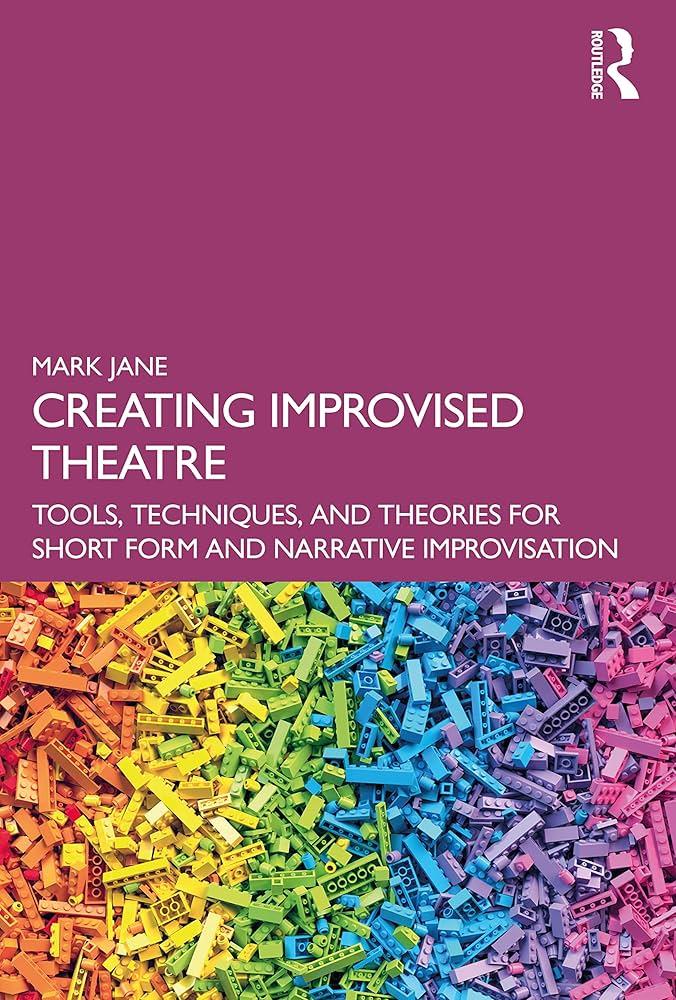
Creating Improvised Theatre
Tools, Techniques, and Theories
Mark Jane

The Improv Handbook
The Ultimate Guide to Improvising in Comedy, Theatre, and Beyond
Tom Salinsky; Deborah Frances-White

Acting Through Improv
Improv Through Theatresports
Lynda Belt; Rebecca Stockley

The Upright Citizens Brigade Comedy Improvisation Manual
Matt Besser; Ian Roberts; Matt Walsh

Embodied Playwriting
Improv and Acting Exercises for Writing
Hillary Haft Bucs; Charissa Menefee

Improvisation for the Spirit
Live a More Creative, Spontaneous, and Courageous Life
Katie Goodman
Related Games
Before or After
Before or After is a short-form game in which performers present a scene, then the audience calls out whether they want to see what happened "before" or "after" the events just depicted. The performers create a new scene that logically connects to the original, revealing backstory or consequences that recontextualize what the audience already witnessed. The game can cycle through multiple rounds, with the audience driving the story forward or backward in time. Before or After trains narrative construction, temporal awareness, and the ability to expand a story in either direction while maintaining internal consistency. The game rewards performers who plant details in early scenes that pay off when the timeline shifts.
Timeline
Timeline is a scene game in which performers play scenes from different moments across a character's or community's history, jumping forward and backward in time to reveal how past events connect to later ones. The game rewards strong narrative tracking and the ability to find surprising causal or thematic links between scenes separated by years or generations.
Meanwhile
Meanwhile is a short-form game in which multiple scenes run in parallel, connected by the transitional word that gives the game its name. When a player or host calls the transition, the current scene freezes and a new scene begins in a different location, time period, or context. The game trains performers in quick context-switching, scene memory, and the ability to pick up a frozen scene exactly where it left off. Callbacks and connections between the parallel storylines elevate the game from a scene-switching exercise into a web of interlocking narratives.
Actor Switch
## Actor Switch: Content Actor Switch is a foundational improv structure, frequently utilized as both a game and an exercise. It centers on the rapid and unexpected exchange of character traits or roles between performers. The core mechanic involves one player initiating a switch by verbally or physically signaling another player to adopt a specific characteristic, emotion, or even a complete persona from the initiating player. This creates a dynamic shift in the scene, demanding adaptability and responsiveness from all involved. The origins of Actor Switch, like many early improv games, are challenging to definitively trace. It likely evolves organically within the burgeoning Chicago improv scene of the 1960s and 70s, drawing from techniques explored by Second City and Del Close. No single individual receives credit for its invention, but its consistent presence in improv training materials suggests early adoption and subsequent refinement by numerous practitioners. It serves as a crucial tool for developing active listening and quick thinking. To execute Actor Switch, a scene begins as usual, with performers establishing a baseline scenario. At any point, a player can declare "Actor Switch!" and then specify the element to be transferred, for example, "Actor Switch: Your frustration!" The targeted player immediately embodies that element, integrating it into their existing character or behavior. This process repeats, with players continually switching elements, creating a layered and unpredictable performance. The goal is not necessarily to create a coherent narrative, but to explore the possibilities of character and reaction. Actor Switch offers several benefits. It encourages performers to observe and react to their scene partners, fostering a heightened sense of ensemble awareness. The rapid shifts challenge performers to abandon preconceived notions and embrace spontaneity. Ultimately, Actor Switch cultivates a playful and dynamic approach to improvisational storytelling.
The Bag
The Bag is a short-form game in which performers draw random objects from a bag and must immediately incorporate each item into an ongoing scene, finding justification for the object's presence within the established narrative. The objects are typically collected from audience members' pockets and belongings before the show, giving the game an element of authentic surprise. The game trains rapid object integration and the improvisational habit of treating unexpected material as an offer.
How to Reference This Page
The Improv Archive. (2026). What Happens Next. Retrieved October 14, 2026, from https://improvarchive.org/games/what-happens-next
The Improv Archive. "What Happens Next." The Improv Archive, 2026. https://improvarchive.org/games/what-happens-next.
The Improv Archive. "What Happens Next." The Improv Archive, 2026, https://improvarchive.org/games/what-happens-next. Accessed October 14, 2026.
The Improv Archive is a systemically maintained repository. The archive itself acts as the corporate author.