Rewind/fast-Forward
Rewind/Fast-Forward is a short-form game in which a host controls the speed and direction of a scene using imaginary playback buttons. "Fast-forward" accelerates the action into the future, "rewind" reverses it, and "play" resumes normal speed. The game demands strong physical commitment and the ability to maintain scene logic across temporal jumps.
Structure
Setup
- Two or more performers play a scene.
- A host stands outside the scene with control over the playback of the scene, using imaginary remote control buttons: play, fast-forward, rewind, slow motion.
- An audience suggestion establishes the scene's situation.
Playback Controls
- Play: the scene proceeds at normal speed and dialogue.
- Fast-forward: performers accelerate to a high-speed version of the scene, their voices and movements compressed and rapid.
- Rewind: performers move backward through the most recent moments of the scene, replaying their actions and dialogue in reverse.
- Slow motion: performers move and speak with extreme deliberateness, drawing out each moment.
- Pause: performers freeze in place until play is called.
How the Scene Works
- The host calls different modes throughout the scene, shifting the temporal experience repeatedly.
- Performers must maintain the logic and continuity of the scene across all modes.
- Rewinding requires that performers reproduce their recent actions and dialogue backward as precisely as possible.
What the Game Trains
- Physical commitment across a wide range of movement speeds.
- Spatial and temporal memory: the ability to replay actions accurately.
- Ensemble synchronization: all performers must shift to the new mode simultaneously.
How to Teach It
How to Explain It
"I have a remote control for your scene. When I call fast-forward, you speed up. When I call rewind, you go backward through exactly what you just did. When I call slow-mo, everything takes forever. The scene keeps making sense no matter what speed I run it at."
Common Notes
- The rewind is the most challenging element. Performers should practice it separately before using it in a performance context. The goal is accurate reversal, not parody of reversal.
- The slow-motion mode reveals physical and vocal commitment: performers cannot hide behind pace in slow-mo.
- The host should use each mode for long enough to create a distinct effect before switching. Rapid-fire mode changes produce chaos rather than comedy.
Common Pitfalls
- Rewind becomes a random backward movement rather than an actual reversal of the specific actions taken. The game requires genuine memory.
- Ensemble synchronization breaks down: performers shift modes at different moments, destroying the shared temporal illusion.
- The host uses fast-forward and rewind so frequently that the scene never has time to establish anything worth accelerating or reversing.
How to Perform It
Audience Intro
"In this game, I have a remote control for the scene. I can fast-forward, rewind, pause, or play any moment. Our performers have to keep the scene going no matter what I do with the remote. Give us a scene to start."
Cast Size
- Ideal: Two to three performers.
- More performers makes the ensemble synchronization more difficult.
Staging
- Performers occupy a defined playing space.
- The host stands to the side with the mimed remote in hand, making each button press clearly visible.
Wrap Logic
- The scene ends when the narrative has reached a natural conclusion, usually after one complete rewind-to-forward arc or a strong button in slow motion.
Worth Reading
See all books →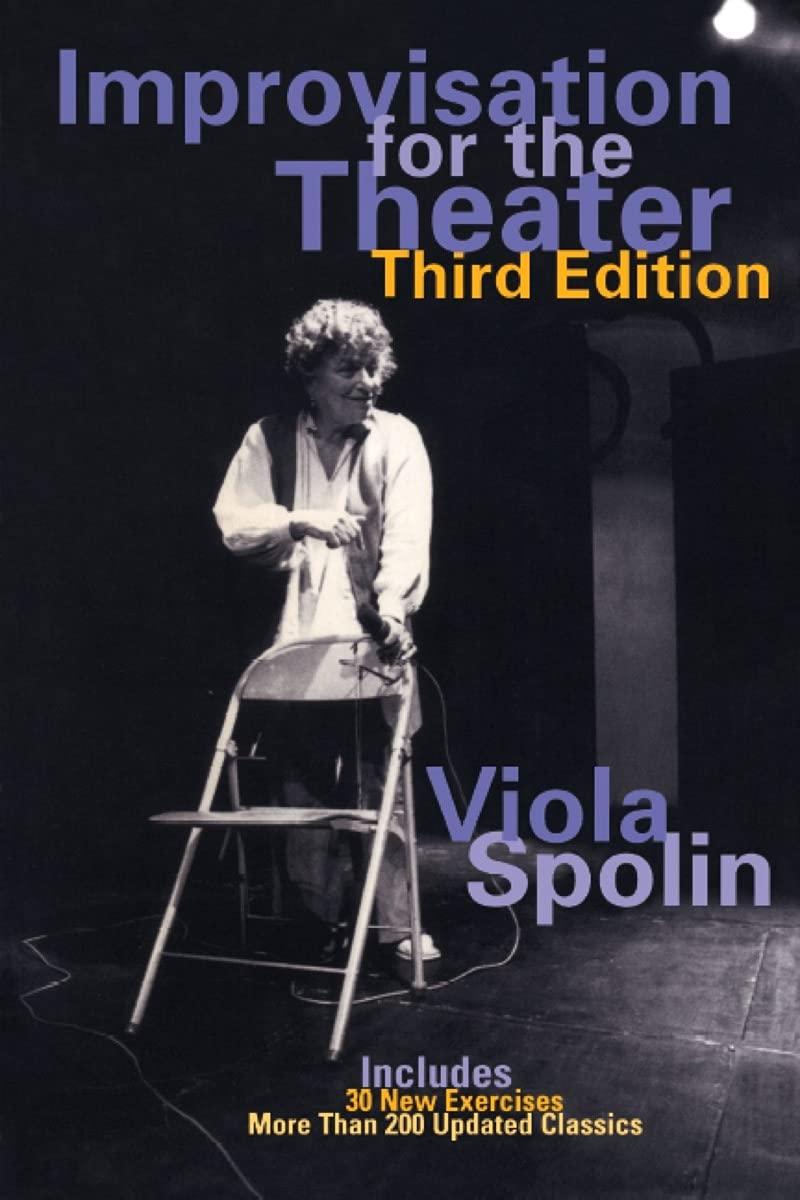
Improvisation for the Theater
A Handbook of Teaching and Directing Techniques
Viola Spolin

Acting Through Improv
Improv Through Theatresports
Lynda Belt; Rebecca Stockley
Theater Games for Rehearsal
Viola Spolin

Directing Improv
Asaf Ronen

Playing Along
37 Group Learning Activities Borrowed from Improvisational Theater
Izzy Gesell
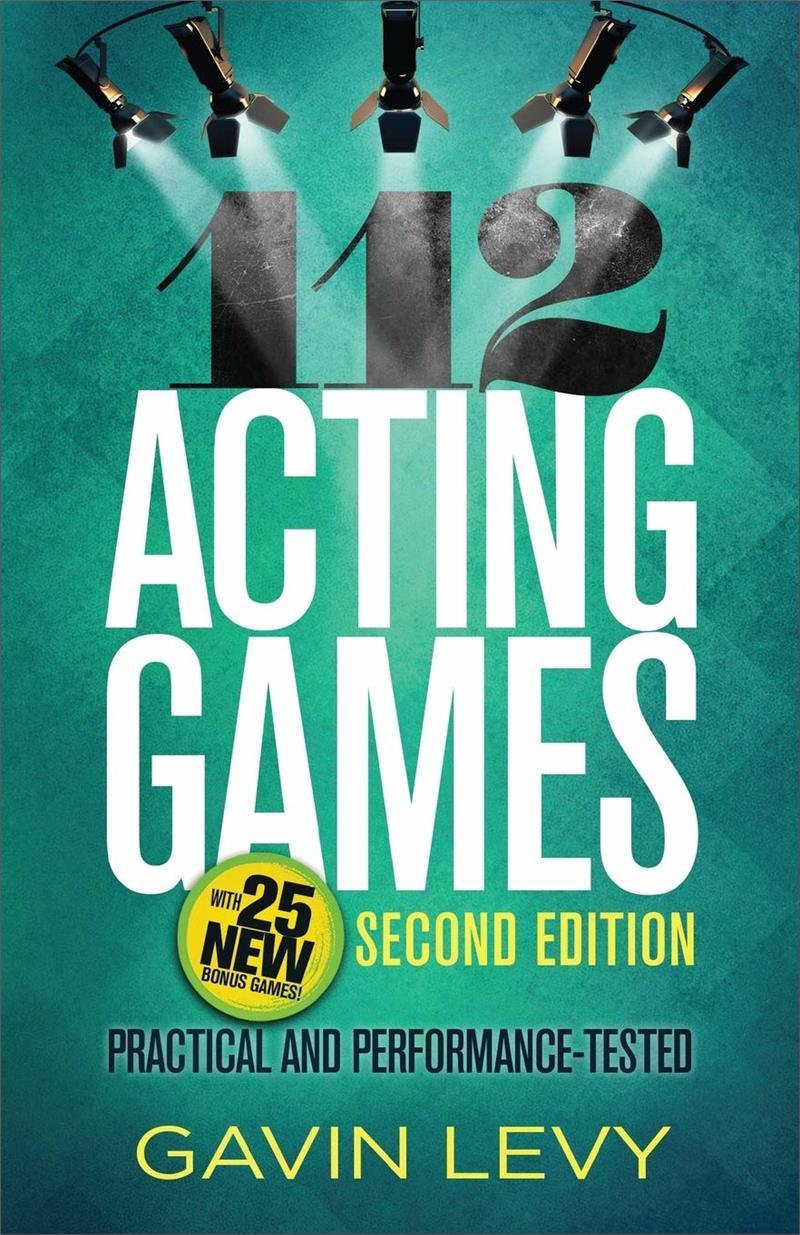
112 Acting Games
Gavin Levy
Related Games
Rewind
Rewind is a short-form game in which a host calls out during a scene, causing performers to physically and verbally reverse their actions back to an earlier moment, then replay forward with different choices. The game rewards strong physical memory, comedic timing at the point of replay, and the ability to generate distinct alternatives quickly when the scene resumes.
Backwards Scene
Backwards Scene is a short-form game in which performers play a scene from its final moment to its first. Each exchange must logically precede what the audience has already seen, creating a reverse-engineered narrative that rewards careful physical and verbal continuity.
Fast Forward
Fast Forward is a scene game in which a caller can jump the scene forward in time, skipping past slow moments to the next point of dramatic interest. Performers must instantly establish the new time frame through changed behavior, dialogue, and physical context. The game trains temporal agility and the ability to communicate the passage of time.
Forward/reverse
Forward/Reverse is a short-form game in which a scene plays forward normally until the caller says "reverse," at which point performers rewind their actions and dialogue exactly. Another "forward" call resumes normal play. The game demands precise physical and verbal recall and rewards clear, reproducible choices.
Countdown
Countdown is a short-form game and exercise in which performers replay a scene in progressively shorter time limits, compressing the action from several minutes down to seconds. Each repetition demands sharper editing, bolder physical choices, and more efficient storytelling as the available time shrinks. The game reveals the essential beats of a scene by forcing performers to strip away everything nonessential, leaving only the core moments that drive the narrative. Countdown demonstrates that the emotional truth of a scene can survive extreme compression, and that clarity improves when performers are forced to prioritize.
How to Reference This Page
The Improv Archive. (2026). Rewind/fast-Forward. Retrieved September 28, 2026, from https://improvarchive.org/games/rewindfast-forward
The Improv Archive. "Rewind/fast-Forward." The Improv Archive, 2026. https://improvarchive.org/games/rewindfast-forward.
The Improv Archive. "Rewind/fast-Forward." The Improv Archive, 2026, https://improvarchive.org/games/rewindfast-forward. Accessed September 28, 2026.
The Improv Archive is a systemically maintained repository. The archive itself acts as the corporate author.