Tell the Truth
Tell the Truth is a game in which a small group of performers privately construct a mix of true personal stories and invented ones, then present them all as true while observers attempt to identify which account is genuine. The game teaches that specificity and conviction make any story believable, and that the most implausible-sounding detail is often the true one. It develops honest performance and the actor's capacity to fully inhabit invented material.
Structure
Setup
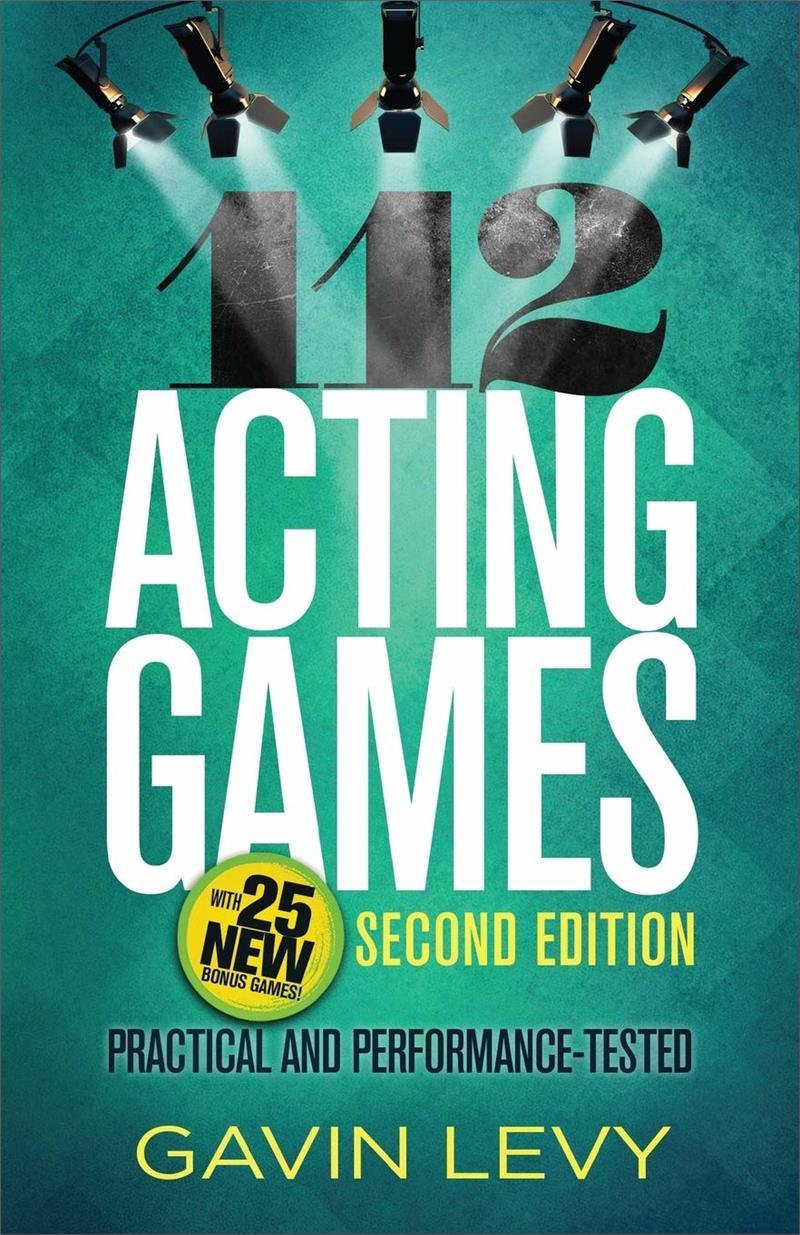
Gavin Levy in 112 Acting Games documents exercise 96, Tell the Truth, in his Nonverbal Communication chapter: five students are sent outside the room. While outside, they privately coordinate a set of stories: some true, some invented. All students will present their account as genuine, and the class must determine who is telling the truth.
Gameplay
The five students return and, one at a time or in turn, tell their stories. Each performer commits fully to their account as though it is true, regardless of whether it is. Observers watch and listen for behavioral signals: vocal confidence, physical ease, eye contact, the quality of detail, and the emotional texture of the storytelling.
After all performers have spoken, observers vote on who they believe. The performers then reveal which stories were true.
Variants include the classroom-familiar "Two Truths and a Lie" format, where each individual performer presents three statements (two true, one false) and the group identifies the lie. This individual version is easier to manage than the five-person group version but provides less exposure to the ensemble dynamics of false testimony.
Debrief
The debrief is the game's most instructive moment. Players discuss which performances were convincing and which were not, and why. The conversation typically surfaces several consistent findings: invented stories with very specific, unusual details are more convincing than generic ones; true stories told with obvious self-consciousness are less convincing than false stories told with relaxed confidence; and the behavioral signals of discomfort (breaking eye contact, speeding up the delivery, adding unnecessary disclaimers) are the same regardless of the story's truth value.
How to Teach It
How to Explain It
"Some of you have true stories. Some of you have invented stories. You are all going to tell your stories as if they are true. The audience decides at the end who is telling the truth and who isn't. Commit to the story. Do not telegraph either way."
Objectives
Tell the Truth develops two capacities. The first is conviction: the ability to commit fully to any material, true or invented, without telegraphing the difference through behavioral signals. This is a core acting skill that applies to all character and fiction work. The second is behavioral self-awareness: seeing the specific physical and vocal habits that reveal internal state (hesitation, avoidance, urgency) and developing the ability to consciously manage those signals.
Scaffolding
Begin with the individual Two Truths and a Lie format before the five-person group version. Individual performers face lower social stakes and have more control over their presentation, making the experience less intimidating for beginners.
After the reveal, have performers demonstrate their performance again: this time, invite them to deliver the false story with the same behavioral ease they brought to the true one. The contrast between the two deliveries often reveals the specific habits that gave them away.
Common Coaching Notes
- "The more specific the detail, the more believable the story."
- "Conviction doesn't mean speed. A genuine memory often arrives slowly."
- "If you know it's false, your body might be trying to hide it. Let the false story live in your body the way a true story would."
- "Observers: watch the eyes, the hands, the speed. Not the content."
How to Perform It
In performance contexts, the game functions primarily as an interactive audience engagement piece. The entertainment value lies in the audience's uncertainty and in the reveal: the moment when the actual truth is disclosed and the audience discovers how well (or badly) they read the performers.
The game's most interesting performances often arise from performers whose true stories are more implausible than their false ones. A true story about an improbably strange real event, presented with the casual confidence of someone for whom that event is simply a memory, can be far less convincing than a carefully constructed invention presented with elaborate sincerity. This is the game's central paradox: truth and conviction are independent variables.
Hosts who frame the game well for the audience increase engagement: asking audience members to share their initial impressions of each performer before the reveal creates investment in the outcome and makes the debrief more participatory.
History
Gavin Levy documents Tell the Truth as exercise 96 in 112 Acting Games (2005), placing it in Chapter 17: Nonverbal Communication. Levy's framing of the exercise as a nonverbal communication activity emphasizes its function as a training tool for behavioral self-awareness: the exercise makes visible the physical and vocal signals that communicate truthfulness or deception regardless of the content of the spoken material.
The game's structure is related to the social party game Two Truths and a Lie, which has circulated in social settings and educational contexts across many decades. The improv training version reframes the social game as a performance exercise focused on conviction and commitment.
Worth Reading
See all books →
Embodied Playwriting
Improv and Acting Exercises for Writing
Hillary Haft Bucs; Charissa Menefee
112 Acting Games
Gavin Levy

The Improvisation Game
Discovering the Secrets of Spontaneous Performance
Chris Johnston

Drama Games and Improvs
Games for the Classroom and Beyond
Justine Jones; Mary Ann Kelley

Impro for Storytellers
Keith Johnstone

Truth in Comedy
The Manual of Improvisation
Charna Halpern; Del Close; Kim Howard Johnson
Related Games
Believe It or Not
Believe It or Not is a storytelling game in which one player tells a story that is either true or entirely invented, and the audience or fellow players must determine which. The storyteller delivers the narrative with equal conviction regardless of its veracity, making the game a test of performance commitment and audience perception. The game rewards detailed, specific delivery and the ability to sell a narrative through confidence, body language, and emotional authenticity. For audiences and fellow players, the game sharpens critical listening and observation. Believe It or Not functions as both a performance game and a training exercise, building skills in storytelling, character conviction, and the relationship between truth and believability in performance.
Rumors
Rumors is a scene game in which a piece of information passes through a chain of performers, each of whom retells it to the next in a brief two-person scene. The message transforms with each retelling as performers misunderstand, embellish, or omit details, until the final version bears little resemblance to the original. The game dramatizes the mechanics of gossip and gives performers a visceral understanding of how information distorts through social transmission.
Confessions
Confessions is a scene game in which one or more characters reveal secrets, admissions, or hidden truths to another character or directly to the audience. The inherent vulnerability and dramatic stakes of confession provide strong emotional fuel without requiring an external gimmick. The game trains performers in emotional honesty, the ability to let a revelation land with appropriate weight, and the skill of responding authentically to unexpected information. Confessions rewards patience and specificity: the power of a confession comes from the details, not from the volume or melodrama of the delivery.
The Lineage
Explore the schools and structures that influenced or evolved from Tell the Truth.
112 Acting Games (Levy)
How to Reference This Page
The Improv Archive. (2026). Tell the Truth. Retrieved September 28, 2026, from https://improvarchive.org/games/tell-the-truth
The Improv Archive. "Tell the Truth." The Improv Archive, 2026. https://improvarchive.org/games/tell-the-truth.
The Improv Archive. "Tell the Truth." The Improv Archive, 2026, https://improvarchive.org/games/tell-the-truth. Accessed September 28, 2026.
The Improv Archive is a systemically maintained repository. The archive itself acts as the corporate author.