Ventriloquist
Ventriloquist is a two-player game in which one performer provides the voice and another provides the body of a single character. The voice player speaks; the body player moves, gestures, and reacts physically, without speaking. The two must coordinate in real time without prior planning to create a coherent, unified character. The structural split between voice and body generates comedy from the inevitable misalignments while training deep physical listening and ensemble coordination.
Structure
Setup
Two performers work as a pair. One sits or stands as the dummy (the body); the other stands or sits behind or beside them as the ventriloquist (the voice). In a common setup, the dummy sits in a chair and the voice player stands beside or behind, occasionally placing a hand on the dummy's back as the signal to move. In some versions, the body player only moves when physically tapped or prompted by the voice player.
Gameplay
A scene begins. The voice player speaks as the character; the body player provides all physical expression: gestures, reactions, shifts of weight, looks, mime actions. Neither player may do the other's job: the voice player does not move their own face or body to indicate the scene; the body player does not speak.
The comedy and the learning both arise from coordination failures: the voice describes an action the body has not yet performed; the body reacts to something the voice has not yet said. Strong pairs develop a call-and-response rhythm that makes these misalignments look deliberate.
In the scene variant, the paired character interacts with a scene partner played by a third performer. This adds the complexity of a full scene while maintaining the mechanical split.
Mechanical Signal Variant
Gay Grasberg documents a variant in which the ventriloquist taps the dummy's back as a signal to speak. The dummy opens and closes their mouth on the tap; the voice player speaks. This introduces a precise mechanical synchrony requirement that makes the split explicit and audible.
How to Teach It
How to Explain It
"Two performers work as a pair. One is the body: they move but do not speak. The other is the voice: they stand beside or behind the body and provide all the dialogue. The body plays every scene choice physically. The voice speaks what the body cannot."
Objectives
Ventriloquist develops listening and physical expression simultaneously. The body player must make the voice legible through physical action without any verbal channel. The voice player must track and validate the body player's choices in real time. The exercise also demonstrates the relationship between voice and body in character: separating them shows how much either can carry alone and how much more they carry together.
Pairing
Pair performers who have not worked closely together. Performers who know each other's rhythms well can shortcut the real coordination challenge. The useful version of the exercise is the one where genuine negotiation is required.
Common Coaching Notes
- "Voice player: give them something to react to, then stop. Let them react."
- "Body player: your physical response is the punctuation. Don't let the sentence go by without marking it."
- "If the body does something unexpected, the voice must use it. Do not ignore it."
- "The disconnection between what we hear and what we see is the game. Commit to both."
How to Perform It
Voice Player
The voice player's primary job is to create space for the body player rather than filling all available space with speech. The most effective voice players give the body player moments: a pause after a statement, a question that requires a physical reaction before the scene moves on. Voice players who speak continuously strand the body player with nothing to react to.
The voice player should also track what the body player is doing and use it: if the body player gestures unexpectedly toward the ceiling, the voice player should name or justify it rather than ignoring it.
Body Player
The body player's commitment must be total. Half-hearted physical expression reads as uncertainty, not character. The body should be specific: not "restless" but crossing and uncrossing the legs, picking at a fingernail, looking repeatedly over the left shoulder.
The body player must track the voice and respond to it physically even when the voice has not cued a specific action. A statement like "I find this very interesting" demands a physical reaction that the body player must provide from imagination rather than instruction.
Audience Intro
"Two performers will work as one. One is the body: they move but do not speak. The other is the voice: they provide all the dialogue. Watch how the two halves communicate without speaking to each other."
History
The ventriloquist and dummy as an improvisational form was developed at The Compass, the Chicago improvisational company that preceded Second City. Sam Wasson documents that the form was invented as an improvisational premise, often performed by George Segal as the ventriloquist and Ben Henry as the dummy. Segal, the more verbally adept of the pair, provided the voice; Henry, physically smaller, provided the body.
The form has roots in professional ventriloquism, a popular entertainment tradition in American vaudeville and variety theatre. The improv game inverts the structure of the vaudeville act by requiring two live performers to split the functions that a single ventriloquist normally maintains alone, creating the coordination challenge.
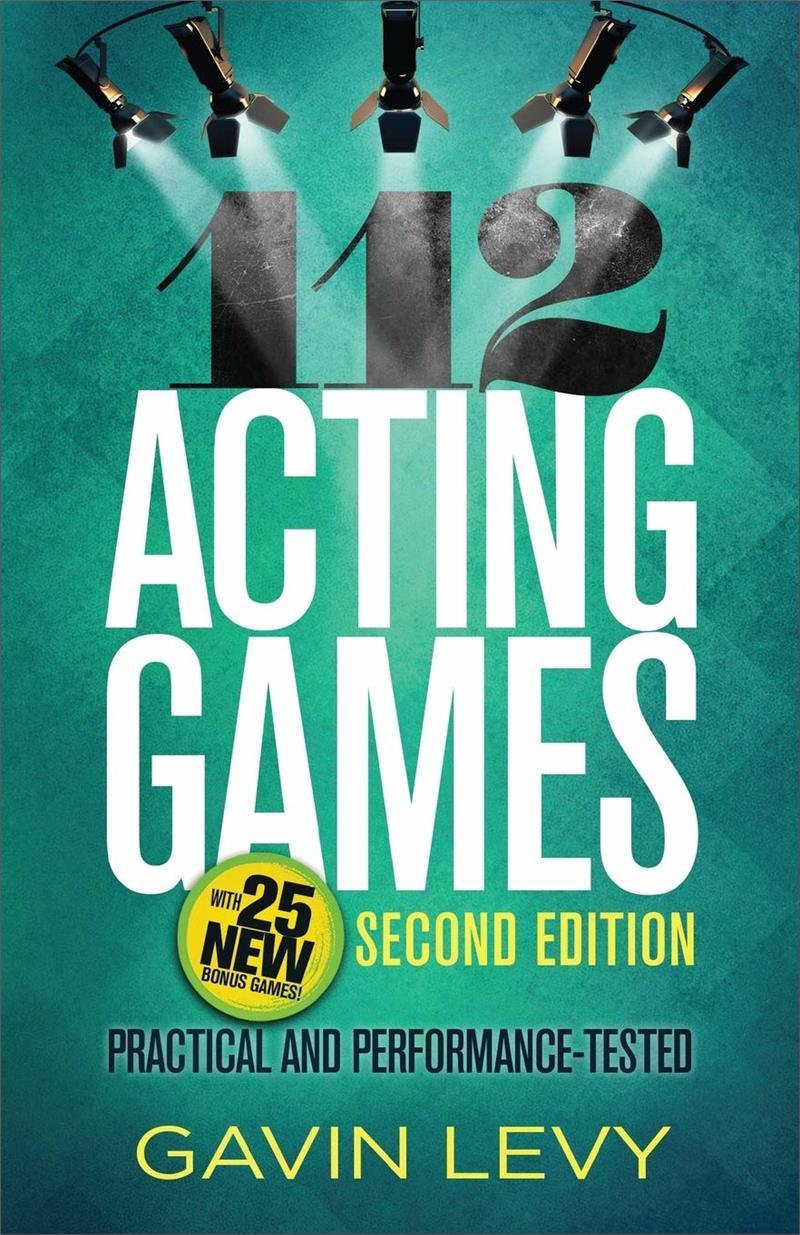
Gavin Levy documents the exercise as Game 93 in 112 Acting Games, framing it as an advanced listening and coordination exercise. Gay Grasberg documents a variant in Great Group Skits. Tim Kazurinsky recalled performing the dummy for George Wendt at Buffalo improv workshops with Del Close, suggesting the form continued to circulate in Chicago improv after the Compass years.
Worth Reading
See all books →
Improv Nation
How We Made a Great American Art
Sam Wasson
112 Acting Games
Gavin Levy

Great Group Skits
50 Character-Building Scenarios for Teens
Lynn Grasberg; Gina Oldenburg
Improvisation for the Theater
A Handbook of Teaching and Directing Techniques
Viola Spolin

Group Improvisation
The Manual of Ensemble Improv Games
Peter Campbell Gwinn; Charna Halpern
Theater Games for Rehearsal
Viola Spolin
Related Games
One Voice
One Voice is a game and exercise in which two or more performers speak simultaneously, attempting to produce the same words at the same time without prior coordination. The group must listen intently and follow collective impulses rather than individual intention, producing coherent shared speech as a single entity. The game develops group mind, deep listening, and the capacity to surrender individual control to collective will.
Narrator
Narrator is a short-form game in which one performer serves as an omniscient narrator who describes and directs the action while other players act out whatever is narrated. The performers must physicalize the narrator's words instantly, even when the descriptions become absurd, contradictory, or physically challenging. The game generates comedy from the tension between what is narrated and what the performers can actually do, and from the narrator's power to control the scene's reality with a single sentence. The game rewards quick physical commitment from the actors and creative, descriptive language from the narrator.
Dubbing
Dubbing is a performance game in which one performer provides the physical actions for a character while a separate performer supplies that character's voice from offstage or from behind. The deliberate separation of voice and body creates inherent comedy as the two performers attempt to synchronize, producing a character that appears to have a mind of its own. Dubbing trains complementary skills: the body performer must generate clear, readable physical actions, while the voice performer must interpret and justify those movements through dialogue. The game appears across many short-form formats and is one of the most audience-accessible improv games due to its immediately visible comic mechanism.
Bidirectional Satellite TV
Bidirectional Satellite TV is a dubbing game in which two pairs of performers are placed in separate areas, each watching the other on an imaginary screen. One pair provides the physical action while the other provides the voices, and they switch roles back and forth. The disconnection between bodies and voices generates comedy through mismatched timing and interpretation.
The Lineage
Explore the schools and structures that influenced or evolved from Ventriloquist.
112 Acting Games (Levy)
How to Reference This Page
The Improv Archive. (2026). Ventriloquist. Retrieved September 28, 2026, from https://improvarchive.org/games/ventriloquist
The Improv Archive. "Ventriloquist." The Improv Archive, 2026. https://improvarchive.org/games/ventriloquist.
The Improv Archive. "Ventriloquist." The Improv Archive, 2026, https://improvarchive.org/games/ventriloquist. Accessed September 28, 2026.
The Improv Archive is a systemically maintained repository. The archive itself acts as the corporate author.