Voices from Heaven
Voices from Heaven is a short-form game in which offstage performers provide the spoken thoughts, inner commentary, or narration for onstage performers who move and react silently, creating comedy and dramatic irony through the gap between visible behavior and revealed interior.
Structure
The Setup
Two or more performers take the stage and begin a scene in mime or near-silence. One or more additional performers stand offstage or at the side and will provide the voices.
The Voices
The offstage performers voice the inner thoughts, second-guessing, or unfiltered reactions of the onstage performers. The voices may be assigned to specific characters or shift fluidly. Onstage performers react to the voices, creating feedback loops between stated thought and physical behavior.
The Scene
The game builds through the escalating specificity and absurdity of the interior commentary. The scene ends when the emotional arc reaches a peak or a natural conclusion.
How to Teach It
Objectives
Voices from Heaven trains offstage performers to listen deeply to physical behavior and find specific, truthful interior commentary rather than easy jokes. It trains onstage performers to receive and respond truthfully.
Common Pitfalls
Voices become a running commentary rather than revelations. The voice should feel like something the character would not choose to say aloud, not just a description of what the character is doing.
How to Perform It
Performance Notes
The most productive voices are specific and committed, not simply sarcastic. A voice that reveals genuine desire, fear, or confusion is more interesting than one that mocks the character.
Onstage performers should react to the voices as if they are genuinely hearing their own thoughts, not performing reaction. The game comes alive when the physical behavior and the voiced interior begin to diverge comically or poignantly.
Worth Reading
See all books →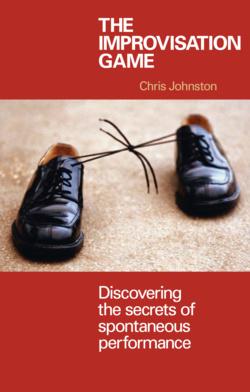
The Improvisation Game
Discovering the Secrets of Spontaneous Performance
Chris Johnston

Theatrical Improvisation, Consciousness, and Cognition
Clayton D. Drinko

Something from Nothing
The Technique of Improvisation
Richard Goteri

Improvisation On the Edge
Notes from On and Off Stage
Ruth Zaporah
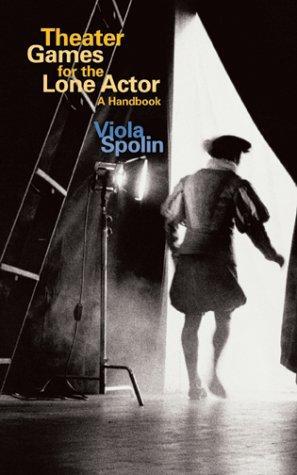
Theater Games for the Lone Actor
Viola Spolin
Theater Games for Rehearsal
Viola Spolin
Related Games
Call from Ray
Call from Ray is a short-form game in which a scene is interrupted by a phone call from an unseen character named Ray, whose offstage dialogue (supplied by another performer) introduces new information that shifts the scene. Each call raises the stakes or redirects the narrative. The game trains adaptability and the ability to incorporate external offers mid-scene.
Asides
Asides is a scene technique game in which performers periodically break from the action to address the audience directly with their character's private thoughts. Borrowed from theatrical convention dating back to Shakespeare and the Restoration comedy tradition, the aside allows a character to reveal inner monologue, secret motives, or contradictory feelings while other characters on stage cannot hear what is said. In improv, the technique layers subtext over surface dialogue, creating dramatic irony and comedy through the gap between what characters say to each other and what they confide to the audience. The game trains performers to maintain dual awareness of both the scene and the audience, and to develop rich inner lives for their characters that extend beyond spoken dialogue.
Narrator
Narrator is a short-form game in which one performer serves as an omniscient narrator who describes and directs the action while other players act out whatever is narrated. The performers must physicalize the narrator's words instantly, even when the descriptions become absurd, contradictory, or physically challenging. The game generates comedy from the tension between what is narrated and what the performers can actually do, and from the narrator's power to control the scene's reality with a single sentence. The game rewards quick physical commitment from the actors and creative, descriptive language from the narrator.
Id
Id is a scene game in which a performer's unfiltered subconscious desires are voiced by a second player, creating a running commentary of primal wants beneath the surface dialogue. The tension between polite conversation and raw impulse generates comedy and dramatic irony. The game highlights the gap between social behavior and inner life.
Dubbed Movie
Dubbed Movie is a scene game in which one set of performers provides the physical action while a separate group supplies all voices from offstage or from the side. The disconnect between bodies and voices generates comedy through mismatched timing, unexpected interpretations, and the challenge of physical performers having to commit fully to words they cannot predict. The game trains both physical storytelling and vocal responsiveness.
Interpretation for the Deaf
Interpretation for the Deaf is a performance game in which one player delivers a speech, presentation, or scene narration while another provides increasingly expressive and divergent sign language interpretation. The interpreter's physical commentary develops a parallel narrative that may amplify, contradict, or heighten what the speaker is saying. The game rewards physical creativity, comic timing, and the ability to find performance opportunities in the gap between the spoken and the signed.
How to Reference This Page
The Improv Archive. (2026). Voices from Heaven. Retrieved September 28, 2026, from https://improvarchive.org/games/voices-from-heaven
The Improv Archive. "Voices from Heaven." The Improv Archive, 2026. https://improvarchive.org/games/voices-from-heaven.
The Improv Archive. "Voices from Heaven." The Improv Archive, 2026, https://improvarchive.org/games/voices-from-heaven. Accessed September 28, 2026.
The Improv Archive is a systemically maintained repository. The archive itself acts as the corporate author.