Agreement
The principle that improvisers accept and affirm the offers made by their scene partners rather than negating or contradicting them. Agreement does not mean characters must agree with each other in a scene; it means the performers share a common reality and build within it.
At the foundation of all improvisation lies a deceptively simple principle: performers accept and affirm the offers made by their scene partners rather than negating or contradicting them. Agreement does not mean characters must agree with each other within a scene; it means the performers share a common reality and build within it. This distinction is essential. Two characters can argue, disagree, or hold opposing views while the performers remain in full agreement about the world they are constructing together.
The concept traces its practical roots to the teaching traditions of modern improvisation, where it emerged as one of the first principles introduced to new performers. In workshop settings, facilitators often distinguish between accepting and agreement, a distinction explored in applied improvisation pedagogy. As Theresa Robbins Dudeck frames in reflective exercises, participants are asked to consider what the difference is between accepting and agreement, pushing practitioners to recognize that acceptance operates at the level of the performer's commitment to shared reality, while agreement is the broader collaborative stance that sustains a scene.
In practice, agreement functions as a contract between performers. Much like the legal agreement Ben Jonson satirized in the induction to Bartholomew Fair, where playhouse management and spectators negotiated terms of engagement, improvisers enter scenes with an implicit pact to honor what has been established. When one performer names the location, relationship, or circumstance, the other builds on that foundation rather than replacing it. This principle extends beyond two-person scenes; in group work, agreement requires that the entire ensemble commit to shared goals. As acting pedagogy emphasizes, whatever method a group uses to prepare will only work if there is agreement and follow-through from the whole class.
Teaching agreement typically begins with exercises that make the principle tangible. Coaches instruct students to respond to offers with affirmation before adding new information. The phrase "Yes, and" serves as shorthand for this process, though experienced teachers caution against reducing agreement to a verbal formula. Agreement lives in behavior, not just language. A performer who says "yes" while physically withdrawing from a scene or abandoning an established reality has not truly agreed. Coaches also teach agreement through collaborative problem-solving exercises, where participants must check for agreement and gain commitment to shared goals before forging ahead, as described in business improvisation methodology.
The most common misunderstanding is the conflation of agreement with compliance. New improvisers sometimes believe that agreement means their characters cannot have conflict, tension, or differing perspectives. This produces flat, tension-free scenes where nothing is at stake. Skilled practitioners understand that rich scenes often feature characters in vigorous disagreement while the performers maintain absolute agreement about the reality of the world. A character can refuse another character's request; what the performer cannot do is deny that the request was made.
Agreement connects directly to several related concepts. It is the mechanism through which offers gain value, since an offer only becomes part of the scene's reality when it is accepted. It underpins the game of the scene, because finding and heightening a pattern requires all performers to recognize and build on the same discovery. It also supports commitment, as genuine agreement demands that performers invest fully in established circumstances rather than hedging or keeping options open. In collaborative creation, as improvisation teacher and director Mark Jane describes, scene partners must work together to find an agreement on how to resolve situations, and how they do so reveals the truth of the relationships they have built.
Further Reading
See all books →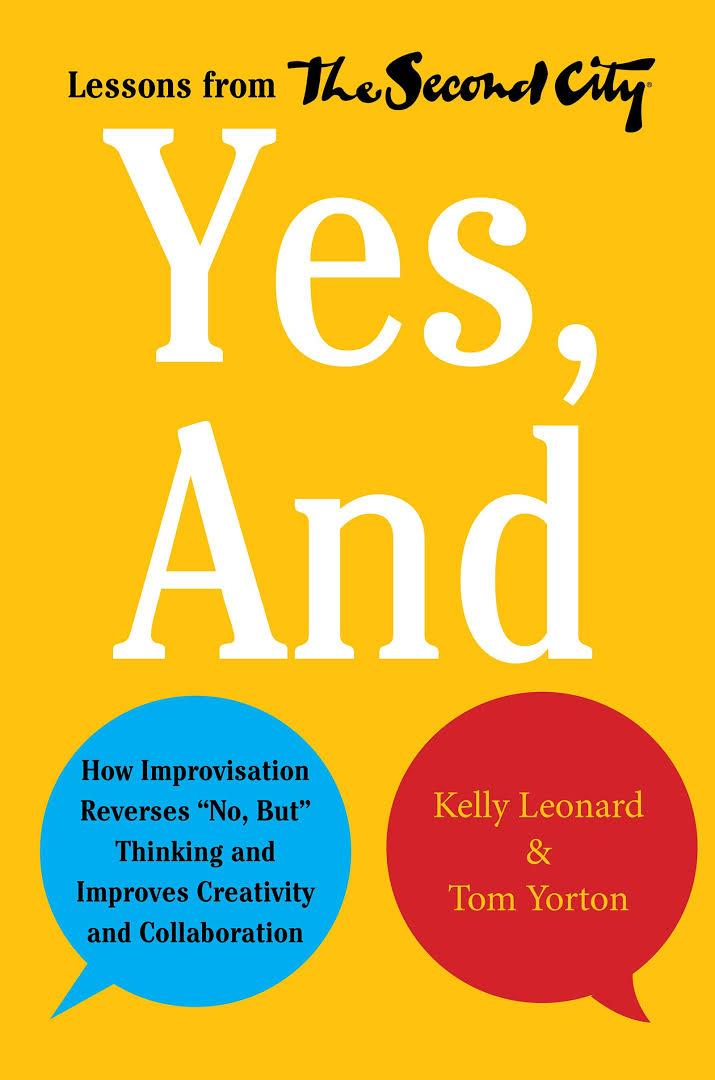
Yes, And
How Improvisation Reverses No, But Thinking and Improves Creativity and Collaboration
Kelly Leonard; Tom Yorton

Business Improv
Experiential Learning Exercises to Train Employees
Val Gee

Comedy and Distinction
The Cultural Currency of a 'Good' Sense of Humour
Sam Friedman

Legislative Theatre
Using Performance to Make Politics
Augusto Boal

Theatrical Improvisation
Short Form, Long Form, and Sketch-Based Improv
Jeanne Leep

Devising Performance
A Critical History
Deirdre Heddon; Jane Milling
How to Reference This Page
The Improv Archive. (2026). Agreement. Retrieved November 5, 2026, from https://improvarchive.org/learn-improv/concepts/agreement
The Improv Archive. "Agreement." The Improv Archive, 2026. https://improvarchive.org/learn-improv/concepts/agreement.
The Improv Archive. "Agreement." The Improv Archive, 2026, https://improvarchive.org/learn-improv/concepts/agreement. Accessed November 5, 2026.
The Improv Archive is a systemically maintained repository. The archive itself acts as the corporate author.