Commitment
The principle that improvisers should fully invest in their choices rather than hedging, commenting on their own work, or abandoning ideas prematurely. A fully committed choice, even if unconventional, reads as confident and grounded to an audience.
At its core, commitment in improvisation refers to the principle that performers should fully invest in their choices rather than hedging, commenting on their own work, or abandoning ideas prematurely. A fully committed choice, even if unconventional, reads as confident and grounded to an audience. This concept operates as both a philosophical stance and a practical technique: when an improviser commits completely to a character, emotion, or scenario, the audience receives permission to believe in the reality being created onstage.
The principle extends well beyond comedic performance. In applied improvisation contexts, commitment appears as a foundational professional skill. Business improv practitioners identify "100 Percent Commitment" alongside concentration and flexibility as essential capacities for problem solving, collaboration, and managing change. The concept translates directly into workplace contexts where half-measures and hedged decisions produce weaker outcomes than fully invested action, even when that action requires mid-course correction.
In performance practice, commitment manifests most visibly in physical and emotional choices. Mask work, as described in improvised theatre pedagogy, demonstrates this clearly: a mask performer's immediacy and total commitment to the text creates a powerful experience for the audience. The performer cannot step outside the reality of the mask to signal irony or distance. This same quality applies to unmasked improvisation, where performers who fully inhabit their choices create more compelling scenes than those who maintain a protective layer of self-awareness.
Teaching commitment often begins with addressing inhibition. Work with older adults in creative drama settings reveals how rigid inhibitions must be overcome before participants can offer the commitment of time, energy, and vulnerability that improvisation demands. Coaches frequently encounter performers who protect themselves by making small, safe choices or by signaling to the audience that they know their choice is silly. The pedagogical challenge lies in creating environments where full investment feels safe enough to attempt.
Commitment also functions as a group contract. In ensemble-based devising, collaborative commitment operates as a practical expression of shared purpose, enabling non-hierarchical creation. When one performer commits fully and another hedges, the scene loses coherence. The concept therefore connects closely to agreement and support: commitment without acceptance from scene partners becomes bulldozing, while acceptance without commitment produces tepid, uncommitted work.
A common misunderstanding conflates commitment with rigidity. Committed improvisers do not cling stubbornly to their first idea regardless of what emerges in the scene. Rather, they invest fully in each moment as it arrives, which may mean committing completely to a new direction when the scene shifts. The discipline lies in bringing full energy and presence to whatever choice is active, not in refusing to adapt. Similarly, commitment should not be confused with volume or intensity alone; a quiet, specific choice made with total conviction demonstrates commitment as effectively as a bold physical gesture.
Further Reading
See all books →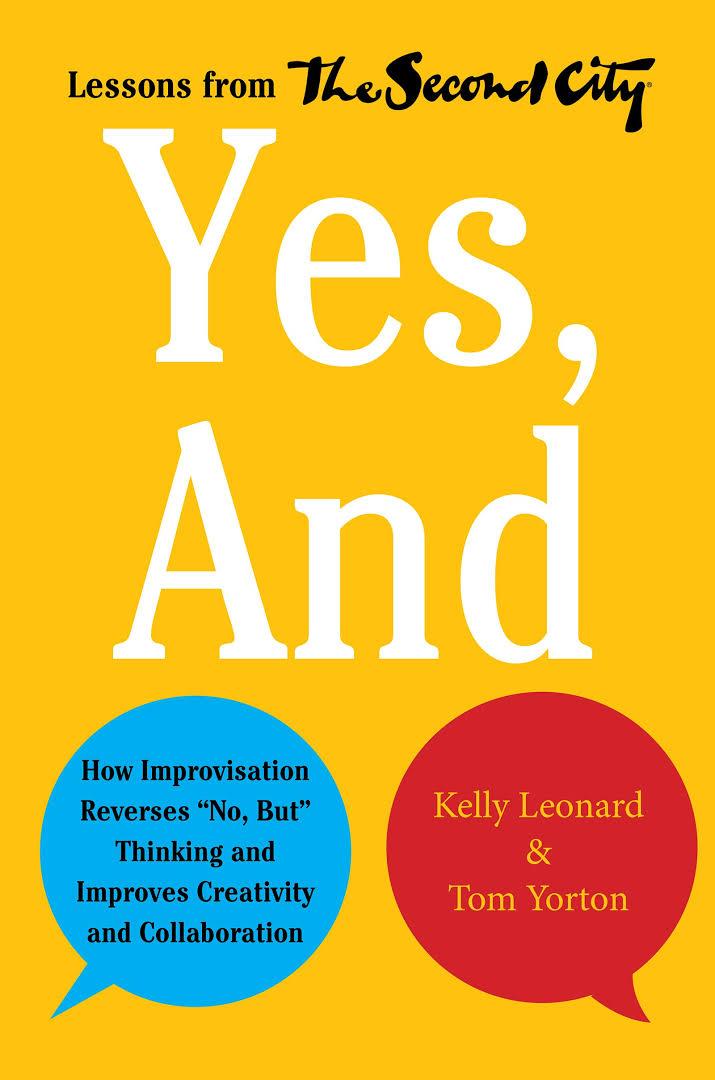
Yes, And
How Improvisation Reverses No, But Thinking and Improves Creativity and Collaboration
Kelly Leonard; Tom Yorton

Business Improv
Experiential Learning Exercises to Train Employees
Val Gee
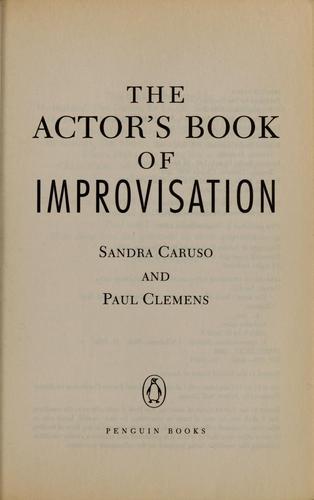
The Actor's Book of Improvisation
Sandra Caruso; Paul Clemens

Comedy and Distinction
The Cultural Currency of a 'Good' Sense of Humour
Sam Friedman

Legislative Theatre
Using Performance to Make Politics
Augusto Boal

Theatrical Improvisation
Short Form, Long Form, and Sketch-Based Improv
Jeanne Leep
How to Reference This Page
The Improv Archive. (2026). Commitment. Retrieved September 28, 2026, from https://improvarchive.org/learn-improv/concepts/commitment
The Improv Archive. "Commitment." The Improv Archive, 2026. https://improvarchive.org/learn-improv/concepts/commitment.
The Improv Archive. "Commitment." The Improv Archive, 2026, https://improvarchive.org/learn-improv/concepts/commitment. Accessed September 28, 2026.
The Improv Archive is a systemically maintained repository. The archive itself acts as the corporate author.