Status
A concept developed by Keith Johnstone describing the relative social position that characters establish and negotiate through behavior, posture, eye contact, and spatial relationships. Status transactions drive dramatic tension: scenes become interesting when status shifts, when high-status characters are brought low, or when low-status characters assert themselves.
One of the most influential ideas in modern improvisation, status refers to the relative social position that characters establish and negotiate through behavior, posture, eye contact, and spatial relationships. The concept was developed and codified by Keith Johnstone, who observed that human interactions are shaped by constant, often unconscious transactions in dominance and submission. Johnstone argued that these transactions are not fixed traits of personality or social class but fluid behaviors that shift moment to moment, making them a powerful engine for dramatic action.
In practice, status operates through physical and verbal signals. A high-status character might hold steady eye contact, speak in complete sentences, occupy space freely, and move with deliberate calm. A low-status character, by contrast, might fidget, avoid eye contact, apologize frequently, and physically compress. The dramatic interest in a scene rarely comes from two characters maintaining the same status throughout; rather, scenes become compelling when status shifts, when a high-status character is brought low, or when a low-status character finds the courage or cunning to assert themselves. These reversals create surprise, tension, and comedy, which is why Johnstone placed status work at the center of his Theatresports system and teaching practice.
Status is taught through a range of exercises designed to make performers aware of how they unconsciously signal position. A common introductory exercise involves assigning each performer a number on a scale from one to ten, then asking them to interact while maintaining that level. More advanced work involves scenes in which performers must gradually raise or lower their status without announcing the shift, forcing them to communicate dominance and submission through behavior alone. Bettina Belt's curriculum in "Acting Through Improv" situates status within a broader progression of characterization skills, treating it as a layer that deepens performance once foundational work in spontaneity, offers, and narrative is established. Sam Levy's "112 Acting Games" includes a Social Status exercise in which two performers play a scene while the audience reads their relative positions, building literacy in both the performers and the watchers.
A common misunderstanding is the confusion of status with social rank or wealth. A king can play low status, nervously deferring to a servant who plays high. Johnstone was careful to distinguish between the social status a character holds in the world of the scene and the performed status they enact through behavior. This distinction is what makes the concept theatrically productive: the gap between expected and performed status is itself a source of comedy and drama.
The concept also has significant applications beyond the stage. In applied improvisation contexts, status awareness is used in organizational development and leadership training. As documented in "Applied Improvisation" by Theresa Dudeck, facilitators use status exercises to help participants recognize how authority operates in workplace settings, supplementing the authority of formal position with the authority of competence and building trust across hierarchies. Business-focused practitioners similarly draw on status dynamics to help professionals navigate meetings, negotiations, and team interactions with greater self-awareness.
Status connects closely to several other core improv concepts, particularly offers and blocking. A status move is itself a kind of offer, proposing a relationship that the scene partner can accept, challenge, or reverse. It also intersects with characterization more broadly, giving performers a concrete, playable dimension that goes beyond accent or physicality. Johnstone's insight was that status is not a fixed trait to be assigned but a living negotiation, one that audiences instinctively understand and find endlessly watchable.
Further Reading
See all books →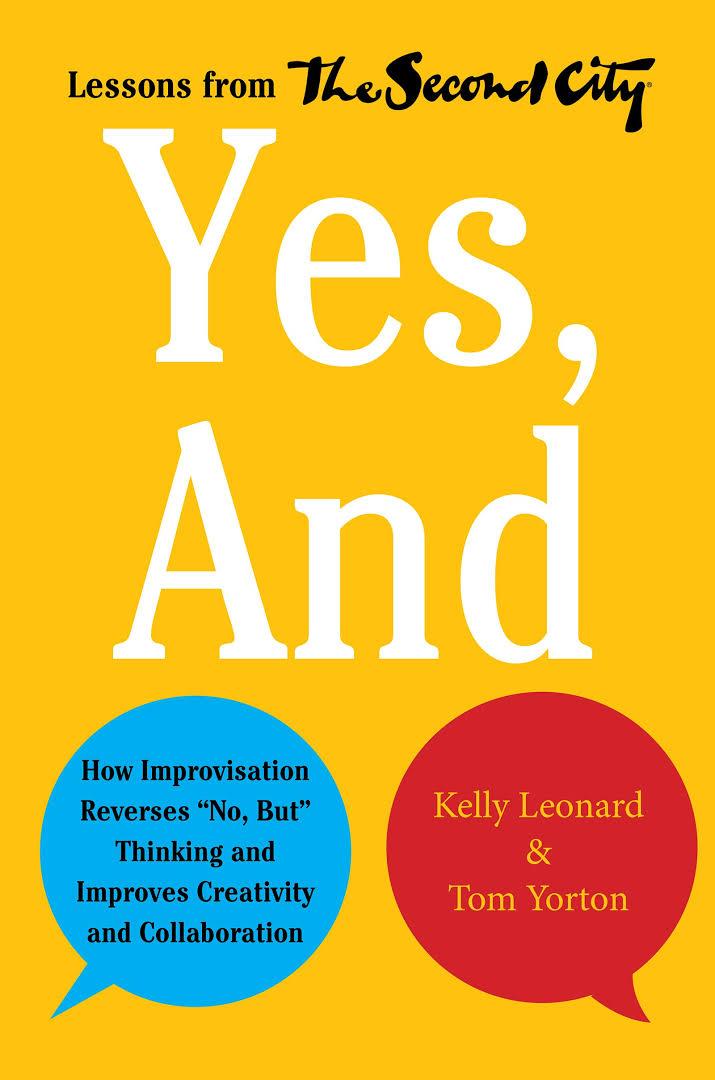
Yes, And
How Improvisation Reverses No, But Thinking and Improves Creativity and Collaboration
Kelly Leonard; Tom Yorton

Business Improv
Experiential Learning Exercises to Train Employees
Val Gee
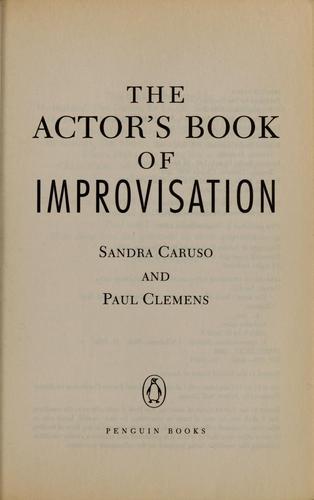
The Actor's Book of Improvisation
Sandra Caruso; Paul Clemens

Comedy and Distinction
The Cultural Currency of a 'Good' Sense of Humour
Sam Friedman

Legislative Theatre
Using Performance to Make Politics
Augusto Boal

Theatrical Improvisation
Short Form, Long Form, and Sketch-Based Improv
Jeanne Leep
How to Reference This Page
The Improv Archive. (2026). Status. Retrieved September 28, 2026, from https://improvarchive.org/learn-improv/concepts/status
The Improv Archive. "Status." The Improv Archive, 2026. https://improvarchive.org/learn-improv/concepts/status.
The Improv Archive. "Status." The Improv Archive, 2026, https://improvarchive.org/learn-improv/concepts/status. Accessed September 28, 2026.
The Improv Archive is a systemically maintained repository. The archive itself acts as the corporate author.