Wimping
A form of soft blocking in which a performer technically accepts an offer but drains it of significance or consequence. If a partner says "There's a bomb in the building," wimping would be responding "Oh, it's probably just a drill." The offer is acknowledged but its dramatic potential is neutralized.
In improvisation, wimping refers to the act of technically accepting a scene partner's offer while draining it of its dramatic weight or consequence. Unlike outright blocking, where a performer refuses an idea entirely, wimping operates more subtly: the offer is acknowledged but its potential is neutralized. If one performer declares "There's a bomb in the building," a wimping response might be "Oh, it's probably just a drill." The words do not contradict the offer, but they strip away its urgency, leaving the scene with nowhere compelling to go.
The term has roots in Theatresports, where it was originally categorized as a foul. In Canadian Theatresports, this infraction was called the "wimping foul," though as Amy Seham documents in Whose Improv Is It Anyway?, the name was later changed to "waffling" in some contexts because the accompanying limp-wristed gesture was too often interpreted as a homophobic caricature. Regardless of the name, the underlying problem remained the same: a performer who accepts ideas on the surface but fails to act on them or commit to their implications.
The most common form of wimping is asking questions. As The Ultimate Improv Book explains, a performer who responds to every offer with "What do you mean?" or "Why would we do that?" is technically staying in the scene but pushing all the creative responsibility back onto their partner. The scene stalls not because ideas are rejected, but because no one is building on them with conviction. Bernie Sahlins identified wimping as one of the key habits that makes scenes fail, describing it as a failure to take action, distinct from but equally destructive as gagging, where a performer sacrifices the scene's reality for a cheap laugh.
Teaching performers to recognize and overcome wimping is a staple of improv pedagogy. Robert Belt's Acting Through Improv positions wimping on a spectrum of responses to offers, distinguishing it from full acceptance, gentle resistance, and outright blocking. Students are asked to practice each mode so they can feel the difference between genuinely building on an idea and merely tolerating it. Mark Jane's Creating Improvised Theatre takes a more visceral approach, using the code word "piranha" as shorthand that coaches can call out whenever an actor lowers the stakes through their attitude or choices. The goal is to make the pattern instantly recognizable so performers can self-correct in the moment.
Wimping is closely related to several other improv concepts. It sits adjacent to waffling, which involves failing to make decisions at all, and to hedging, where a performer delays committing to a choice. It is the inverse of raising the stakes, a principle Keith Johnstone and others emphasize as essential to compelling narrative. Tom Salinsky and Deborah Frances-White's The Improv Handbook places the avoidance of wimping alongside being obvious and reincorporating ideas as foundational scene-building habits. The advice from Improvise by Mark Dickins captures the corrective impulse simply: make the active choice. Stop wimping out and get to the island.
What makes wimping particularly insidious is that performers who wimp often believe they are being good scene partners. They are saying yes, after all. But acceptance without commitment is a hollow form of agreement. A scene where every danger is minimized, every surprise explained away, and every emotional charge defused will inevitably flatten into monotony. The discipline of improv asks not just that performers accept what is offered, but that they invest it with meaning and follow its implications wherever they lead.
Further Reading
See all books →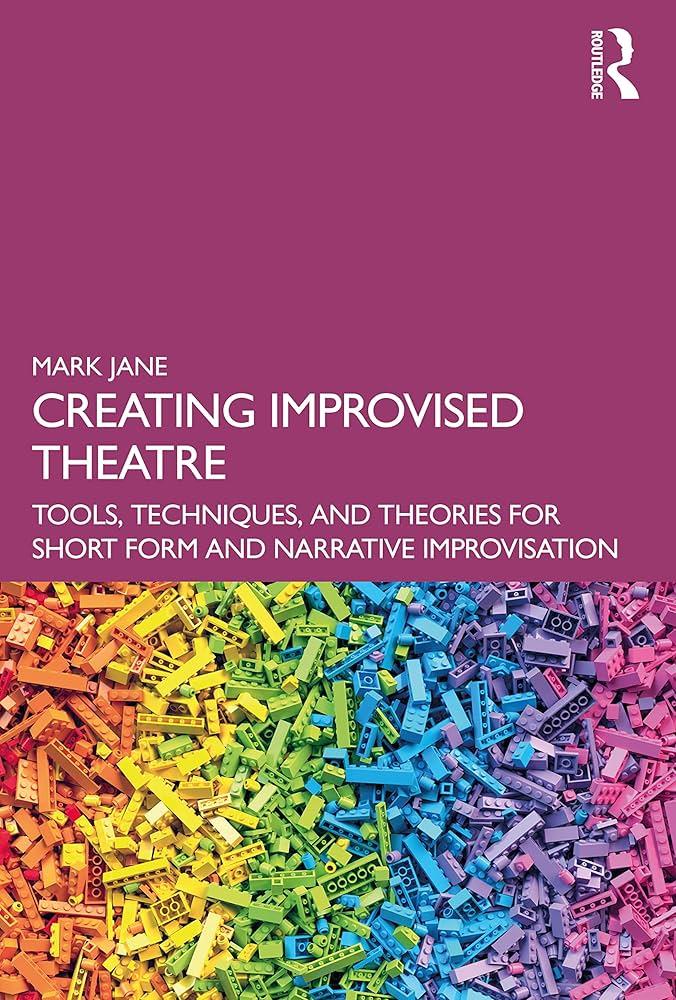
Creating Improvised Theatre
Tools, Techniques, and Theories
Mark Jane

The Improv Handbook
The Ultimate Guide to Improvising in Comedy, Theatre, and Beyond
Tom Salinsky; Deborah Frances-White

Acting Through Improv
Improv Through Theatresports
Lynda Belt; Rebecca Stockley
Improv Show
Virginia Loh-Hagan

The Ultimate Improv Book
A Complete Guide to Comedy Improvisation
Edward J. Nevraumont; Kurt Smeaton; Nicholas P. Hanson

Whose Improv Is It Anyway?
Beyond Second City
Amy E. Seham
How to Reference This Page
The Improv Archive. (2026). Wimping. Retrieved September 28, 2026, from https://improvarchive.org/learn-improv/concepts/wimping
The Improv Archive. "Wimping." The Improv Archive, 2026. https://improvarchive.org/learn-improv/concepts/wimping.
The Improv Archive. "Wimping." The Improv Archive, 2026, https://improvarchive.org/learn-improv/concepts/wimping. Accessed September 28, 2026.
The Improv Archive is a systemically maintained repository. The archive itself acts as the corporate author.