Matt Walsh (born October 13, 1964, Chicago, Illinois) is a comedian, actor, writer, and director who co-founded the Upright Citizens Brigade alongside Matt Besser, Amy Poehler, and Ian Roberts. Trained under Del Close at iO Chicago and at The Second City and the Annoyance Theatre, Walsh co-created and starred in the UCB television series on Comedy Central (1998 to 2000) and co-authored The Upright Citizens Brigade Comedy Improvisation Manual (2013). He is widely known for his role as Mike McLintock, the bumbling White House communications director on HBO's Veep (2012 to 2019), which earned him two Primetime Emmy nominations and a Screen Actors Guild Award with the ensemble cast.
Walsh was born in Chicago, the fourth of seven children in a Catholic family. He attended Hinsdale South High School, where he played backup tight end on the football team, and earned a Bachelor of Arts in psychology from Northern Illinois University in 1987, spending his junior year studying abroad in Salzburg, Austria.
Walsh discovered improvisation during his senior year at NIU and began taking weekly classes at The Second City in Chicago after graduation. He briefly worked at Northwestern Memorial Hospital with psychiatric patients while pursuing improv training at The Second City, the Annoyance Theatre, and iO (then ImprovOlympic) under Del Close. He co-founded the sketch group Department of Works with university classmates.
In 1990, Walsh became a founding member of the Upright Citizens Brigade alongside Matt Besser, Ian Roberts, and Amy Poehler. The group performed in Chicago before relocating to New York City in 1996, where they established the UCB Theatre as a center for alternative comedy and long-form improvisation. Comedy Central picked up the Upright Citizens Brigade as a television series, which ran for three seasons from 1998 to 2000. Walsh played the character Trotter in the series.
After the show's run, Walsh served as a correspondent on The Daily Show with Jon Stewart from 2001 to 2002. He appeared in the short-lived comedy programs Players (2010) and Dog Bites Man (2006), the latter a mockumentary-style show on Comedy Central that used improvised interactions with unsuspecting real people.
The UCB expanded its institutional footprint under the four founders' leadership, opening theatres at UCB Chelsea, the East Village UCB, UCB Franklin in Los Angeles, and UCB Sunset. Walsh co-authored The Upright Citizens Brigade Comedy Improvisation Manual in 2013, codifying the troupe's game-centered approach to long-form improvisation.
Walsh's breakthrough screen role came in 2012 when he was cast as Mike McLintock on HBO's Veep, created by Armando Iannucci. McLintock, the perpetually outmatched White House communications director, appeared in all sixty-five episodes across seven seasons through 2019. The role drew directly on Walsh's improvisational training, with Iannucci encouraging cast improvisation around scripted material. Walsh earned Primetime Emmy nominations for Outstanding Supporting Actor in a Comedy Series in 2016 and 2017, and the Veep ensemble won the Screen Actors Guild Award for Outstanding Performance by an Ensemble in a Comedy Series in 2018.
Walsh's film credits include Elf (2003), The Hangover (2009), Ted (2012), and more than fifty other features. He made his directorial debut with High Road (2012), an improvised comedy he co-wrote and starred in, followed by A Better You (2014). His voice acting work and guest television appearances span dozens of credits across network and cable comedy.
Walsh co-hosts the podcast Bear Down with Scot Armstrong, focused on the Chicago Bears, and the Veep rewatch podcast Second in Command with co-star Timothy Simons.
Historical Context
Walsh's path from iO Chicago student under Del Close to UCB co-founder follows the same generational transmission that produced several of the most important comedy institutions of the late twentieth century. His training at iO, Second City, and the Annoyance Theatre gave him exposure to three distinct approaches to improvisation: Close's Harold-centered long-form philosophy, Second City's revue-based scene work, and the Annoyance's transgressive character-driven aesthetic. The UCB synthesized elements of all three into its own methodology.
The UCB's relocation from Chicago to New York in 1996 was a deliberate strategic decision to establish a training center and performance venue in a city that lacked the institutional improv infrastructure Chicago had built over decades. The move created a New York alternative comedy scene that had not previously existed at institutional scale, and the UCB Theatre became the primary training ground for a generation of performers who entered television writing rooms, late-night shows, and film.
Walsh's casting in Veep in 2012 represented a particular kind of validation for improvisationally trained performers. Armando Iannucci's directorial approach, which encouraged improvisation around scripted material and valued the spontaneous discoveries that ensemble performers could generate, was ideally suited to Walsh's training. The show's critical and commercial success, including multiple Emmy wins for the series, demonstrated that improvisational skills could produce performances of the highest caliber in prestige television.
The four UCB theatres that Walsh co-founded trained thousands of performers during the 2000s and 2010s, creating a pipeline that fed Saturday Night Live, late-night television, streaming comedy, and Hollywood writing rooms. The institutional model the UCB Four built became the template for how improv training centers operated in major American cities.
Legacy
Walsh's legacy operates on two levels: as a co-founder of one of the most influential comedy institutions in American history, and as a performer who demonstrated the range of careers that improvisational training enables.
As a UCB co-founder, Walsh helped build the training center and theatre system that became the dominant pathway into professional comedy in New York and Los Angeles during the 2000s and 2010s. The UCB Comedy Improvisation Manual, which he co-authored, codified the game-centered approach to long-form improvisation that thousands of performers learned through UCB classes and that many other training centers adopted.
His seven-season run on Veep stands as one of the most prominent examples of an improviser sustaining a major role in prestige television. The show's improvisational production method, in which the cast generated material around scripted scenes, validated the UCB training philosophy in a high-profile context and influenced how subsequent comedy productions approached the relationship between scripted and improvised performance.
Walsh's career arc, from iO student to UCB founder to Emmy-nominated television actor and film director, traces the full scope of professional possibilities that opened for improvisationally trained performers in the decades following Del Close's pedagogical revolution at iO Chicago.
Companies and Organizations
Associated venues and institutional relationships currently documented in the archive.
Recommended Reading
Books are ordered from the strongest direct connection outward to broader relevance.

The Upright Citizens Brigade Comedy Improvisation Manual
Matt Besser; Ian Roberts; Matt Walsh
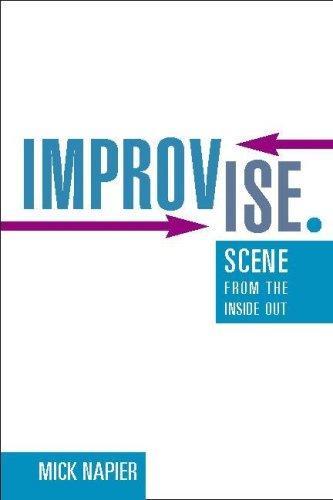
Improvise
Scene from the Inside Out
Mick Napier

The Funniest One in the Room
The Lives and Legends of Del Close
Kim Howard Johnson

Long Form Improvisation and American Comedy
The Harold
Matt Fotis
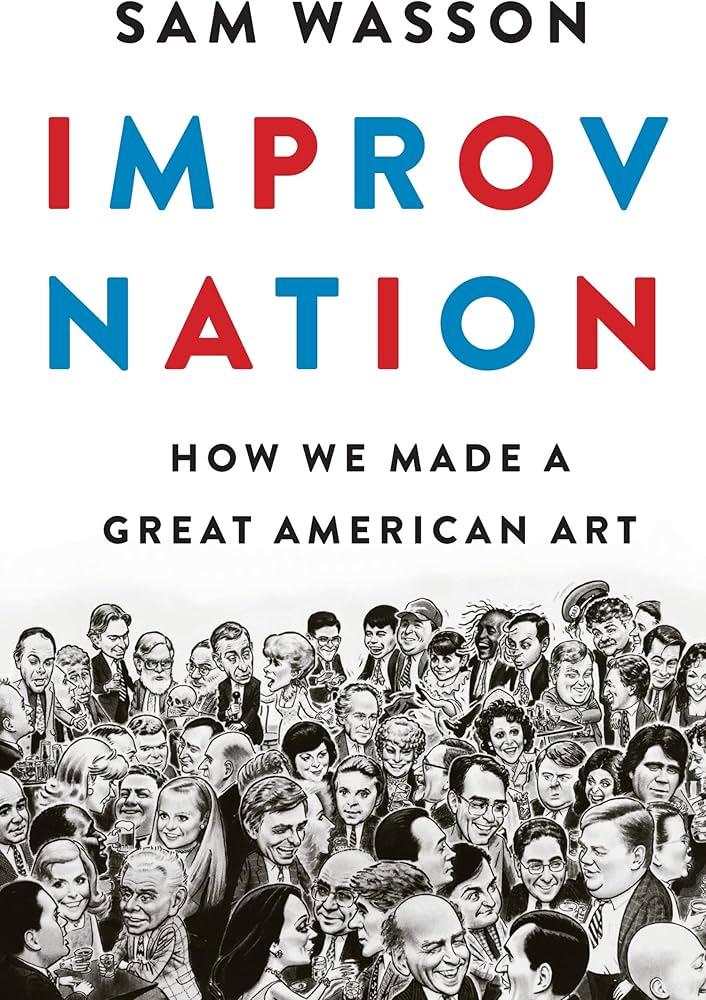
Improv Nation
How We Made a Great American Art
Sam Wasson

The Improv Illusionist
Using Object Work, Environment, and Physicality in Performance
David Raitt
References
In the Archive
How to Reference This Page
The Improv Archive. (2026). Matt Walsh. Retrieved September 29, 2026, from https://improvarchive.org/people/matt-walsh
The Improv Archive. "Matt Walsh." The Improv Archive, 2026. https://improvarchive.org/people/matt-walsh.
The Improv Archive. "Matt Walsh." The Improv Archive, 2026, https://improvarchive.org/people/matt-walsh. Accessed September 29, 2026.
The Improv Archive is a systemically maintained repository. The archive itself acts as the corporate author.