Matt Besser
Matt Besser (born September 22, 1967, Little Rock, Arkansas) is a comedian, actor, writer, director, and improv teacher who co-founded the Upright Citizens Brigade alongside Amy Poehler, Ian Roberts, and Matt Walsh. Trained under Del Close at iO Chicago, Besser co-created and starred in the UCB television series on Comedy Central (1998 to 2000), co-authored The Upright Citizens Brigade Comedy Improvisation Manual (2013), and has hosted the improv4humans podcast on the Earwolf network since 2011. He performs regularly in ASSSSCAT 3000 and teaches at UCB training centers.
Besser grew up in Little Rock, Arkansas, in an interfaith household. His father, Sanford Besser, was an investment banker, and his mother, Diane Pettit Besser, was active in local arts. He attended Little Rock Central High School and graduated from Amherst College in 1989 with a Bachelor of Arts in American Studies. His senior thesis examined comedy censorship, focusing on Lenny Bruce.
After college, Besser performed stand-up comedy in Denver before relocating to Chicago. After seeing an improvisational show at iO Theater featuring Dave Koechner, Tim Meadows, and Chris Farley, he enrolled in classes there. His first iO group was Victim's Family, which included Rick Roman, Adam McKay, Miles Stroth, and Ian Roberts. The group was later renamed The Family (with Neil Flynn and Ali Farahnakian replacing Roman), and Del Close directed them, making them the first long-form group that Close personally focused on coaching.
In 1990, Besser and Roberts formed the sketch comedy group that would become the Upright Citizens Brigade. Original members included Ali Farahnakian, Adam McKay, Rick Roman, and Horatio Sanz. The group relocated from Chicago to New York City in 1996, and in 1999 opened the first UCB Theatre in Chelsea, Manhattan. Amy Poehler and Matt Walsh, who had joined the group in Chicago, became the four core members known as the UCB Four.
Comedy Central picked up the Upright Citizens Brigade as a television series, which ran for three seasons from 1998 to 2000. The show blended sketch comedy with staged guerrilla-style pranks and became a cult favorite. Besser co-created and starred in the series.
As UCB grew into one of the most influential improv institutions in America, Besser took a central role in developing its pedagogical philosophy. He co-authored The Upright Citizens Brigade Comedy Improvisation Manual in 2013 with Walsh, Roberts, and Poehler, codifying the troupe's approach to long-form improvisation with particular emphasis on "the game of the scene" as the fundamental building block. The manual became the primary textbook for UCB training centers in New York and Los Angeles and one of the most widely used improv instruction books in the country.
Besser has been a core teacher at UCB since the training center's founding, teaching classes and conducting master workshops including his "Finding the Game" intensive. He performs regularly in ASSSSCAT 3000, UCB's signature long-form show.
In 2011, Besser launched improv4humans on the Earwolf podcast network, featuring fully improvised episodes with guest comedians. The podcast has run for over a decade, becoming one of the longest-running improv-focused audio programs. He also created the audio series Stolen Idea: A Punk Rock Musical (2017) and My Dead Wife, the Robot Car (2022).
Besser's acting credits include appearances in Walk Hard: The Dewey Cox Story (2007), Parks and Recreation (as Crazy Ira), Curb Your Enthusiasm, Modern Family, New Girl, Key and Peele, How I Met Your Mother, and Drunk History. He directed the mockumentary Freak Dance (2011) and served as executive producer on Thank You, Del: The Story of the Del Close Marathon (2016). His voice acting work includes WordGirl, Rick and Morty, Bob's Burgers, and Close Enough. He released the stand-up special Pot Humor on Amazon Prime Video in 2019.
Historical Context
Besser's trajectory from iO Chicago student to UCB co-founder traces the direct line of transmission from Del Close's long-form improvisation philosophy to the institution that would spread it most widely in the twenty-first century. Close's decision to personally direct Victim's Family, later The Family, represented a deliberate investment in a specific group of performers who would carry his methodology forward. That group included Besser, Ian Roberts, Adam McKay, and Neil Flynn, all of whom went on to significant careers in comedy.
The UCB's move from Chicago to New York in 1996 was a pivotal moment in American improv history. While Chicago had long been the center of improvisational training, the UCB's establishment of a permanent theatre and training center in Manhattan created a comparable institution on the East Coast. The opening of the Chelsea theatre in 1999 and the expansion to Los Angeles in 2005 on Franklin Avenue gave UCB a bicoastal presence that no other improv training organization had achieved.
The Comedy Central series (1998 to 2000) brought long-form improv sensibilities to basic cable television at a time when most televised comedy was either stand-up or traditionally written sketch. The show's blend of improvised scenes with structured comedy helped normalize the aesthetic that UCB performers brought to scripted television and film in the following decades.
The publication of the UCB Comedy Improvisation Manual in 2013 formalized the pedagogical framework that had evolved through years of teaching at the UCB training centers. The manual's emphasis on "the game of the scene" as the organizing principle of improvised comedy became the dominant theoretical framework in American improv education, rivaling the Harold-centered approach associated with iO.
Teaching Philosophy
Besser's teaching centers on identifying and heightening "the game of the scene," the core comedic pattern or unusual thing that emerges in the first beat of an improvised scene. His approach, codified in the UCB Manual, treats game as the fundamental unit of improvised comedy rather than narrative or character. Performers are trained to recognize the first unusual thing that happens in a scene, label it as the game, and then explore it through heightening and variations.
His improv4humans podcast serves as a public extension of this philosophy, demonstrating in real time how trained improvisers identify and play games with minimal setup. The podcast format strips away the visual spectacle of stage improv and foregrounds the listening, pattern recognition, and commitment that the UCB approach demands.
Besser's "Finding the Game" workshops emphasize the moment of discovery over preparation, training performers to trust that the game will emerge from honest scene work rather than being imposed from outside. This reflects the broader UCB pedagogical position that improvisation is a skill built through structured practice rather than an innate talent.
Legacy
Besser's most significant contribution to American improvisation is institutional. As co-founder of UCB, he helped build the training center that produced a generation of performers who now dominate television comedy writing rooms, late-night shows, podcast networks, and streaming content. The UCB training pipeline, shaped in part by Besser's teaching and the manual he co-authored, became the primary pathway into professional comedy for performers in New York and Los Angeles during the 2000s and 2010s.
The UCB Comedy Improvisation Manual codified a theoretical framework that shifted the center of gravity in American improv pedagogy. Before its publication, the Harold remained the dominant structural model for long-form improv training, taught primarily through iO's curriculum. The manual's game-centered approach offered an alternative framework that many training centers adopted or adapted, extending its influence beyond UCB's own classrooms.
improv4humans, running since 2011, demonstrated that long-form improvisation could work as audio content and helped establish the improv podcast as a viable format. The show's longevity and its use of professional improvisers performing without safety nets made it a reference point for how improvisation translates beyond the stage.
Besser's role as executive producer of Thank You, Del: The Story of the Del Close Marathon documented the annual festival that became the single largest gathering of improvisers in the world, preserving the history of an event that connected the iO tradition directly to the UCB community Besser helped build.
Companies and Organizations
Associated venues and institutional relationships currently documented in the archive.
Recommended Reading
Books are ordered from the strongest direct connection outward to broader relevance.

The Upright Citizens Brigade Comedy Improvisation Manual
Matt Besser; Ian Roberts; Matt Walsh

The Art of Chicago Improv
Short Cuts to Long-Form Improvisation
Rob Kozlowski

Guru
My Days with Del Close
Jeff Griggs

Long Form Improvisation and American Comedy
The Harold
Matt Fotis

Funny on Purpose
The Definitive Guide to an Unpredictable Career in Comedy
Joe Randazzo
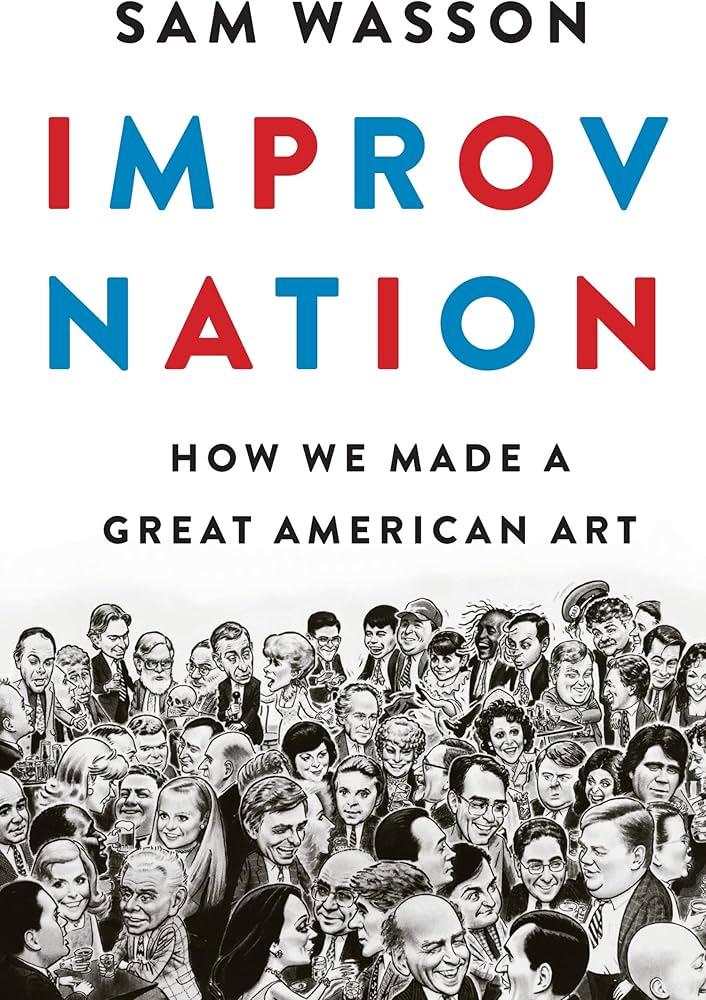
Improv Nation
How We Made a Great American Art
Sam Wasson
References
In the Archive
How to Reference This Page
The Improv Archive. (2026). Matt Besser. Retrieved September 29, 2026, from https://improvarchive.org/people/matt-besser
The Improv Archive. "Matt Besser." The Improv Archive, 2026. https://improvarchive.org/people/matt-besser.
The Improv Archive. "Matt Besser." The Improv Archive, 2026, https://improvarchive.org/people/matt-besser. Accessed September 29, 2026.
The Improv Archive is a systemically maintained repository. The archive itself acts as the corporate author.