Peter Gwinn
Peter Gwinn is an American comedy writer, improviser, and teacher from Evanston, Illinois, who trained at iO Theater under Charna Halpern and Del Close, performed with The Second City Touring Company, and wrote for The Colbert Report, winning two Emmy Awards. He authored Group Improvisation: The Manual of Ensemble Improv Games (2003) and founded the musical improv group Baby Wants Candy. He currently writes for Wait Wait...Don't Tell Me on NPR.
Gwinn grew up in Evanston, Illinois, and attended Carleton College in Northfield, Minnesota, where he began improvising with the group Cujokra. After college, he moved to Chicago and studied with Charna Halpern and Del Close at iO Theater, where he performed and taught.
From 1997 to 2000, Gwinn was a member of The Second City Touring Company, developing his skills in sketch writing and ensemble performance. He founded Baby Wants Candy, a musical improv group that creates a fully improvised musical in each performance, complete with original songs, choreography, and narrative structure. The group became one of the most recognized musical improv ensembles in the country.
In 2003, Gwinn published Group Improvisation: The Manual of Ensemble Improv Games with a foreword by Charna Halpern, providing a practical guide to the ensemble-based improv games and exercises used in training programs at iO and other Chicago theaters.
After over a decade of performing and teaching in Chicago, Gwinn moved to New York in 2005, where he performed with The Stepfathers and Arsenal at the Upright Citizens Brigade Theatre. His writing career expanded into television when he joined the writing staff of The Colbert Report on Comedy Central, where he won two Emmy Awards for Outstanding Writing for a Variety Series.
Gwinn currently writes for Wait Wait...Don't Tell Me, NPR's comedy news quiz. He continues to teach improvisation, having taught at iO, The Second City, and the UCB Theatre, and now teaches through The Home Comedy Theater.
Historical Context
Gwinn's career spans the three institutions most responsible for defining American improvisation: iO Theater, The Second City, and the Upright Citizens Brigade. His training under Del Close and Charna Halpern at iO during the 1990s placed him in the institution's influential period, when the Harold and other long-form formats were being refined and codified for a new generation of performers. His subsequent work at Second City and UCB gave him a perspective that bridges all three major schools of American improv.
Baby Wants Candy represents a significant contribution to the development of musical improvisation as a distinct performance format. While musical games had long been part of short-form improv, the creation of fully improvised musicals required a synthesis of improvisational skill, musical ability, and narrative discipline that pushed the art form in new directions. The group demonstrated that improvisation could sustain the demands of a full musical production, including songs, choreography, and coherent narrative arc, all created in real time.
Gwinn's move from Chicago to New York in 2005 reflected the broader expansion of improvisational comedy from its Midwestern home base to the East Coast, where UCB was building the institutional infrastructure that would make New York a second center of American improv alongside Chicago.
Teaching Philosophy
Gwinn's teaching philosophy is most fully documented in Group Improvisation: The Manual of Ensemble Improv Games (2003), which he co-authored with Charna Halpern. The book presents improv pedagogy as a progression from individual skill development to ensemble coherence, arguing that the "Group Mind" (the state of unified collective awareness and shared creative intention) is not a mystical phenomenon but a learnable outcome of consistent ensemble practice.
His approach to teaching long-form ensemble work identifies the Group Mind as the primary goal of advanced improv training and treats individual technique as instrumental to that goal rather than as an end in itself. Games and exercises are selected not for their entertainment value alone but for the specific ensemble skills they develop: concentration, mutual support, active listening, and the pattern recognition that allows groups to identify and build thematic connections across a long-form show.
The book's organization of exercises by purpose (building concentration, developing support habits, training pattern recognition, and preparing specifically for Harold structure) reflects Gwinn's conviction that effective improv pedagogy is sequential and goal-directed. His Harold-focused chapters address the specific component skills that Harold performance requires, providing instructors and ensembles with a structured development path from fundamental ensemble habits to the complex group coordination that Harold performance demands. His subsequent teaching at iO and UCB applied this same systematic approach to a range of long-form and short-form training contexts.
Legacy
Gwinn's significance lies in his dual contribution as both a practitioner and a chronicler of ensemble improvisation. Group Improvisation: The Manual of Ensemble Improv Games provided one of the few published manuals focused specifically on ensemble game work, filling a gap in the improv literature between theoretical texts like Del Close's Truth in Comedy and format-specific guides. The book's practical orientation made it widely used in training programs across the country.
His Emmy-winning television writing on The Colbert Report demonstrates the professional outcomes that improvisational training enables, connecting the iO and Second City stages to the highest levels of comedy writing. His current work at Wait Wait...Don't Tell Me continues to apply improvisational thinking to broadcast comedy, bringing the spontaneous sensibility of his Chicago training to a national radio audience.
His teaching career across iO, Second City, UCB, and independent programs has trained hundreds of performers, making him one of the few teachers to have worked at all three of the major American improv institutions.
Recommended Reading
Books are ordered from the strongest direct connection outward to broader relevance.

The Art of Chicago Improv
Short Cuts to Long-Form Improvisation
Rob Kozlowski

Improvisation for Actors and Writers
A Guidebook for Improv Lessons in Comedy
Bill Lynn

The Funniest One in the Room
The Lives and Legends of Del Close
Kim Howard Johnson

Group Improvisation
The Manual of Ensemble Improv Games
Peter Campbell Gwinn; Charna Halpern
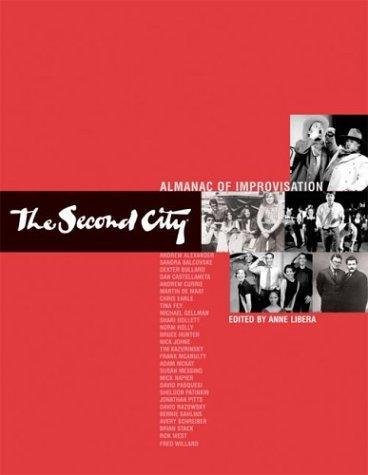
The Second City Almanac of Improvisation
Anne Libera
Teaching Improv
The Essential Handbook
Mel Paradis
References
In the Archive
How to Reference This Page
The Improv Archive. (2026). Peter Gwinn. Retrieved September 28, 2026, from https://improvarchive.org/people/peter-gwinn
The Improv Archive. "Peter Gwinn." The Improv Archive, 2026. https://improvarchive.org/people/peter-gwinn.
The Improv Archive. "Peter Gwinn." The Improv Archive, 2026, https://improvarchive.org/people/peter-gwinn. Accessed September 28, 2026.
The Improv Archive is a systemically maintained repository. The archive itself acts as the corporate author.