Shannon Manning
Shannon Manning is an American improviser, director, producer, and teacher who co-founded the Magnet Theater in New York in 2005 alongside Armando Diaz and Ed Herbstman. She trained in improv with Del Close in Chicago, taught and directed at UCB Theatre and Magnet Theater, produced the political improv show Red All Over and the music-and-improv show Beauty Love Truth, performed on Late Night with Conan O'Brien, served as comedy and music talent buyer for Union Hall in Brooklyn, and teaches improv through her program Improv for Poets and Geniuses.
Manning graduated Dean's List from the University of Chicago with a degree in History, then studied performance at the School of the Art Institute and theatre at the University of Illinois at Chicago. She completed two years of improv training with Del Close, whose teaching at iO Chicago shaped the long-form vocabulary she would later bring to her own teaching and directing work.
Before relocating to New York, she worked in Chicago in media production, including producing TV news and weather computer graphics, writing and producing a Chicago Bulls scoreboard animation, and co-founding one of the earliest web publishing businesses in the city.
She moved to New York in 1997 and entered the improv community, teaching and directing at the Upright Citizens Brigade Theatre. In 2005 she co-founded the Magnet Theater with Armando Diaz and Ed Herbstman, establishing the theater that became one of New York's central independent improv and sketch performance and training venues. At Magnet she taught, directed, and produced, including the political improv show Red All Over and the ongoing music-and-improv show Beauty Love Truth.
She also produced and ran the weekly comedy series Drinkytown. For three years she served as comedy and music talent buyer for Union Hall in Brooklyn, the sister venue to the Bell House, a role that earned her recognition from the New York Times for what the paper described as savvy and adventurous programming. She performed on Late Night with Conan O'Brien.
Manning subsequently founded Good Orbit, an independent podcast network, and the production company Sparkle Television, handling audio, video, stage, websites, and livestream work. She teaches improv through Improv for Poets and Geniuses, a program distinct from traditional comedy training in its emphasis on creative personal expression.
Historical Context
Manning's co-founding of the Magnet Theater in 2005 places her within the small group of practitioners who built New York's second generation of independent improv institutions after UCB established the primary model in 1999. The Magnet's founding by Diaz, Herbstman, and Manning created an alternative performance and training home that did not replicate UCB's specific house team and Harold structure but developed its own ensemble culture and programming mix. The political improv show Red All Over and the genre-crossing Beauty Love Truth represented approaches to improv programming that extended the form beyond the training center showcase model.
Her training with Del Close in Chicago connects her to the lineage of long-form improv pedagogy that shaped virtually all of the New York institutions in which she subsequently worked. That grounding in Close's teaching informed her own approach, which she later developed into a program explicitly positioned outside the standard comedy pipeline.
Teaching Philosophy
Manning's teaching approach, as documented through her program Improv for Poets and Geniuses, emphasizes generosity, support, and the transfer of improv skills into all areas of creative life rather than specifically toward comedy performance. Student testimonials from the program describe an emphasis on listening to small moments between people, patient guidance for artists of all experience levels, and a holistic approach that treats improv as a personal practice rather than a technical discipline. Her training with Del Close at iO Chicago shaped the long-form vocabulary she brought to New York, and her subsequent work at UCB before co-founding the Magnet allowed her to develop that vocabulary within the particular ensemble and performance culture that the UCB tradition represents. At the Magnet, which she co-founded with Armando Diaz and Ed Herbstman in 2005, she has operated as both a teacher and a director, building a curriculum and performance program that reflects the experimental, genre-mixing aesthetic she and her co-founders brought to the institution.
Her teaching philosophy, as expressed through both her classroom work and the Improv for Poets and Geniuses program, treats improv as a discipline of attentiveness rather than primarily as a comedy technique. This framing makes her work particularly valuable for students who approach improv from artistic backgrounds outside comedy: writers, visual artists, musicians, and other creative practitioners who find in improv's demands on presence and responsiveness a training system applicable to their own creative work. The Magnet's culture of artistic experimentation, which has always extended beyond short-form performance into long-form, narrative, and hybrid theatrical formats, reflects the same conviction that improv's principles are broad enough to support a wide range of creative inquiry.
Legacy
Manning's founding role at the Magnet Theater means her institutional contribution to New York improv is embedded in a venue that has trained and showcased performers for two decades and continues to operate. The Magnet's particular culture of experimental programming, genre-mixing, and independent ensemble work reflects the founding priorities she brought to the project alongside Diaz and Herbstman.
Her Improv for Poets and Geniuses program represents a documented effort to extend improv pedagogy beyond the performer-training model toward a broader artistic and personal development audience, a trajectory consistent with the applied improv tradition but approached from an artistic rather than corporate direction. The Magnet's sustained operation over two decades, its role as a primary New York venue for experimental long-form, and its consistent production of independent ensemble work represent a documented institutional contribution to New York improv that extends well beyond Manning's individual teaching practice.
Her Improv for Poets and Geniuses program represents a specific pedagogical innovation within the applied improv tradition, one that orients improv training toward artistic development and personal creative practice rather than corporate application or traditional comedy performance. By designing a program explicitly for non-performer creative practitioners, she has articulated an application of improv pedagogy that the broader applied improv field has only partially developed, and her documented program outcomes represent evidence that this orientation produces genuine creative and personal value for participants who have no conventional comedy ambitions.
Recommended Reading
Books are ordered from the strongest direct connection outward to broader relevance.

Truth in Comedy
The Manual of Improvisation
Charna Halpern; Del Close; Kim Howard Johnson

The Art of Chicago Improv
Short Cuts to Long-Form Improvisation
Rob Kozlowski

The Upright Citizens Brigade Comedy Improvisation Manual
Matt Besser; Ian Roberts; Matt Walsh

Chicago Comedy
A Fairly Serious History
Margaret Hicks; Mick Napier
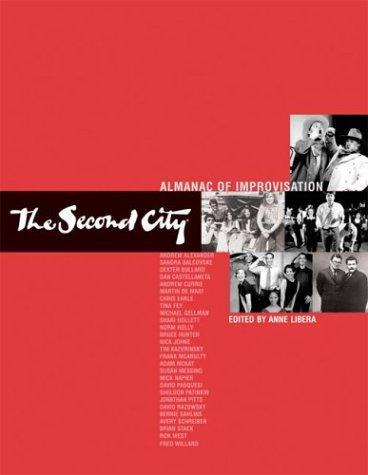
The Second City Almanac of Improvisation
Anne Libera
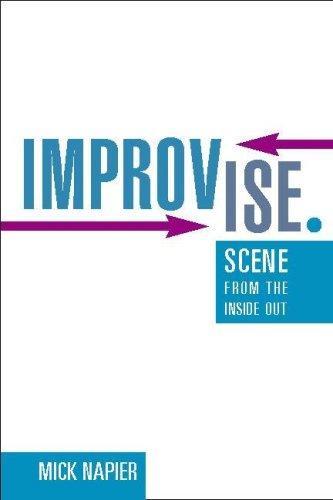
Improvise
Scene from the Inside Out
Mick Napier
References
How to Reference This Page
The Improv Archive. (2026). Shannon Manning. Retrieved November 5, 2026, from https://improvarchive.org/people/shannon-manning
The Improv Archive. "Shannon Manning." The Improv Archive, 2026. https://improvarchive.org/people/shannon-manning.
The Improv Archive. "Shannon Manning." The Improv Archive, 2026, https://improvarchive.org/people/shannon-manning. Accessed November 5, 2026.
The Improv Archive is a systemically maintained repository. The archive itself acts as the corporate author.