William Hall
William Hall is an American actor, director, improv teacher, and author who co-founded BATS Improv (originally Bay Area Theatresports) in San Francisco in 1986 and subsequently built one of the West Coast's most durable improvisational training programs. He is the author of The Playbook: Improv Games for Performers (2014), a reference collection of over 370 improv games drawn from nearly three decades of teaching and performance, and a founding member of Fratelli Bologna, a business theatre consultancy.
Career
Hall was raised in Richmond, Virginia, where he attended Maggie L. Walker High School. He went on to earn a Bachelor of Fine Arts in drama from Boston University, where his classmates included Geena Davis. After graduating, he relocated to San Francisco to pursue professional theatre work.
His screen career began with small roles in major productions: he appears as one of the Nazis in the ark opening sequence of Raiders of the Lost Ark (1981), and went on to appear in The Right Stuff (1983), Howard the Duck (1986), Midnight Caller, Hemingway and Gellhorn, and Twisted.
In 1986 Hall co-founded the Bay Area Theatresports organization in San Francisco alongside other founding members. The organization, later renamed BATS Improv, was built around Keith Johnstone's Theatresports competitive format and grew into one of the Bay Area's primary improvisational institutions, eventually housing a 200-seat theatre and a full-time professional staff. Hall also co-founded the BATS School of Improv, establishing the training arm that has served the Bay Area improv community continuously since its founding. He has described the founding impulse as placing creative power in the actors' hands, so that performers themselves could act as writers, directors, and producers of what happened on stage.
Hall became a founding member of Fratelli Bologna, a business theatre company that applies improvisational principles to corporate training and organizational development. Through Fratelli Bologna he has worked with clients including Kaiser, Salesforce, Ancestry.com, and HP. He has performed and taught improv internationally and directed a production of The Life Game in Lodz, Poland.
In 2014 Hall published The Playbook: Improv Games for Performers, a comprehensive game reference collecting over 370 exercises and structures across his teaching career since 1986. The book has sold over 5,000 copies and received endorsement from Patricia Ryan Madson of Stanford University as the definitive reference for improv instruction. Hall maintains improvgames.com as an ongoing resource hub for the improv teaching community.
Historical Context
Hall's co-founding of BATS Improv in 1986 placed the organization at the start of San Francisco's long-form and competitive improv infrastructure. The Bay Area Theatresports model, which Hall and the founding ensemble established, brought Theatresports to the West Coast during a period when the format was still primarily associated with Calgary and its international offshoots. BATS became the organizational anchor for Bay Area improv across four subsequent decades, outlasting the closures that affected many regional improv organizations during the same period.
Hall's trajectory from stage and film actor into improv co-founder and eventually corporate training practitioner represents a pattern characteristic of the generation of performers who helped build the applied improv sector in the 1980s and 1990s. The founding of Fratelli Bologna extended his practice from performance and teaching into a professional field that was still emerging as a recognized consulting category during the late 1980s.
The Playbook's publication in 2014 formalized a body of game knowledge accumulated across nearly thirty years at BATS and in international workshops, contributing a documented resource to the improv teaching literature at a time when practical game references for working teachers were relatively sparse.
Teaching Philosophy
Hall's teaching at BATS Improv is grounded in the Theatresports tradition he inherited from Keith Johnstone's methodological framework, adapted over decades of practical instruction in San Francisco's long-form improv community. His book The Playbook: Improv Games for Performers (2014) codifies many of the exercises and principles he developed through decades of directing ensembles and teaching students at BATS.
His approach emphasizes the playful, game-based structure that Theatresports made central to competitive and educational improv. The Playbook organizes exercises by purpose: warming up, building ensemble connection, developing character specificity, and extending performance range into long-form and hybrid structures. This taxonomic approach reflects Hall's conviction that improv games are not just warm-up tools but the primary curriculum vehicle through which performers develop the reflexes, habits, and sensibilities that constitute skilled long-form work.
Hall's classroom practice at BATS draws on his background as a classically trained stage actor with a BFA from Boston University. He applies the discipline of theatrical character work to the spontaneous demands of improv, emphasizing that the best unscripted performers are not those who have abandoned technique but those who have internalized it deeply enough to deploy it without thinking. His teaching connects the ensemble-building principles of Johnstone's Theatresports tradition with the character specificity expectations of serious theatrical training, producing a pedagogy that treats fun and rigor as compatible rather than competing values.
Legacy
Hall's primary legacy is the co-founding of BATS Improv, which has operated continuously since 1986 and remains one of the West Coast's central improvisational training and performance institutions. Through BATS, Hall and his co-founders established a sustained pipeline of improv training in the Bay Area with a school, ensemble program, and performance space that has served the region for nearly four decades.
The Playbook represents a documented contribution to the instructional literature of improvisation: a comprehensive game reference built from nearly thirty years of practice that has circulated widely among improv teachers as a working reference. Patricia Ryan Madson's endorsement from Stanford University placed the book within the overlap between academic and practitioner communities that improv teaching has historically occupied.
Hall's work with Fratelli Bologna contributed to the professionalization of applied improv as a consulting and organizational development practice, working with major corporations before that field had developed the institutional recognition it later acquired.
Early Life and Training
Hall grew up in Richmond, Virginia, and attended Maggie L. Walker High School, where his interest in drama developed. He went on to Boston University, earning a BFA in drama; his classmates there included Geena Davis.
Recommended Reading
Books are ordered from the strongest direct connection outward to broader relevance.

The Playbook
Improv Games for Performers
William Hall

The Applied Improvisation Mindset
Tools for Transforming Individuals, Organizations, and Communities
Theresa Robbins Dudeck; Caitlin McClure

Improvisation for Actors and Writers
A Guidebook for Improv Lessons in Comedy
Bill Lynn

The Comedy Improv Handbook
A Comprehensive Guide to University Improvisational Comedy
Matt Fotis; Siobhan O'Hara
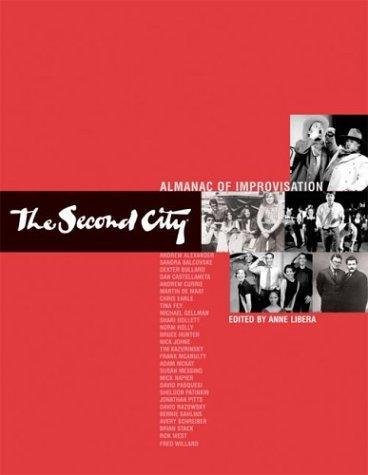
The Second City Almanac of Improvisation
Anne Libera

Improv Comedy (20th Anniversary Edition)
Andy Goldberg
References
In the Archive
How to Reference This Page
The Improv Archive. (2026). William Hall. Retrieved September 28, 2026, from https://improvarchive.org/people/william-hall
The Improv Archive. "William Hall." The Improv Archive, 2026. https://improvarchive.org/people/william-hall.
The Improv Archive. "William Hall." The Improv Archive, 2026, https://improvarchive.org/people/william-hall. Accessed September 28, 2026.
The Improv Archive is a systemically maintained repository. The archive itself acts as the corporate author.