1-2-4-All
1-2-4-All is a full-group applied improvisation exercise that structures brainstorming in four quick stages: individual reflection, pairs, groups of four, and whole-group sharing. The format widens participation, speeds up idea generation, and gives quieter participants a defined route into the conversation.
Structure
Setup
- Bring the full group together around one open question.
- Ask something broad enough to invite multiple perspectives, such as a concern, possibility, or design question.
- Make the time limits clear before the round starts.
How The Round Moves
- First, everyone thinks and writes alone for one minute in silence.
- Next, participants pair up and share what they noticed for two minutes.
- Then each pair joins another pair, making a group of four, and compares responses for four minutes.
- Each group of four looks for the strongest patterns, concerns, or ideas that are surfacing.
- Finally, the facilitator asks each group to offer one idea to the full room and captures the responses.
What The Structure Is Doing
- The exercise starts privately, so every participant has time to form a thought before louder voices enter.
- The pair stage lets people test language out loud in a lower-pressure setting.
- The group-of-four stage forces comparison, selection, and synthesis.
- The whole-group share turns many small conversations into a visible set of collective themes.
Simple Example
If the prompt is "What are your biggest questions about this change?" a participant may first write concerns alone, then notice in pairs that both people are worried about communication, then discover in a group of four that timing and role clarity are recurring issues. By the time the room hears the report, the idea has already been tested and clarified.
When To Stop
The round ends after each group of four has contributed a key idea or once the facilitator has enough material to move into debrief, planning, or the next decision-making step.
How to Teach It
Objectives
- widen participation before the room settles around a few dominant voices
- help participants move from private thought to shared synthesis
- show how simple rules can change the quality and speed of a group conversation
How To Explain It
We are going to answer this question in four quick steps: alone, in pairs, in groups of four, and then with everyone.
Write silently for one minute, share in pairs for two, compare in fours for four, and then be ready to give the room one strong idea from your group.
Playing Notes
- Ask a genuinely open question. If the question only has one expected answer, the structure becomes mechanical instead of exploratory.
- Keep the time boundaries visible and audible. A chime or firm verbal cue helps the room move cleanly from one phase to the next.
- Say as little as possible once the round starts. The structure is meant to organize the conversation for you.
- In the group-of-four phase, coach participants to look for the strongest themes rather than report every point they heard.
- In the whole-group share, ask for one idea per group first. That keeps the room moving and prevents long speeches.
Common Pressure Points
- If the solo minute is interrupted, participants start reacting to each other before they have formed their own thought.
- If the pair stage runs too long, the exercise can stall in story-sharing instead of moving toward synthesis.
- If the group of four tries to report everything, the final share becomes repetitive and muddy.
- If the facilitator keeps re-explaining the task, the room starts listening to the leader instead of working the structure.
Notes That Appear Directly In Source Material
- The workbook frames the exercise as a basic brainstorming structure for questions, ideas, and suggestions.
- The source debrief asks how this structure differs from the way people typically talk in meetings.
- The source suggestions advise facilitators to avoid chatting during the silent writing minute, use a chime for transitions, and say as little as possible.
In Applied Settings
1-2-4-All is designed for applied rooms where the goal is not performance but broad, structured participation. It asks participants to move the same question through four levels of conversation, which reveals how much better a room thinks when people are given both private reflection time and a clear turn-taking structure.
In workplace and organizational settings, the exercise is useful when a facilitator needs honest input without letting the discussion get captured by the quickest or most senior voices. The solo minute protects independent thinking. The pair stage lowers the risk of speaking up. The group-of-four stage turns scattered reactions into themes. By the time the whole room hears an idea, that idea has already been shaped by listening, comparison, and selection.
That matters in meetings because many teams confuse open discussion with inclusive discussion. 1-2-4-All makes participation visible and distributed. It helps groups notice whether they usually jump straight to group talk, whether some people wait for permission before speaking, and whether the room is better at generating ideas than it is at synthesizing them.
For facilitators, the debrief value is practical. The room can reflect on what changed when the conversation had rules, who found it easier to contribute after the solo and pair stages, and how the same structure might improve planning sessions, retrospectives, change conversations, or cross-functional meetings back at work.
Skills Developed
History
The archive currently documents 1-2-4-All through Workbook 9.2 of Applied Improvisation by Theresa Dudeck and Caitlin McClure. That source identifies it as a liberating structure and credits the structure to Henri Lipmanowicz and Keith McCandless (2013).
Worth Reading
See all books →
Applied Improvisation
Leading, Collaborating, and Creating Beyond the Theatre
Theresa Robbins Dudeck; Caitlin McClure

Group Improvisation
The Manual of Ensemble Improv Games
Peter Campbell Gwinn; Charna Halpern

The Applied Improvisation Mindset
Tools for Transforming Individuals, Organizations, and Communities
Theresa Robbins Dudeck; Caitlin McClure

Playing Along
37 Group Learning Activities Borrowed from Improvisational Theater
Izzy Gesell
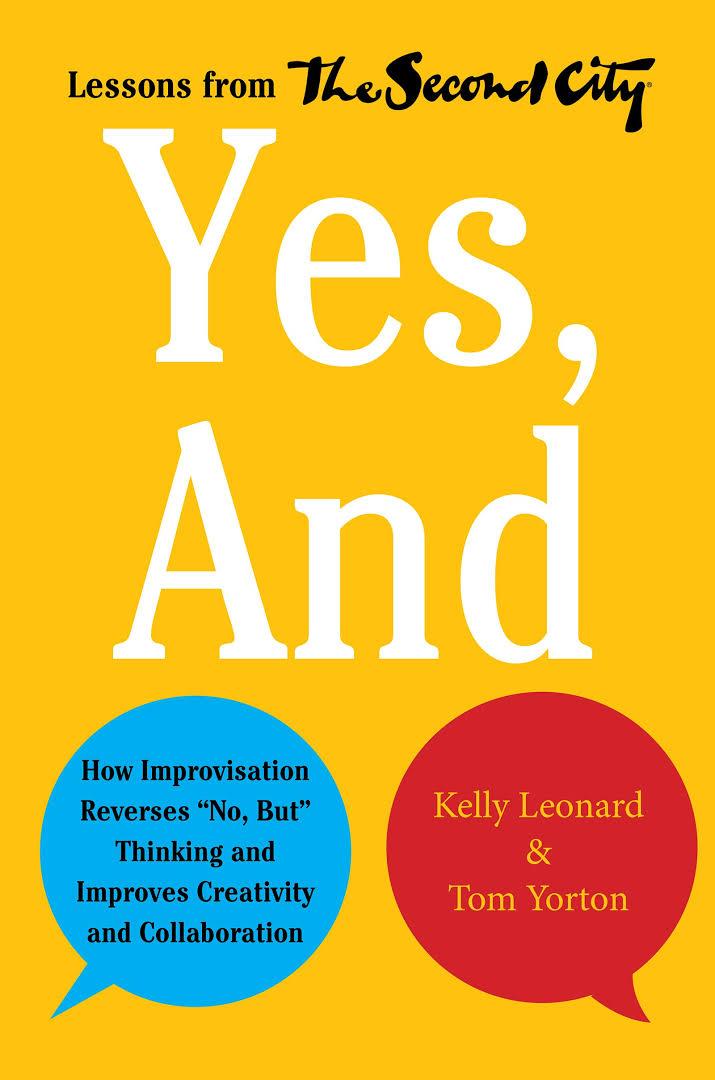
Yes, And
How Improvisation Reverses No, But Thinking and Improves Creativity and Collaboration
Kelly Leonard; Tom Yorton

The Improv Mindset
How to Make Improvisation Your Superpower for Success
Keith Saltojanes
Related Exercises
Problem Solving
Problem Solving is an applied improvisation exercise from Business Improv in which teams tackle challenges using "Yes, And" principles and other improvisational techniques. Rather than following traditional analytical frameworks, participants generate solutions through rapid ideation, collaborative building, and the willingness to explore unconventional approaches.
Silo-Busting Exercise
Silo-Busting Exercise is an applied improvisation exercise in which a team facing a real challenge invites people from a completely separate department to join their brainstorming session. The outside participants bring fresh perspectives, unfamiliar frameworks, and no institutional assumptions, breaking the echo-chamber dynamic that limits innovation within isolated teams.
Turbocharged Brainstorm
Turbocharged Brainstorm is an applied exercise in which participants generate ideas at maximum speed for a compressed time period, prioritizing volume and velocity over evaluation. The exercise uses time pressure and competition as catalysts to bypass the inner critic and access the full range of a group's generative capacity.
Building Blocks Brainstorm
Unlike traditional brainstorming, this exercise focuses on a single idea and has the group build on it iteratively, brick by brick, until a complete concept emerges.
Dr. Know-It-All
Dr. Know-It-All is an exercise in which three or four participants sit side by side and answer audience questions one word at a time as if they were a single expert. Each person in the panel says one word, then the next person continues with one word, creating a collectively improvised answer that emerges word by word across the panel. The exercise requires intense listening, agreement, and the ability to accept any word offered and continue from exactly there.
Question Storming
Question Storming is an applied improvisation exercise from Max Dickins' Improvise! in which participants brainstorm questions rather than answers about a challenge. By reframing the creative process away from solutions and toward inquiry, the exercise reveals hidden assumptions, opens new angles of exploration, and demonstrates that asking the right question is often more valuable than generating quick answers.
The Lineage
Explore the schools and structures that influenced or evolved from 1-2-4-All.
Applied Improvisation (Dudeck & McClure)
How to Reference This Page
The Improv Archive. (2026). 1-2-4-All. Retrieved September 28, 2026, from https://improvarchive.org/exercises/1-2-4-all
The Improv Archive. "1-2-4-All." The Improv Archive, 2026. https://improvarchive.org/exercises/1-2-4-all.
The Improv Archive. "1-2-4-All." The Improv Archive, 2026, https://improvarchive.org/exercises/1-2-4-all. Accessed September 28, 2026.
The Improv Archive is a systemically maintained repository. The archive itself acts as the corporate author.