Ali Baba and the 40 Thieves
Ali Baba and the 40 Thieves is a circle rhythm exercise in which players accumulate a sequence of gestures. The first player establishes a repeating movement; each subsequent player adds a new gesture while maintaining all previous ones. The compounding complexity tests memory, coordination, and group synchronization.
Structure
Setup
- Players stand in a circle.
- The first player establishes a simple, repeatable gesture with a sound or word.
- Every player performs this gesture.
- The second player adds a second gesture before or after the first.
- Every player now performs both gestures in sequence.
- Each subsequent player adds one more gesture to the accumulating chain.
The Accumulation Challenge
- By the time the chain reaches six or eight gestures, the memory and coordination demands become substantial.
- Players must reproduce every gesture in correct sequence before adding their own.
- Errors are acknowledged without embarrassment and the group attempts to rebuild from the error point.
What It Trains
- Sequential memory and physical reproduction.
- Group coordination: the group must remain synchronized as the chain grows.
- Comfort with public error: the later rounds virtually guarantee some failure, and the group culture around failure is part of the exercise.
Facilitation Notes
- Start with simple, distinct gestures to build the chain's foundation.
- The facilitator can choose to end the game at a natural peak of complexity rather than running until complete breakdown.
Variations
- The chain is performed to a rhythm, with each gesture taking exactly one beat.
- Players who make an error must leave the circle, continuing until the most accurate player remains.
How to Teach It
How to Explain It
"We are building a chain of gestures. [Player one], give us a gesture. Now everyone does it. [Player two], add one before or after. Now everyone does both. We keep adding until we have as many as we can hold."
Common Notes
- The early rounds are about clarity. Every gesture should be repeatable and distinct.
- Watch for creeping variation: players who slightly modify earlier gestures with each repetition. The chain must remain stable at its base.
- Manage the group's relationship with error. Laughing at error is fine; shame at error undermines the exercise.
Common Pitfalls
- Early gestures are too similar and the chain becomes indistinct.
- Players add gestures before the previous one is stable across the group.
- The chain is allowed to run until total collapse without the facilitator recognizing the natural ending point.
Worth Reading
See all books →
Group Improvisation
The Manual of Ensemble Improv Games
Peter Campbell Gwinn; Charna Halpern
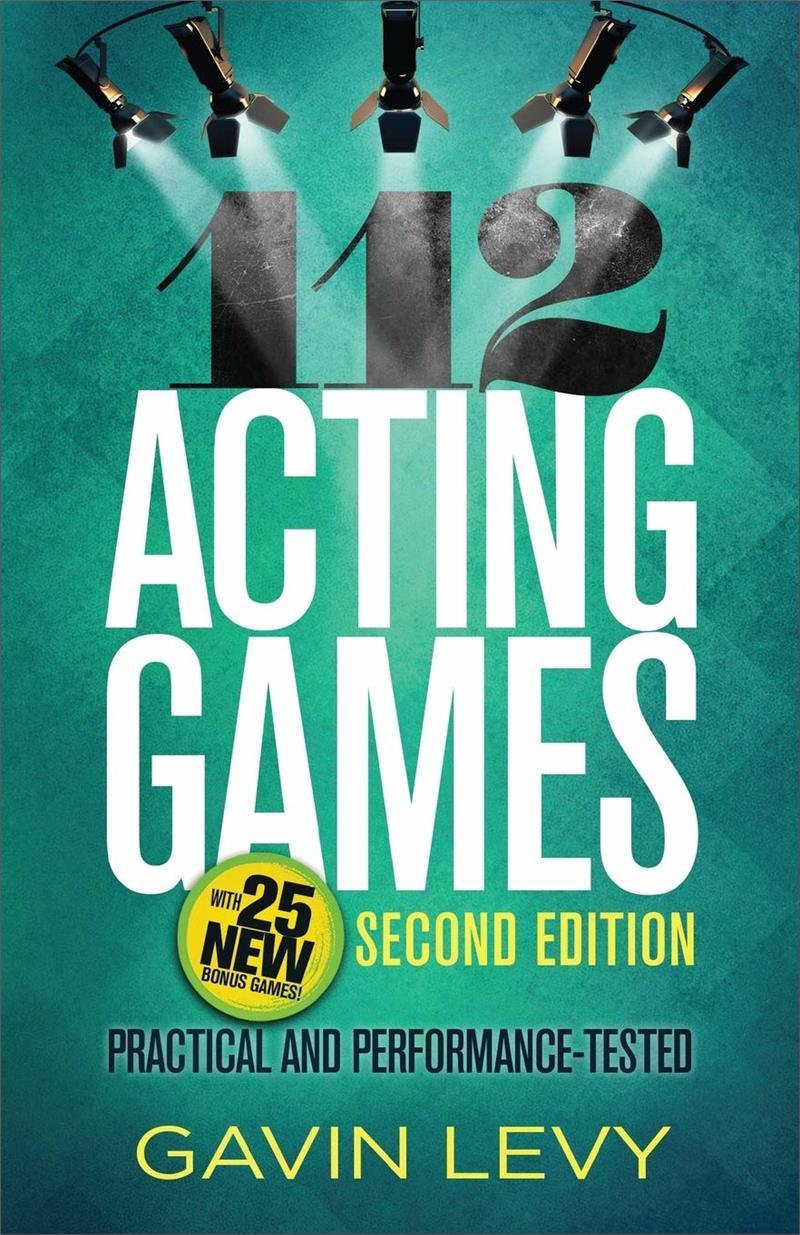
112 Acting Games
Gavin Levy
Theater Games for Rehearsal
Viola Spolin

Business Improv
Experiential Learning Exercises to Train Employees
Val Gee

Improvisation for the Theater
A Handbook of Teaching and Directing Techniques
Viola Spolin

Theatrical Improvisation, Consciousness, and Cognition
Clayton D. Drinko
Related Exercises
Rituals
Rituals is a scene exercise in which performers explore the behavioral rhythms of repeated, patterned actions: the small ceremonies people perform when making coffee, setting a table, greeting a colleague, or preparing for sleep. By slowing down and physicalizing the precise sequence of a ritual, players develop attention to behavioral specificity and discover that the way a character moves through their routines reveals character, relationship, and emotional state as clearly as explicit dialogue.
Associatioin Chain
Association Chain is a circle exercise in which each player says a word inspired by the previous player's word, building a rapid chain of free associations. The exercise trains spontaneous, uncensored responses and reveals the connective leaps that drive improvised scene work. Speed is essential to prevent intellectual filtering.
One Two Three Four
One Two Three Four is a rhythmic counting exercise in which pairs of participants count to four between them in an alternating pattern, then progressively replace numbers with physical actions. The exercise layers increasing cognitive complexity onto a simple rhythm, training split attention, physical commitment, and the ability to maintain a pattern while simultaneously transforming it.
Gesture Circle
Gesture Circle is a movement and listening exercise in which each player in a circle creates an abstract, personally meaningful gesture, teaches it to the player beside them, and receives a gesture from the other side. The exercise passes gestures around the circle so that each gesture travels from person to person, being received, held, and handed on. The exercise develops listening through the body, the capacity for genuine repetition rather than imitation, and a quality of full physical attention to another person's movement.
Bunny
Bunny is a high-energy circle exercise in which players pass a rhythmic pattern around the group through a combination of chanted sounds and synchronized gestures. The player designated as the bunny performs a central action, typically holding both hands beside the head like ears while chanting "bunny bunny," while the two players on either side perform complementary supporting gestures. The bunny then passes to another player across the circle, and the pattern repeats with increasing speed. The exercise builds group rhythm, peripheral awareness, and comfort with looking foolish. It is widely used as a warm-up in both theatrical and corporate training contexts, valued for its ability to lower inhibitions, demand focus, and generate collective energy through structured silliness.
The Lineage
Explore the schools and structures that influenced or evolved from Ali Baba and the 40 Thieves.
Games for Actors and Non-Actors (Boal)
How to Reference This Page
The Improv Archive. (2026). Ali Baba and the 40 Thieves. Retrieved September 28, 2026, from https://improvarchive.org/exercises/ali-baba-and-the-40-thieves
The Improv Archive. "Ali Baba and the 40 Thieves." The Improv Archive, 2026. https://improvarchive.org/exercises/ali-baba-and-the-40-thieves.
The Improv Archive. "Ali Baba and the 40 Thieves." The Improv Archive, 2026, https://improvarchive.org/exercises/ali-baba-and-the-40-thieves. Accessed September 28, 2026.
The Improv Archive is a systemically maintained repository. The archive itself acts as the corporate author.