Back to Back
Back to Back is a trust and connection exercise in which two players sit or stand with their backs pressed together and work together on a physical or verbal task without the benefit of eye contact. Common tasks include standing up simultaneously from a seated position, telling a collaborative story, or mirroring each other's movements through physical pressure alone. The absence of visual cues forces participants to communicate through weight, pressure, breath, and vocal tone, developing a physical listening channel that operates independently of sight. The exercise appears across multiple performance traditions, from Augusto Boal's Games for Actors and Non-Actors to John Abbott's The Improvisation Book, and is one of the most widely used partner exercises in both improv training and applied improvisation settings.
Structure
Players divide into pairs. Each pair stands or sits with their backs firmly pressed together, maintaining full contact along the spine.
In the physical version, the pair begins seated on the floor with their backs together and arms linked at the elbows. On the facilitator's signal, both players attempt to stand up simultaneously without using their hands and without breaking back contact. Success requires both players to push equally against each other, negotiate weight distribution through physical pressure, and coordinate their timing without verbal planning.
In the verbal version, as described by Abbott in The Improvisation Book, the pair stands back to back and engages in an improvised conversation or collaborative storytelling exercise. Without eye contact or facial cues, players must rely entirely on vocal inflection, breathing patterns, and physical pressure to read their partner's energy and respond appropriately.
Boal documents additional variations in Games for Actors and Non-Actors: two actors standing back to back and leaning against each other, gradually increasing the distance between their feet while maintaining contact; and a bottom-to-bottom variation that changes the balance dynamics entirely.
The exercise runs through multiple rounds, allowing pairs to recalibrate and improve their communication. The facilitator may rotate partners between rounds to expose players to different body types, weights, and communication styles.
How to Teach It
How to Explain It
"Sit or stand back to back with your partner. Your job is to communicate and coordinate while you cannot see each other's faces or gestures. Notice how much you rely on visual cues and what you do when they are not there."
Back to Back is one of the most effective exercises for teaching physical listening, the ability to receive and respond to nonverbal information from a partner through direct physical contact.
Start with the standing-up task because it produces immediate, visible results. Pairs either succeed or fail, and the reason for failure is almost always that one partner pushed harder or moved faster than the other. Use this as a concrete demonstration that partnership requires matched effort and mutual responsiveness.
Coach players to breathe together before attempting the task. Synchronized breathing establishes a shared rhythm that makes coordinated movement much easier. Players who hold their breath or breathe independently from their partner struggle to find the timing.
A common failure mode occurs when one player takes charge and tries to control the movement while the other becomes passive. Effective Back to Back work requires both players to contribute equally. Neither leads nor follows; both adjust continuously.
For the verbal variation, coach players to listen for changes in their partner's breathing, vocal pace, and physical tension. Without visual cues, these become the primary channels for reading emotional state and energy level. Players discover that they can sense their partner's engagement, hesitation, or excitement through their back alone.
The exercise works well as a bridge between physical warm-ups and scene work. After completing Back to Back, partners often demonstrate stronger listening and responsiveness when they move into face-to-face scenes together.
For applied settings, the exercise illustrates the importance of nonverbal communication and equal participation in collaborative work. Participants discover that successful partnership depends on sensitivity to the other person's contribution, not on taking control.
Worth Reading
See all books →
Theatrical Improvisation
Short Form, Long Form, and Sketch-Based Improv
Jeanne Leep

Acting Through Improv
Improv Through Theatresports
Lynda Belt; Rebecca Stockley

The Applied Improvisation Mindset
Tools for Transforming Individuals, Organizations, and Communities
Theresa Robbins Dudeck; Caitlin McClure
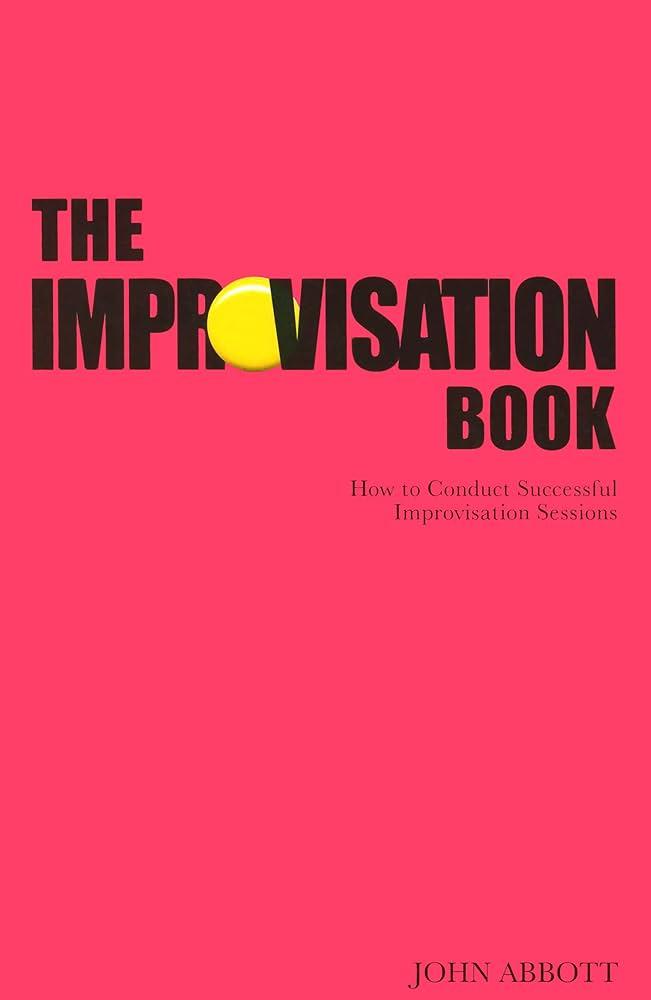
The Improvisation Book
How to Conduct Successful Improvisation Sessions
John S.C. Abbott
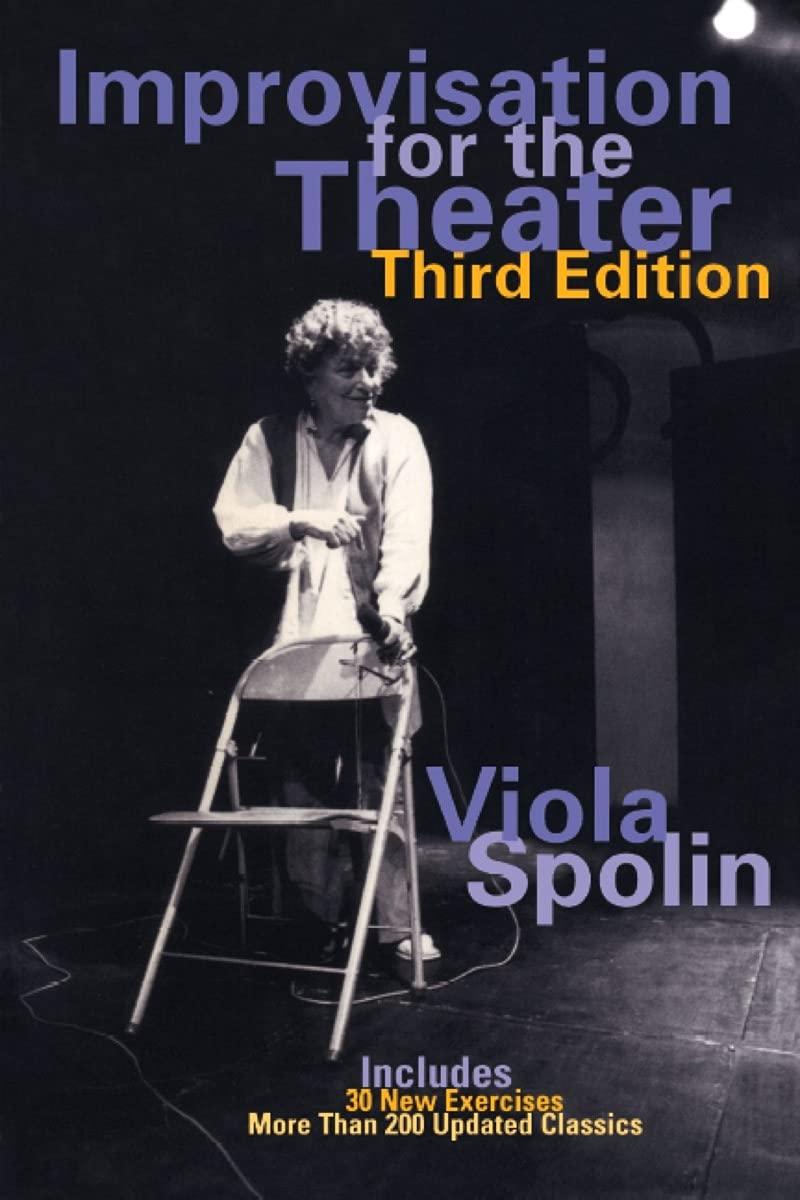
Improvisation for the Theater
A Handbook of Teaching and Directing Techniques
Viola Spolin

Business Improv
Experiential Learning Exercises to Train Employees
Val Gee
Related Exercises
Take That Back
Take That Back is an exercise in which players improvise a scene and when the leader rings a bell, the speaking actor must replace their last line with something different. The exercise trains performers to generate multiple possibilities for any moment and demonstrates that the first idea is rarely the best.
Give and Take
Give and Take is a foundational scene technique and exercise in which performers practice transferring and sharing focus within a scene. Only one action, conversation, or event holds the audience's attention at a time, and performers must silently negotiate who has focus and who yields it. The exercise trains the essential ensemble skill of knowing when to step forward and when to step back, making it one of the most important exercises for developing group awareness. Give and Take is used in both theatrical improv and applied improvisation settings, where it teaches collaborative turn-taking and active listening.
Mirror
Mirror is a foundational partner exercise in which one player moves and the other copies with as much precision as possible. The basic challenge is simple to see and simple to feel: both players must stay connected closely enough that the movement reads as one shared action instead of one person chasing the other. Across published training material, Mirror is used to build concentration, body awareness, responsiveness, and nonverbal listening.
Trust Exercise
Trust Exercise is an ensemble warm-up in which players practice physical vulnerability and mutual support through structured trust-fall and trust-lift configurations. One player allows their body to be caught, supported, or passed by the group, developing the physical and psychological openness that ensemble ensemble work requires. The exercise builds ensemble cohesion by making reliance on others literal and concrete.
Two Players -- One Voice
Two Players One Voice is an applied exercise in which two participants speak simultaneously as a single character, committing to matching word choices, rhythm, and volume in real time, training deep listening, surrender of individual agenda, and the construction of shared voice.
Cocktail Party
Cocktail Party is a multi-scene ensemble exercise and game in which several pairs of performers simultaneously engage in separate conversations at an imagined social gathering. The overlapping dialogues create a rich, layered environment in which performers must maintain their own character and scene while tracking the conversations happening around them. As connections emerge between the separate conversations, performers weave themes, characters, and references across the pairs. The game trains ensemble awareness, the ability to sustain a character in the background, and the skill of recognizing shared themes and patterns across simultaneous scenes. As described in Truth in Comedy, the Cocktail Party allows performers to explore the value of connections in improvisation.
How to Reference This Page
The Improv Archive. (2026). Back to Back. Retrieved September 28, 2026, from https://improvarchive.org/exercises/back-to-back
The Improv Archive. "Back to Back." The Improv Archive, 2026. https://improvarchive.org/exercises/back-to-back.
The Improv Archive. "Back to Back." The Improv Archive, 2026, https://improvarchive.org/exercises/back-to-back. Accessed September 28, 2026.
The Improv Archive is a systemically maintained repository. The archive itself acts as the corporate author.