Be Specific
Participants silently exchange imaginary objects in a circle, then trace how objects transformed, illustrating the importance of specific communication.
Structure
Setup
Participants stand in a circle. No materials needed.
Phase 1: The Silent Object Exchange
The first player mimes picking up a specific, defined object - not "something" but something with a precise physical identity: a heavy glass bottle, a small fragile egg, a sharp pencil. They handle it with physical specificity: showing weight, texture, fragility, size through the quality of their movement. They pass it silently to the next person.
The next person receives it based entirely on what they observed: the weight suggested by how it was held, the size suggested by the grip, the delicacy suggested by the care. They handle it for a moment and pass it on.
This continues until the object has gone around the full circle.
Phase 2: Revelation and Comparison
After the circle is complete, the facilitator asks each participant what they were holding. Starting from the original sender, each person names their object. The group traces how the object transformed: a heavy glass bottle became a large jar, then a small pot, then a decorative vase, then something entirely different.
Phase 3: Repeat with Precision
The exercise runs again. This time the original sender names the object aloud before passing it. Each receiver must articulate what specific qualities they noticed (weight, texture, size) before passing. The degree of specificity in description correlates with the degree of fidelity in transmission.
Debrief
The comparison between the vague and specific versions is usually dramatic. Specific language - precise physical description - preserves more of the original meaning through transmission.
How to Teach It
How to Explain It
"Pick something specific. Not 'something.' An object you can describe exactly: shape, weight, texture. Pass it. Don't say what it is. Let the movement say it. We'll find out at the end what everyone was holding."
Why It Matters
Specificity is one of the most frequently cited qualities of strong improv: the difference between "a car" and "a rusted 1987 Chevy pickup with a cracked dashboard and a pine tree air freshener" is the difference between a shadow and a scene. This exercise makes specificity a physical and communicative requirement. When the object transforms in transmission, participants see concretely what vague communication costs: the original meaning is lost not through malice but through insufficient specificity. The exercise builds the habit of specificity across verbal and nonverbal communication simultaneously.
Common Coaching Notes
- Demonstrate the contrast. Pass an object twice: once with vague handling (generic "something"), once with full physical specificity. The difference in what people receive is immediate and visible.
- Name the transformation. In the debrief, don't editorialize - just name: "It started as a heavy glass bottle and ended as a feather. What happened in between?"
- Connect to improv scene work. "When you say 'this is an important document' versus 'this is your grandmother's last letter,' the specificity tells the audience what to feel."
Debrief Questions
- At what point in the circle did the object change most dramatically?
- What would have preserved it better?
- Where in your work does lack of specificity create the same kind of transformation?
In Applied Settings
Organizational Context
Be Specific addresses one of the most pervasive communication failures in organizational life: the gap between what a speaker intends to communicate and what the listener actually receives. This gap is usually not a function of intelligence or intent but of specificity: the more precisely information is expressed - in physical handling, in language, in instruction, in feedback - the more faithfully it is received and acted upon.
Workplace Applications
The exercise is used in communication skills training, feedback and coaching programs, cross-functional team development, and any organizational context where information transfer quality is critical. It is particularly valuable for teams whose work involves precise instruction-giving (project management, technical communication, training design), where the cost of vague communication is visible in downstream rework, misaligned deliverables, or repeated misunderstandings.
Meeting and Team Communication
Facilitators can use the Be Specific exercise to prime a team for precision before a planning session, a briefing, or a feedback workshop. The shared experience of watching an object transform through vague transmission gives the team a common reference point for the conversation: "This is what happens when we're not specific. What does specific look like in our context?"
Debrief for Organizations
The organizational debrief can explore real instances of communication failure through vagueness: "Can you think of a time when a clear instruction became something different by the time it reached implementation? What would have made it more specific?" This moves from the exercise to real organizational problem-solving. Participants often find that the most consequential failures in their organizations are specificity failures dressed up as disagreements or misalignments.
Skills Developed
Worth Reading
See all books →
Business Improv
Experiential Learning Exercises to Train Employees
Val Gee
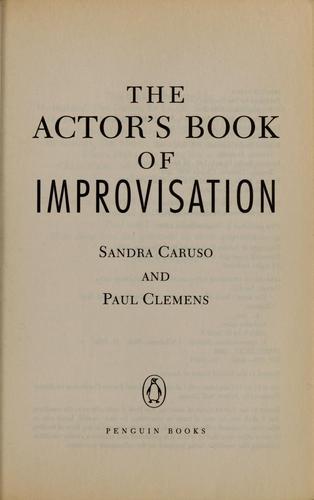
The Actor's Book of Improvisation
Sandra Caruso; Paul Clemens

Theatrical Improvisation
Short Form, Long Form, and Sketch-Based Improv
Jeanne Leep

The Young Actor's Book of Improvisation
Dramatic Situations
Sandra Caruso; Susan Kosoff
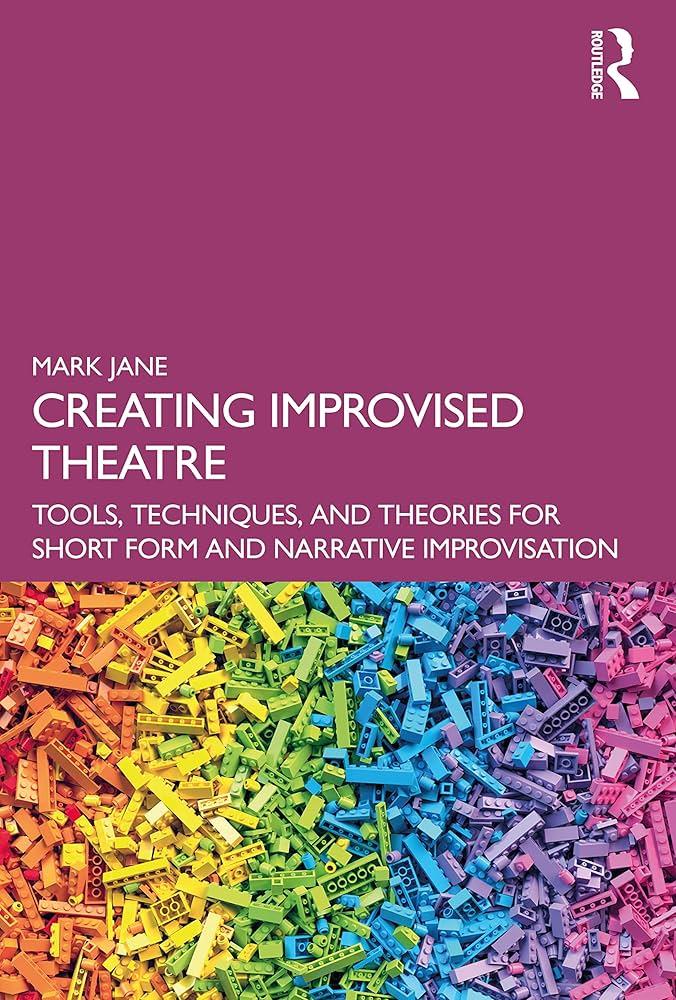
Creating Improvised Theatre
Tools, Techniques, and Theories
Mark Jane

The Routledge Companion to Improvisation in Organizations
Miguel Pina e Cunha; Dusya Vera; António Cunha Meneses
Related Exercises
Object Circle
Object Circle is a warm-up exercise in which participants stand in a circle and pass physical or mimed objects to each other, transforming each object through imagination as it travels. One participant sends an object with a specific size, weight, and character; the next participant receives it, uses it briefly, then transforms it into something new before passing it on. The exercise develops physical specificity, collaborative imagination, and the habit of accepting and building on what a partner offers.
Passing Around Objects
Passing Around Objects is a circle exercise in which players create imaginary objects with distinct physical properties and pass them to their neighbors, who must receive and reproduce each object faithfully before sending it on. When objects return to their creators, the group examines what changed along the way. The exercise develops object work consistency, observation, and the discipline of treating a partner's physical choices as real.
The Thing
The Thing is an object work exercise in which a player is handed an imaginary object whose identity has not been declared in advance. The player must discover what the object is solely through the physical act of handling it -- registering its weight, texture, shape, and behavior in real time. The exercise teaches that specificity of handling creates the object; the object does not exist prior to the player's physical commitment to it.
What's the Object?
What's the Object is a physical mime and object-work exercise in which participants handle an imaginary object with sufficient specificity and consistency that observers can identify what it is, training precise physical commitment, object permanence, and the performer's spatial relationship to invented material.
New Object to Talk
New Object to Talk is a warm-up exercise in which participants pick up a random object and use it as a conversation starter, speaking to or about the object as if it has significance, purpose, or a story attached to it. The exercise trains spontaneous verbal commitment and the ability to generate content from minimal external stimulus.
New Object Name and Application
New Object Name and Application is an applied improvisation exercise in which participants are given an ordinary everyday object, assign it a completely new name, and then pitch a convincing use case for it under its new identity. The exercise trains spontaneous creative reframing, confident presentation under uncertainty, and the ability to find value in unexpected contexts.
The Lineage
Explore the schools and structures that influenced or evolved from Be Specific.
Business Improv (Gee & Gee)
How to Reference This Page
The Improv Archive. (2026). Be Specific. Retrieved September 28, 2026, from https://improvarchive.org/exercises/be-specific
The Improv Archive. "Be Specific." The Improv Archive, 2026. https://improvarchive.org/exercises/be-specific.
The Improv Archive. "Be Specific." The Improv Archive, 2026, https://improvarchive.org/exercises/be-specific. Accessed September 28, 2026.
The Improv Archive is a systemically maintained repository. The archive itself acts as the corporate author.