Body Hide
Body Hide is a physicality exercise in which players attempt to conceal specific body parts or make themselves as small as possible within the space. The exercise heightens body awareness and encourages creative, unusual physical positions. It breaks habitual posture and builds comfort with unconventional stage movement.
Structure
Setup
Players spread out across the space with room to move. No partners needed for the basic version.
Phase 1: Hide a Body Part
The facilitator calls a body part: "Hide your left elbow." Players must conceal the named body part as completely as possible - behind their back, under an arm, pressed against the wall, folded into their torso. The constraint forces creative physical positions. After 10-15 seconds, the facilitator calls a new body part.
Progress through a range of parts: knee, shoulder, right hand, chin, hip, both feet simultaneously. Some are straightforward; others require players to discover unusual positions.
Phase 2: Make Yourself as Small as Possible
Players attempt to occupy the least possible space: crouching, folding, tucking. Then the opposite: occupy as much space as possible. Oscillate between the extremes three or four times rapidly.
Phase 3: Find a Position that Hides Three Parts Simultaneously
The facilitator names three body parts. Players find the single physical configuration that conceals all three at once. This is a sustained physical problem-solving challenge.
Variation: Partner Hide
In pairs, players must hide a designated body part using their partner's body as a prop or screen (without contorting the partner).
How to Teach It
How to Explain It
"I'm going to call a body part. Your job: hide it completely. Cover it, fold it in, tuck it away. You have ten seconds. Ready - hide your right elbow."
Why It Matters
Body Hide develops physical range and awareness by imposing a novel physical problem that cannot be solved through habitual posture or rote movement. Each hiding challenge requires the performer to explore positions they would never occupy in normal life - or on stage in conventional scenes. The exercise breaks the postural defaults that make performers look similar to themselves in every scene they play. It also develops the ability to find character through unusual physical starting points: a performer who discovers they've created an interesting character configuration by hiding their hip has learned that character can arrive through the body.
Common Coaching Notes
- Move fast between prompts. Long gaps allow players to settle and rationalize. A brisk pace keeps the physical problem-solving instinctive.
- Celebrate unexpected solutions. When a player finds a genuinely unusual position, name it briefly: "Look at that. Nobody else solved it that way."
- Connect to character work. After Phase 1, ask players to hold the most unusual position they've found and speak from it. What does this body want? What kind of person lives in this shape?
- No judgment on ability. Some players are more physically flexible. The goal is creative problem-solving, not gymnastics. Reframe: "Find a position, not a perfect position."
Debrief Questions
- Which body part was hardest to hide?
- Did any position feel like a character?
- How does this connect to how you normally use your body on stage?
Worth Reading
See all books →
Mask Improvisation for Actor Training and Performance
the compelling image
Sears A. Eldredge
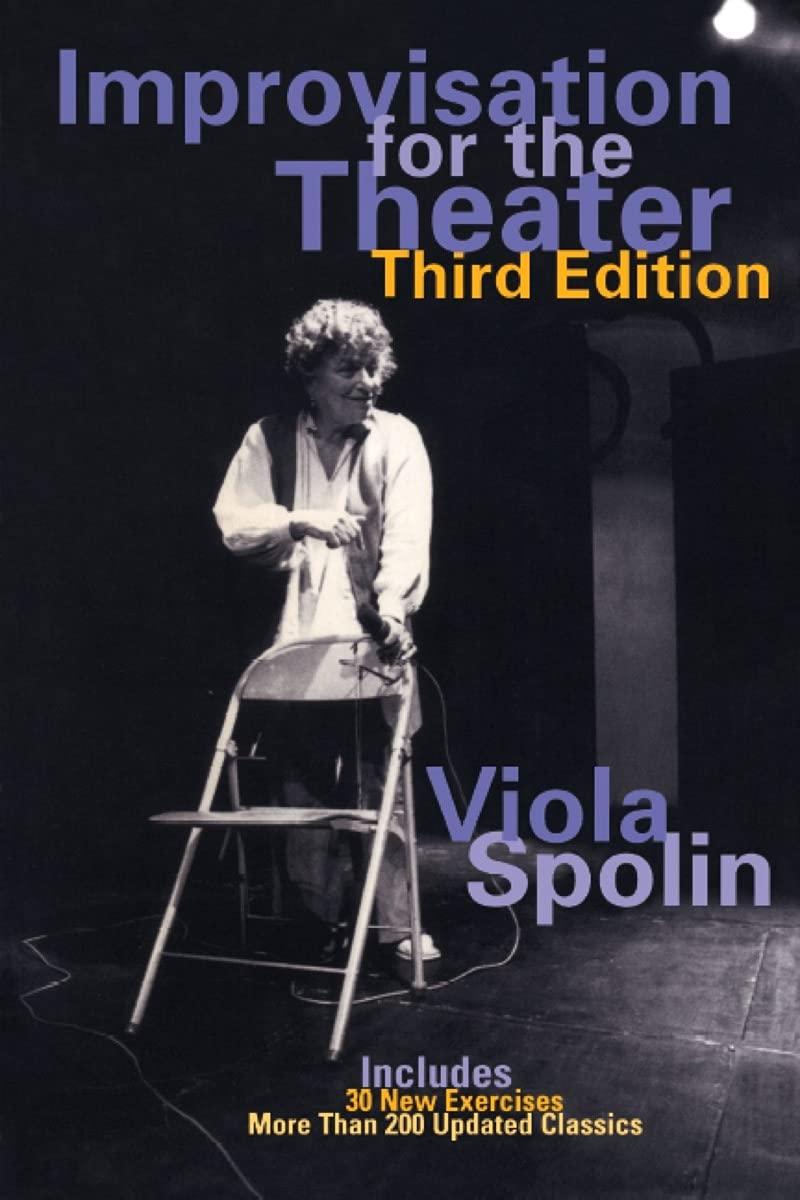
Improvisation for the Theater
A Handbook of Teaching and Directing Techniques
Viola Spolin
Theater Games for the Lone Actor
Viola Spolin

The Improv Illusionist
Using Object Work, Environment, and Physicality in Performance
David Raitt

Embodied Playwriting
Improv and Acting Exercises for Writing
Hillary Haft Bucs; Charissa Menefee

Acting Through Improv
Improv Through Theatresports
Lynda Belt; Rebecca Stockley
Related Exercises
Complete Bodies
Complete Bodies is a physicality exercise in which players practice using their entire body to communicate rather than relying primarily on face and hands. The exercise challenges performers to express emotional states, status, and character through the spine, torso, hips, and legs as well as through their more habitual expressive channels. It builds physical range and presence for scene work and performance.
Big Body Tiny Head
Big Body Tiny Head is a physicality exercise in which performers exaggerate the proportions of their body in movement, leading with an oversized physical presence while minimizing the head and face. The distortion forces players out of cerebral, face-focused performance habits and into full-body expressiveness. The exercise develops physical range and breaks self-conscious patterns.
Bobsledding Bodies
Bobsledding Bodies is a physical warm-up exercise in which players form a tight line and navigate the space together, shifting direction and speed as a unit. The exercise builds group awareness, physical coordination, and the ability to respond as an ensemble to subtle changes in momentum.
Triangles
Triangles is a movement exercise in which each player secretly selects two other people in the space and attempts to maintain an equilateral triangle with them as all players move simultaneously. Because everyone's target pairs are different and unknown to others, the formation shifts continuously with no fixed resolution. The exercise demonstrates how invisible individual choices produce complex collective patterns, and builds sustained spatial awareness and attention to others.
Barney
Barney is an energy and movement warm-up exercise in which players adopt an exaggerated, lumbering physical character and interact with the group through simple, playful commands. The exercise asks participants to embody a large, slow, friendly creature (often described as a dinosaur or monster) and move through the space with maximum physical commitment and minimum self-consciousness. The inherent silliness of the character lowers inhibitions quickly, making Barney effective as an early warm-up for groups that are new to physical work or uncomfortable with large physical choices. The exercise builds comfort with exaggerated movement, vocal projection, and the willingness to look ridiculous in front of others, all foundational skills for improv performance.
Making Faces
Making Faces is a warm-up exercise in which players practice exaggerated facial expressions, cycling through emotions, mirroring a partner, or responding to facilitator prompts. The exercise loosens inhibition around physical expressiveness and helps performers discover how facial choices communicate character and emotion instantly. Many performers rely primarily on voice and words; Making Faces redirects attention to the face as a primary communication instrument. The exercise serves as an accessible entry point for physical comedy work and character creation.
How to Reference This Page
The Improv Archive. (2026). Body Hide. Retrieved September 28, 2026, from https://improvarchive.org/exercises/body-hide
The Improv Archive. "Body Hide." The Improv Archive, 2026. https://improvarchive.org/exercises/body-hide.
The Improv Archive. "Body Hide." The Improv Archive, 2026, https://improvarchive.org/exercises/body-hide. Accessed September 28, 2026.
The Improv Archive is a systemically maintained repository. The archive itself acts as the corporate author.