Bumpity Bump
Bumpity Bump is a name-learning exercise in which a player in the center of the circle points to someone and says a directional phrase such as "left" or "right" followed by "bump." The pointed-to player must name their neighbor on that side before the center player finishes saying "Bumpity Bump Bump Bump." The exercise reinforces name recall under pressure.
Structure
Setup
Players stand in a circle and spend 2-3 minutes learning each other's names if they don't already know them. The center player (facilitator or a volunteer) walks around the inside of the circle pointing at players.
The Command
The center player points at someone and says a directional phrase plus "Bump":
- "Left Bump" - the pointed-to player must name the person to their left before the center player finishes saying "Bumpity Bump Bump Bump"
- "Right Bump" - the pointed-to player must name the person to their right before the count ends
- "You Bump" - the pointed-to player must say their own name before the count ends
Failure Conditions
- Can't remember the name in time: go to center
- Names the wrong person: go to center
- Hesitates past the count: go to center
Pacing
The count ("Bumpity Bump Bump Bump") should be delivered at a rhythmic, moderately fast pace - not so fast that it's impossible, but fast enough that players can't leisurely think.
Group Size
Works best with 8-20 players. Larger circles may require standing closer together so that "left" and "right" are easily identifiable.
Variation: First and Last
Advanced groups must name the full first and last name of the neighbor - a significant escalation in difficulty.
How to Teach It
How to Explain It
"Walk around pointing at people. When I point at you and say 'Left Bump,' name the person to your left before I finish saying 'Bumpity Bump Bump Bump.' 'Right Bump' - name your right. 'You Bump' - your own name. Ready?"
Why It Matters
Learning and using names quickly is a basic social skill that also happens to be essential for ensemble work. Players who can't recall each other's names default to eye contact and gesture rather than calling on specific ensemble members. Beyond the practical name-learning function, Bumpity Bump trains the retrieval of information under social and time pressure - a direct analog to the demands of fast-paced improv scenes. The pressure of the count makes name recall a performance task rather than a casual social exercise.
Common Coaching Notes
- Use early in a training course or workshop. The exercise is most valuable when names are genuinely new. Running it in session 6 with a group that already knows each other loses its primary value.
- Make the count audible and consistent. A rhythmic, predictable count is fairer and more useful than an arbitrary one. "Bumpity Bump Bump Bump" should feel like a metronome.
- Don't slow down for sympathy. If a player can't remember a name, let the exercise work: go to center. The social pressure is the learning mechanism.
- Use right after a name-learning warmup. If players have just done a name-learning activity (juggling names, etc.), transition directly to Bumpity Bump while the names are fresh.
Debrief Questions
- Whose name was hardest to remember?
- What strategy did you use when you were about to be pointed at?
- How does name-learning connect to ensemble care in improv?
Worth Reading
See all books →
Playing Along
37 Group Learning Activities Borrowed from Improvisational Theater
Izzy Gesell

Business Improv
Experiential Learning Exercises to Train Employees
Val Gee

Group Improvisation
The Manual of Ensemble Improv Games
Peter Campbell Gwinn; Charna Halpern
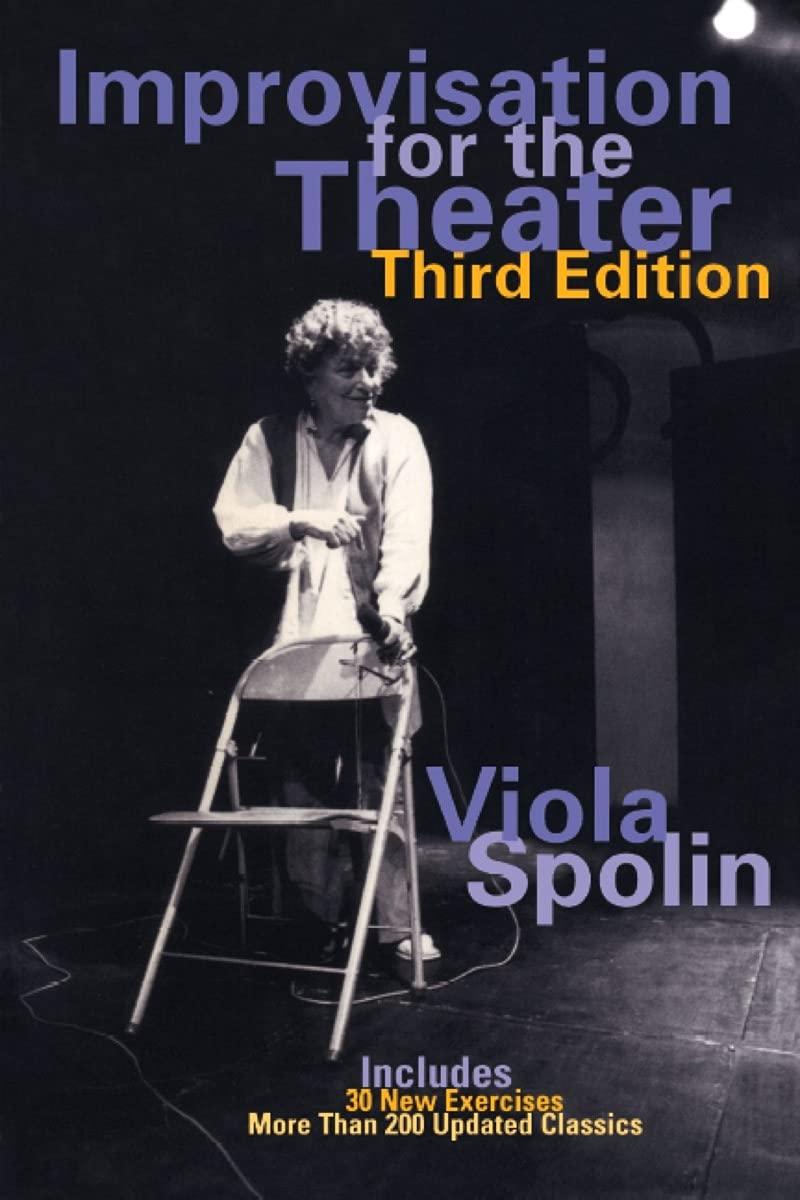
Improvisation for the Theater
A Handbook of Teaching and Directing Techniques
Viola Spolin
Theater Games for Rehearsal
Viola Spolin
Theater Games for the Lone Actor
Viola Spolin
Related Exercises
Name Game
Name Game is a warm-up exercise in which players learn and reinforce each other's names through a structured pattern of call-and-response, rhythmic chanting, or physical gestures. Each player's name is paired with a movement, an alliterative adjective, or a rhythmic pattern that makes the name memorable and the learning process active. The exercise is a staple opening activity for new groups and builds the ensemble familiarity that supports strong scene work. Knowing every player's name and having a physical memory associated with it creates the foundation for personal connection within the group.
Introducing Association
Introducing Association is a name-learning exercise that combines self-introduction with word association. Each player introduces themselves by name and adds a word, image, or gesture that they associate with their name. Subsequent players repeat all previous names and associations before adding their own. The exercise simultaneously learns names and warms up the associative thinking required for improvisation, building memory through the concrete links that association provides.
Name and Motion
Name and Motion is a name-learning exercise in which each participant says their name while simultaneously performing a physical gesture or movement of their choosing. The group then mirrors both the name and the motion back in unison. The pairing of verbal and physical information creates multiple memory anchors, making name retention significantly more reliable than verbal-only introductions.
Hello
Hello is a simple greeting exercise in which players practice making contact through the single word "hello," varying their delivery to express different emotions, characters, and relationships. The exercise demonstrates the range of meaning a single word can carry. It builds vocal variety and the ability to communicate intention through tone.
Name 6 Circle
Name Six Circle is a name-learning exercise in which a group stands in a circle and passes names around in a structured sequence, with each pass requiring the sender to make eye contact, say the recipient's name clearly, and receive acknowledgment before the name travels on. The exercise builds name retention and attentiveness to others in the group.
You
You is a circle exercise in which players point at another person and say "you," passing focus around the group with clear eye contact and decisive gestures. The exercise trains the habit of making specific, committed choices about who receives an offer. It builds directness and the ability to give and receive attention cleanly.
How to Reference This Page
The Improv Archive. (2026). Bumpity Bump. Retrieved October 14, 2026, from https://improvarchive.org/exercises/bumpity-bump
The Improv Archive. "Bumpity Bump." The Improv Archive, 2026. https://improvarchive.org/exercises/bumpity-bump.
The Improv Archive. "Bumpity Bump." The Improv Archive, 2026, https://improvarchive.org/exercises/bumpity-bump. Accessed October 14, 2026.
The Improv Archive is a systemically maintained repository. The archive itself acts as the corporate author.