Conflict Resolution
Conflict Resolution is a category of applied improvisation exercises in which participants practice navigating interpersonal disagreements using the foundational improv principles of acceptance, listening, and creative problem-solving. Scenarios are enacted improvisationally, giving participants a lower-stakes environment to practice the conversational moves that productive conflict navigation requires: staying present with the other person's perspective, building on rather than dismissing opposing positions, and moving toward resolution without requiring one party to concede.
Structure
Setup
Pairs or small groups receive a conflict scenario. Scenarios are drawn from realistic professional or interpersonal contexts: a decision that two colleagues are in disagreement about, a situation where expectations were not met, a misunderstanding that has escalated, or a case where two parties have competing legitimate needs.
The Improvised Conversation
Players enact the scenario using improv listening principles. Each player commits to the given reality of the other person's position, accepts the emotional logic of their perspective, and looks for agreement or common ground before introducing their own counter-position. The conversation runs until a resolution is found or until the coach calls a freeze.
Replay Option
After a freeze, the coach can direct players to re-run the same scenario using a different approach: one player may be instructed to drop a defensive position, or to accept an earlier offer they had declined, or to begin by stating the other person's perspective back to them accurately. Multiple replays of the same scenario allow participants to experience how different moves change the conversational trajectory.
Conclusion
The full group discusses what conversational moves opened or closed the conflict, and what improv principles were most active in the most productive moments.
How to Teach It
Objectives
Conflict Resolution exercises target active listening through disagreement, perspective-taking under emotional pressure, and the ability to build toward shared resolution rather than competitive victory. They also develop awareness of the moment when a participant stops listening and begins defending.
How to Explain It
"You're in a disagreement. Your job is not to win. Your job is to understand the other person's position so completely that you can state it better than they can -- then find a move that works for both of you. Notice the moment you stop listening. That's the moment the conflict escalates."
Scaffolding
Begin with lower-stakes scenarios (a disagreement about a shared workspace, a scheduling conflict) before introducing emotionally loaded content. With beginners, give players a list of conversational moves they can use: "What I hear you saying is...," "What would help you right now?", "I agree with part of what you're saying..." Advanced groups work without scaffolding and are coached to notice their own resistance.
Common Pitfalls
The most common drift is pairs who debate rather than navigate: both players defend their position and neither player genuinely hears the other. The exercise loses its purpose when players treat it as a negotiation to win rather than a practice in connection under pressure.
In Applied Settings
Learning Objectives
Conflict resolution exercises address one of the most consistent gaps in organizational performance: the ability to hold a disagreement productively rather than avoiding, escalating, or suppressing it. The improv framing removes the ego stakes of real workplace conflicts while preserving the emotional and communicative dynamics that make conflicts genuinely difficult.
Workplace Transfer
The skills practiced in the exercise -- listening through defensiveness, acknowledging before counter-proposing, building from the other person's position -- transfer directly to performance conversations, cross-functional disagreements, budget negotiations, project scope disputes, and any organizational situation where two parties need to move forward despite differing priorities. The exercise develops the behavioral repertoire that makes those conversations possible.
Facilitation Context
Conflict resolution exercises are used in corporate team development, HR professional development, management training, mediation preparation, educational settings, and community dialogue programs. They work with pairs and small groups, and are most effective when the scenarios are drawn from the participants' actual professional context.
Debrief Framing
Facilitators ask: "When did you stop listening? What triggered that? What did the other person offer that you could have built on but didn't? If you ran the conversation again knowing what you know now, what would you do differently? Where in your actual work life is this conversation happening right now?"
Skills Developed
Worth Reading
See all books →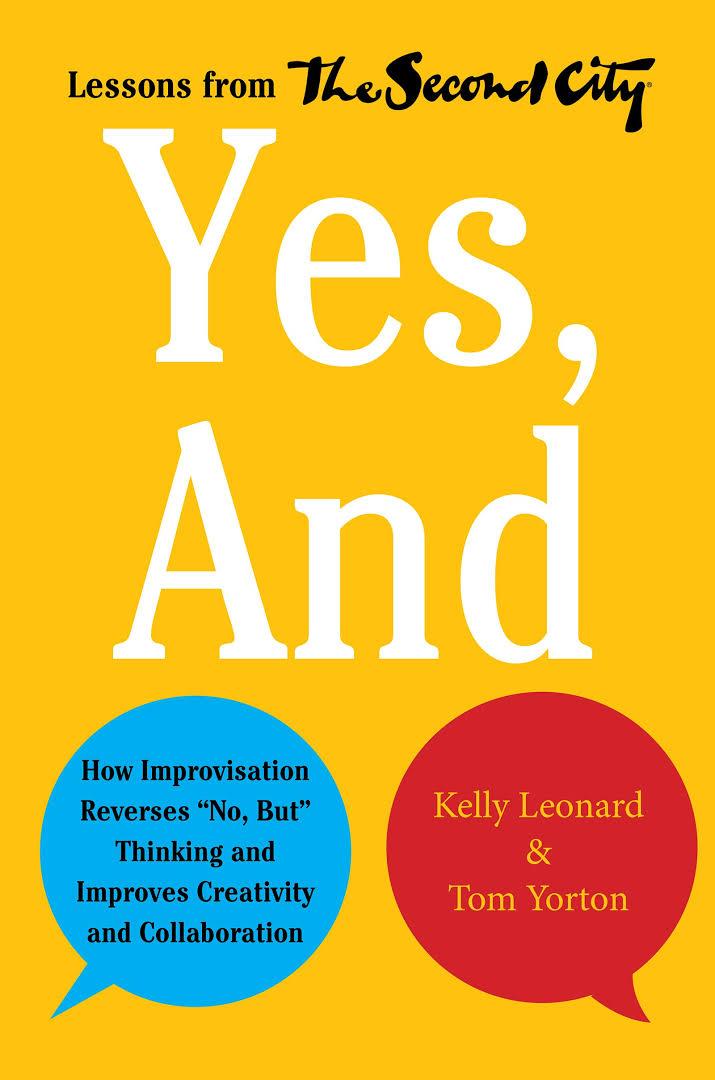
Yes, And
How Improvisation Reverses No, But Thinking and Improves Creativity and Collaboration
Kelly Leonard; Tom Yorton

Business Improv
Experiential Learning Exercises to Train Employees
Val Gee

Business Unscripted
Business is Improv
Ben Winter; Tara Hedberg

Applied Improvisation
Leading, Collaborating, and Creating Beyond the Theatre
Theresa Robbins Dudeck; Caitlin McClure

The Applied Improvisation Mindset
Tools for Transforming Individuals, Organizations, and Communities
Theresa Robbins Dudeck; Caitlin McClure
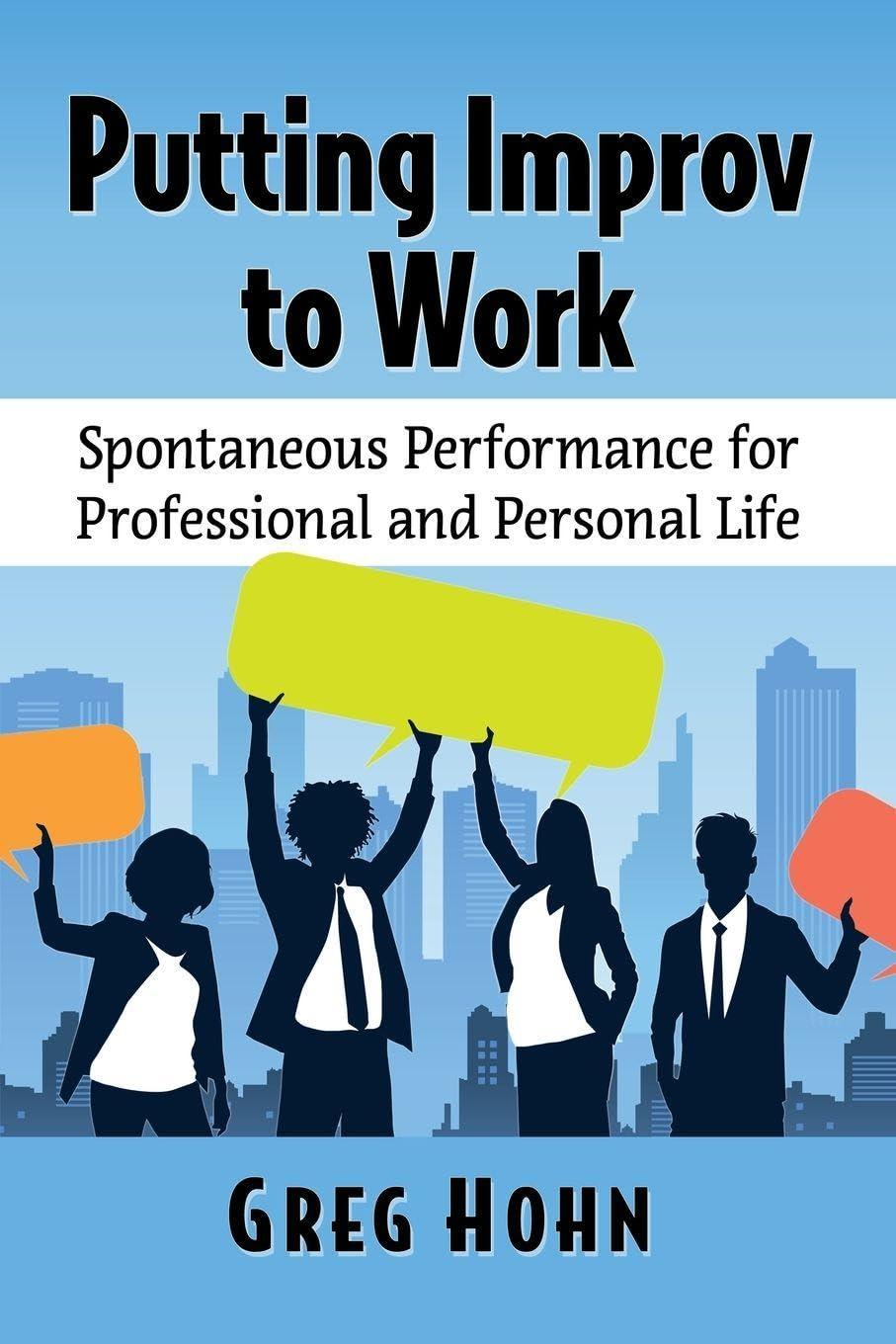
Putting Improv to Work
Spontaneous Performance for Leadership, Learning, and Life
Greg Hohn
Related Exercises
Coaching and Conflict Management
Coaching and Conflict Management is an applied improvisation exercise in which participants practice the conversational moves of coaching and constructive conflict navigation. Using improvisational scenarios, players develop active listening, open questioning, and the ability to hold space for another person's experience before problem-solving. The exercise is used in leadership development and management training programs.
Negotiation Skills
Negotiation Skills is an applied improvisation exercise in which participants engage in structured two-person scenes built around a negotiation scenario, using improv principles -- agreement, active listening, building on offers -- to navigate competing interests toward a shared outcome. The exercise makes the underlying dynamics of negotiation visible and trainable by placing them inside low-stakes fictional scenarios before transferring them to real professional contexts.
Constructive Debate
Constructive Debate is an applied improvisation exercise in which participants practice building on opposing viewpoints rather than dismissing or refuting them. Each contribution requires the speaker to first restate the previous speaker's position accurately and locate something valid in it before introducing their own perspective. The exercise develops the discipline of genuine engagement with competing views as a prerequisite to productive disagreement.
Problem Solving
Problem Solving is an applied improvisation exercise from Business Improv in which teams tackle challenges using "Yes, And" principles and other improvisational techniques. Rather than following traditional analytical frameworks, participants generate solutions through rapid ideation, collaborative building, and the willingness to explore unconventional approaches.
Agreement Scenes
Agreement Scenes is an exercise in which performers practice fully agreeing with every offer their scene partner makes. By removing all conflict and negation, the exercise reveals how scenes can build through mutual enthusiasm and escalating shared reality. It reinforces the "yes, and" principle at its most fundamental level.
Arguments
Three players: one in center, two on sides taking opposite positions. The center player must maintain logical and emotional agreement with both simultaneously.
The Lineage
Explore the schools and structures that influenced or evolved from Conflict Resolution.
Business Improv (Gee & Gee)
How to Reference This Page
The Improv Archive. (2026). Conflict Resolution. Retrieved September 28, 2026, from https://improvarchive.org/exercises/conflict-resolution
The Improv Archive. "Conflict Resolution." The Improv Archive, 2026. https://improvarchive.org/exercises/conflict-resolution.
The Improv Archive. "Conflict Resolution." The Improv Archive, 2026, https://improvarchive.org/exercises/conflict-resolution. Accessed September 28, 2026.
The Improv Archive is a systemically maintained repository. The archive itself acts as the corporate author.